Anita Mathias: Dreaming Beneath the Spires

Anita Mathias's Blog on Faith and Art

  • Home
  • My Books
  • Meditations
  • Essays
  • Contact
  • About Me

“Jesus Angry”

By Anita Mathias


[Jesus_temple.jpg]


A friend of ours has a daughter who is disabled, autistic, and has a fiery temper. When asked to chose a Bible story, she asks for “Jesus angry” stories.


In the past, when I have been angry with another Christian, and told them what I think of their behaviour, a third Christian has often asked me, “Well, what would Jesus do?” And sometimes, a likely answer is, “He would be angry.”


Matthew 21:1-12


Jesus Comes to Jerusalem as King
 1 As they approached Jerusalem
The centre of Israel’s religious life and messianic expectations

 and came to Bethphage on the Mount of Olives, Jesus sent two disciples, 2 saying to them, “Go to the village ahead of you, and at once you will find a donkey tied there, with her colt by her. Untie them and bring them to me. 3 If anyone says anything to you, say that the Lord needs them, and he will send them right away.”
Jesus refers to himself as the Lord, the sovereign orchestrator of these events.

 4 This took place to fulfill what was spoken through the prophet:
 5 “Say to Daughter Zion,
   ‘See, your king comes to you,
gentle and riding on a donkey,
   and on a colt, the foal of a donkey.’”
The inexorable and uncanny fulfillment of Biblical prophecy.
A donkey was an animal symbolic of humility, peace and Davidic royalty.
ESV–Matthew specifies that Jesus’ entrance into Jerusalem upon a colt fulfills the prophecy of Zech 9:9. Jesus’ action is an open declaration that he is the righteous Davidic Messiah.


 6 The disciples went and did as Jesus had instructed them. 7 They brought the donkey and the colt and placed their cloaks on them for Jesus to sit on. 8 A very large crowd spread their cloaks on the road, 
An act of royal homage; it symbolized the crowd’s submission to Jesus as King.

while others cut branches from the trees and spread them on the road. 9 The crowds that went ahead of him and those that followed shouted,
   “Hosannab]”>[b] to the Son of David!”
Hosanna means O Save. It expresses both prayer and praise.
Son of David, an acknowledgment that Jesus is the Davidic Messiah.

   “Blessed is he who comes in the name of the Lord!”c]”>[c]
   “Hosannad]”>[d] in the highest heaven!”
This means “May those in heaven sing Hosanna.”

 10 When Jesus entered Jerusalem, the whole city was stirred 
The religious establishment is stirred up, fearing that Jesus may usurp their power. Much opposition comes from fear and jealous.

and asked, “Who is this?”
Because of Jesus’s dramatic entry into Jerusalem.

 11 The crowds answered, “This is Jesus, the prophet from Nazareth in Galilee.”

12 Jesus entered the temple courts and drove out all who were buying and selling there. He overturned the tables of the money changers and the benches of those selling doves. 13 “It is written,” he said to them, “‘My house will be called a house of prayer,’ but you are making it ‘a den of robbers.’”


Jesus was obviously a strong, physically power man, with charisma. One man, single-handedly chasing away those who were buying and selling, overturning the tables of the money changers, and the benches of those selling doves. The buying and selling took place in the large outer court of the Gentiles, which covered several acres. Jesus was probably particularly annoyed that this took place in the area set apart for the Gentiles to pray.


What chaos, what a hubhub!


Because increased money gives power, and the power to fulfill fantasies, and to boost one’s profile, church, in the hands of the less scrupulous will be accompanied by requests for money, sometimes legitimate, sometimes to fulfill private visions, dreams, and ego-boosting plans and fantasies.


Thieves used caves to store their loot, and plan future crimes!

Share on site of your choice … Wikio
Filed Under: Matthew

The Arithmetic of Counting Blessings

By Anita Mathias

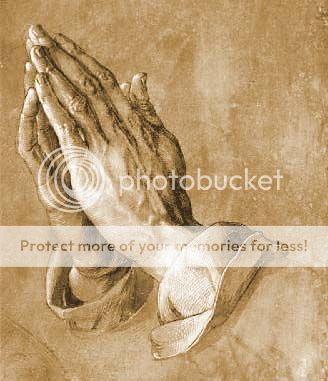
praying hands
Durer, The Praying Hands


I don’t recall how Selwyn Hughes, “The 7 Laws of Spiritual Success” handed up in our house. A few chapters caught my eye as I was about to put it in the Oxfam box.


Here’s his chapter on Counting Blessings. I have speed-typed bits while reading it


“Thou hast given so much to me
Give me one thing more
A grateful heart.”  George Herbert

Sir John Templeton, financier and philanthropist who gives away millions of dollars every year says that when he awakes, he lies quietly on his bed, and thinks of five new ways in which he has been blessed. He belives is this one of the chief reasons why peace and contentment flood his life.

John Templeton-For every problem people have, there are at least 10 blessings.

Charles Spurgeon–“It is a delightful and profitable occupation to mark the hand of God in the lives of His ancient saints and to observe his goodness in delivering them, His mercy in pardoning them, and His faithfulness in keeping his covenant with them. But would it not be more interesting and profitable for us to notice the hand of God in our own lives?”

“Count your blessings.” Impossible advice. Our arithmetic is not good enough. 

When we exhort our soul to praise the Lord, our emotions follow. A law of the personality and of life: what we think about will soon affect the way we feel. Rational Emotive Therapy is based on this idea–“Change your thinking, and you change your feelings, and the next consequence is a change in behaviour.”

We would be much calmer and more confident in the presence of new troubles if we remembered vividly the old deliverances; if we had kept them fresh in mind, and been able to say, “The God who delivered me then will not desert me now.”

John Newton, “His love in times past forbids me to think,
He’ll leave me at last in trouble to sink.”

Auden–“Let your last thinks be all thanks.”

William Law, “If anyone would tell you the shortest, surest way to all perfection and happiness, he must tell you to make it a rule to yourself to thank and praise God for everything that happens to you. For it is certain that, whatever seeming calamity happens to you, if you thank and praise God for it, you turn it into a blessing.”

In everything give thanks–for everything works out for good. God can take the worst thing that has happened to you, and turn it into the best thing that has ever happened to you. 

The risen Christ is the greatest reminder that even the evil of the cross can be transformed into a new and exalted life.

It is a law of the soul that the more we focus on what we have rather than what we don’t the more the soul begins to thrive.


Share on site of your choice … Wikio

Filed Under: random

The Magic Kingdom-VI. The Ones to whom He Opens the Door

By Anita Mathias

h/t
 The Magic Kingdom is a long, very personal essay I wrote in 2003, which I am posting here in installments, without re-reading or editing (because, once I start, I would edit it into a different essay!). This is the final section
I The Magic Kingdom I–The Varieties of Magic

 II The Magic Worlds of Art and Nature.    

III Deep Magic from Before the Dawn of Time. 
IV The Magic Kingdom of Prayer
V The Ones He Calls and the Ones He Chooses 
                                                         The Ones to Whom He Opens the Door.

               And in church, the veil of sin between me and Him hangs heavily, for we had once known sweet fellowship, and I realize my greatest betrayal was that I turned my eyes far from his lovely eyes, and I cry out for forgiveness, and for his life to once more flood me.  And I remember that the publican who went home justified before God merely cried, “God have mercy on me, a sinner,” that there is more rejoicing in heaven over one Anita who repents than over the ninety-nine righteous who do not need to repent.  “For all the fitness he desireth is to feel thy need of him.”
               And I cry out, “Oh wretched woman that I am!  Who will rescue me from this body of death?  For I am a woman of unclean lips and I live among a people of unclean lips.”  And time and time again, in response, the veil which I long to step through is ripped in two from top to bottom, and I step over, and with the eyes of faith, I see the Lord, seated on his throne, high and lifted up, and the whole earth is full of his glory, and I ask him to brand me so deeply that I can never stray, and I feel my heart and lips touched by the burning coal of repentance, and I hear the magical words, “Your guilt is taken away, and your sin atoned for.”
               And I might be asked to speak at a church function, lead a Bible study, write a spiritual piece, and I think “Who am I?” and I remember another to whom he opened the door, a murderer in hiding who had quite literally broken–not just lamps and mugs–but all  the ten commandments in one fell swoop–who had the same reasonable query, and was reassured, “I will help you speak and will teach you what to say;” “My Presence will go with you and I will give you rest.”
               This is the deepest magic I know: that God is agape, that he loves the lazy and weak-willed and vacillating, the undisciplined and messy–like me–and though I may slap on a smile and shine my house, and close the windows when I lose my temper, and dangerously shove laundry and  secrets and skeletons into closets to molder in the darkness, I am still loved by One from whom no secrets need to be kept, for his serious direct eyes see right through them, and he loves me anyway, the kind of love which, when offered us, however imperfectly, by a father, a husband, a mentor, a friend, a child staggers and transforms us.
               Yes, this too is what prayer is like: not being able to meet the eyes of Him my heart loves, for the golden life-line that bound us has been so frayed by rage, hatred, revulsion, fear and frustration; and I feel like stone–cold, hard, dead (and a little crazy); and I realize that I have never known how to love; and my betraying heart says with Enobarbus in Anthony and Cleopatra, “I am alone the villain of the earth.”  It is then to discover that when the dead trees of the ice storm snapped all visible cables, the underground cords that bound me to him were not, could not be, severed, for they were secured deep, in the basement of my personality, when I implored him in, and he came and set up his dwelling within me.  And though I have filled my mind and days with sin and folly and distraction, in the bunker basement of my being, unscathed by 5000 pound bombs, or the hurricanes and tornadoes of the heart, he remains, the heart of my own heart, a love so extravagant and stunning that I cannot quite get my mind around it.
               The magic of the Kingdom is that the imperfect and erratic such as I can enter it, that its doors are always open, that repentance is the key.  That I am in the grip of deep grace; that he will not let go; that the days when I run to him, humbled by my failures, are the days when I, in fact, have the most room in my heart for him; when I most resemble the ones he chose. That this is an eclectic sampling of those to whom he opened the door: yes, yes, some of the ninety-nine righteous, but also Augustine, fettered by lust, horrified at the implications of conversion: “Give me chastity, but not yet,’ he famously prays; Colson, feeling furious, framed, shamed by Watergate; Anne Lamott, drunk, doped, hemorrhaging after an abortion, whose audacious sinner’s prayer was, “Fuck it. You can come in.”[1] 
 Those He Transforms
               Samuel tells Saul–“The Spirit of the Lord will come upon you in power and you will be changed into a different person.”[2]   Is there anyone so self-satisfied, so smug, for whom this promise holds no magic?  Psychotherapy, self-help books–vehicles of hope for modern man–at best help us to bear fortune’s slings and arrows by increasing insight, modifying behavior. To enter the magic kingdom, to become a true Christian, modifies the heart.  This is the promise of the new covenant: “I will give them an undivided heart and put a new spirit in them; I will remove from them their heart of stone and give them a heart of flesh.”[3]   “For if any man is in Christ, he is a new creation;” Paul writes.  “Very lovely, but not really true,” I thought when first a Christian.  I now believe it–and not just because I believe Scripture is inspired.  Nobody could talk the blind man of John 9 out of his own experience: “One thing I know.  I was blind, but now I see.”  I know God can dramatically transform the human personality because I find myself experiencing it with great joy.
               For as the yeast of the Kingdom rises through me, everything I consider important or impressive, the eyes with which I see people; the way I live my life–it’s all thoroughly reshuffled.   I rapidly change, every few months, so much so that I can read the journals of six months, a year ago, with sadness and bemusement as if they belonged to another woman, and say, like Angelo in Measure for Measure, “but that was in a far country, and the wench is dead.”
               A drab brown caterpillar in our garden shriveled into a chrysalis, inconspicuous as a dead twig, before it streaked across the garden, a striking orange and black kite, a startling paraglider, a Viceroy butterfly.  The same Ancient of Days who designed those metamorphoses designed ours: that the yeast of ancient words, and a spirit, ancient before there were days, should transform us with ever-increasing glory from lumpen dough to warm, nourishing, golden, glorious bread, until we barely resemble the woman we once were.
               This then is the Magic Kingdom: powerfully transforming, but invisible so that its reality can be doubted in my own life, or in other peoples’.  When the resplendent streamers of the aurora borealis play on it, it shimmers, solid and immutable, and I am certain that I will never live in any other reality for its joy pulses through my blood and bones. Yet the mists of pressure, foolishness, fury, weariness, or despair can obscure that iridescent castle.  I reach out through the fog: Have I lost God, or have I never known him?   But the mists lift, and at dawn, I see him, and he is the rising sun from heaven, the bright and morning star, the King of Kings, seated on his throne, and I know that he is my friend, and that he has established his magic kingdom within me, and all around me, and it will never pass away.


[1] Anne Lamott, Traveling Mercies, pg. 50, Anchor Books, 1999
[2] 1Kings, 10:6
[3] Ezekiel 11:19


Share on site of your choice … Wikio
Filed Under: In which I explore the Spiritual Life, In which I shyly share my essays and poetry

The Magic Kingdom–V: The Ones He Calls, and The Ones He Chooses

By Anita Mathias

The Magic Kingdom is a long, very personal essay I wrote in 2003, which I am posting here in installments, without re-reading or editing (because, once I start, I would edit it into a different essay

Part I The Magic Kingdom I–The Varieties of Magic
Part II The Magic Worlds of Art and Nature.    

III Deep Magic from Before the Dawn of Time. 
IV The Magic Kingdom of Prayer


The Ones He Calls
For the Son of Man has not come to call the righteous, but sinners to repentance (Luke 5:32).
               They shove the abashed woman  in front of the rabbi.  The cacophony resounds: “Moses,” “law,” “adultery” “stone such women,”“now what do you say?”   Her hope fades as, through the disheveled curtain of her hair, she studies his strong, quiet face.  Pure goodness.  He would not contradict Moses.  But, while the questions echo, he is silent.  Then, she hears him speak,  “If any one of you is without sin, let him be the first to throw a stone at her.”  She flinches as she waits.  Waits.  And hears footsteps like a departing dream.  The rabbi had found the one spring which could release the trapped woman.  And wouldn’t his words, his forgiveness, the new hope he offered have been to her the sweetest magic she could imagine?  She had been a caterpillar in a ring of fire (as Martin Luther described grace).  And he was the Siegfried who risked that ring of fire to rescue her. 
               And isn’t there a wonder and mystery in God’s mercy?  That he is more than an equal opportunity lover, but, in fact, “came to seek and to save what was lost:” the cranky, the lazy, the petty, those for whom memories of the past are an embarrassment, the “nasty people,” Lewis calls them.  This is the breathtaking good news: that when I know the core of his calling is love, but am so annoyed with Roy that I can barely bear to look at him; when I play truant in the magic kingdom of books and poetry, and my house goes to pieces and I feel I have failed my children; when a tidbit of gossip passes my lips, and I remember I had resolved never to do that again; the moments when I feel that prayer now, opening a Bible now, would be hypocrisy, for I am humbled by an outburst of temper; a hot-headed e-mail; a spontaneous exaggeration reaching off the pages of creative nonfiction (where it is perhaps permissible) to the nonfiction my listeners believe they are listening to (or I hope they do)– it is when I have blown it that I have qualified myself to be the sinner he came to call to repentance, and, so, the Great Physician pays me a house call; the shepherd, leaving the ninety-nine sheep, takes up his staff, and trudges off to find me; a lamp is lit and the house searched for me; the father, forgetting all else, scans the horizon for me; and the man whose gaze I am ashamed to meet offers me a dazzling way to be saved from my enemies and from the hands of all who hate me. A God for the prodigals who have squandered all in foolish living, for the sick in body and mind and soul and spirit, that is indeed good news.
The Ones He Chooses
               And when the King, the Lord of glory, came to dwell among us, who was counted worthy to follow him, to be the first Christians?
*             he who, with the insight God lavishes on the unworthy, early recognized the Messiah, dominant, cocksure Peter of erratic insight, whom Jesus fiercely rebuked when he recoiled at his friend becoming a paradoxical suffering King whose magic kingdom was not of this world, who was draped in royal robes with mockery and great laughter, whose crown was of thorns, whose throne was the cross, and whose insignia was his nail-scarred hands.
*             those who were fiercely competitive in the noble enterprise of establishing the kingdom of whose nature they were uncertain; always enviously trying to identify the favorite, the greatest.
*             Those who continually forgot his vivid miracles, and were continually rebuked for their lack of faith.  But though they disapproved of his approach to money, power, or people, they loved him.  “Let us also go that we may die with him,” Thomas says, though in the hour of terror, not one of them dared to, not yet.
               To these men he walked up, looked into their eyes, and said, “Follow me,” and they rose, leaving nets and tax booth, and walked behind him–becoming, by that act, Christians. And he comes up to us, people indubitably in process, amid the muck and misery and marvel of life, looks at us, and says, “Come, follow me.”  And as, with an ardent, “Oh yes!” we make our first changes, we become Christians.  And are we, by those words, instantly transformed, utterly transfigured?  No more than they were, though they were with him all day, all night, loving him despite their ambition, pride, doubt, and impatience.  The long years it takes to become a writer, a mathematician, but in the wideness of God’s mercy, all it takes to bear the tremendous badge of a Christian is our “yes,” our tottering steps.  And though we may trip and stumble and stray, he steadies us, and leads us on, transforming us by the slow-release seed of his life within us, as potent and generative as that seed too small to be seen by the naked eye, shed in an ecstatic night we cannot identify, that made the children we adore.
               In moments of total surrender and loving trust, I have decided to follow Jesus 100%.  And between commitments, how much has my commitment actually grown?  A percentage point, perhaps more, if it was a major renunciation. How disastrous in the world’s eyes!  I see these cruel graphs in stores–Employee goals: a minimum of a hundred percent efficiency and I think of the ones he chose: Peter who declared, “I will go to the death with you” and believed it too, but who, in the darkness, by a coal fire, in a chiaroscuro scene that Rembrandt and Caravaggio loved, “never knew” the Jesus being degraded by his enemies–but whose bitter tears led to a bitter-sweet reconciliation at dawn, by another coal fire.  The Lord of Glory accepts us just as we are, even as he molds us into what he (and between gasps, we) wants us to be.
               I read of Francis Schaeffer’s “plant-throwing, pot-smashing temper” in a profile in Christianity Today.[1]   And he was one of the most influential Christians of the twentieth century.  Had he crossed over into Christ’s magic Kingdom?  I don’t doubt it–for that is the magic of the Magic Kingdom.  It deigns to reign in jars of clay.  In his son Franky Schaeffer’s autobiographical novel, Portofino, the evangelical leader growls dangerously, “Elsa, I wish you wouldn’t interrupt my quiet time with the Lord.”  “You’ve just had your quiet time, and you are still so irritable with me,” my husband observes plaintively.  I have made similar observations of his spiritual life, less temperately.
               In the early years of our marriage, we knew the wild fire of sin when our inherited tempers were activated and the air was alive with identified flying objects–a camera, a vase–yes, still nonfiction, unfortunately, and the next morning the shame of trying not to meet the neighbors’ eyes (they heard, they didn’t hear, they heard, they…) as, embarrassed at the incongruity, we got into the van to go to church, knowing what we would think if we had heard what they heard (oh please, didn’t hear!) and then saw them go to church.


[1]  “The Dissatisfaction of Francis Schaeffer, Christianity Today, March 3rd, 1997


Share on site of your choice … Wikio

Filed Under: random

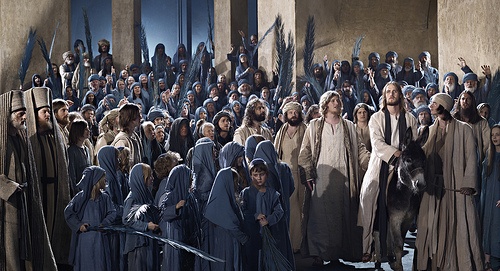
Hosanna to the Son of David, Matthew 21 1-11

By Anita Mathias

Oberammergau Passion Play

Jesus Comes to Jerusalem as King
 1 As they approached Jerusalem
The centre of Israel’s religious life and messianic expectations

 and came to Bethphage on the Mount of Olives, Jesus sent two disciples, 2 saying to them, “Go to the village ahead of you, and at once you will find a donkey tied there, with her colt by her. Untie them and bring them to me. 3 If anyone says anything to you, say that the Lord needs them, and he will send them right away.”
Jesus refers to himself as the Lord, the sovereign orchestrator of these events.

 4 This took place to fulfill what was spoken through the prophet:
 5 “Say to Daughter Zion,
   ‘See, your king comes to you,
gentle and riding on a donkey,
   and on a colt, the foal of a donkey.’”
The inexorable and uncanny fulfillment of Biblical prophecy.
A donkey was an animal symbolic of humility, peace and Davidic royalty.
ESV–Matthew specifies that Jesus’ entrance into Jerusalem upon a colt fulfills the prophecy of Zech 9:9. Jesus’ action is an open declaration that he is the righteous Davidic Messiah.


 6 The disciples went and did as Jesus had instructed them. 7 They brought the donkey and the colt and placed their cloaks on them for Jesus to sit on. 8 A very large crowd spread their cloaks on the road, 
An act of royal homage; it symbolized the crowd’s submission to Jesus as King.
while others cut branches from the trees and spread them on the road. 9 The crowds that went ahead of him and those that followed shouted,
   “Hosanna[b] to the Son of David!”
Hosanna means O Save. It expresses both prayer and praise.
Son of David, an acknowledgment that Jesus is the Davidic Messiah.

   “Blessed is he who comes in the name of the Lord!”[c]
   “Hosanna[d] in the highest heaven!”
This means “May those in heaven sing Hosanna.”

 10 When Jesus entered Jerusalem, the whole city was stirred 
The religious establishment is stirred up, fearing that Jesus may usurp their power. Much opposition comes from fear and jealous.

and asked, “Who is this?”
Because of Jesus’s dramatic entry into Jerusalem.

 11 The crowds answered, “This is Jesus, the prophet from Nazareth in Galilee.”

Filed Under: random

Hosanna to the Son of David, Matthew 21 1-11

By Anita Mathias

Oberammergau Passion Play

Jesus Comes to Jerusalem as King
 1 As they approached Jerusalem
The centre of Israel’s religious life and messianic expectations

 and came to Bethphage on the Mount of Olives, Jesus sent two disciples, 2 saying to them, “Go to the village ahead of you, and at once you will find a donkey tied there, with her colt by her. Untie them and bring them to me. 3 If anyone says anything to you, say that the Lord needs them, and he will send them right away.”
Jesus refers to himself as the Lord, the sovereign orchestrator of these events.

 4 This took place to fulfill what was spoken through the prophet:
 5 “Say to Daughter Zion,
   ‘See, your king comes to you,
gentle and riding on a donkey,
   and on a colt, the foal of a donkey.’”
The inexorable and uncanny fulfillment of Biblical prophecy.
A donkey was an animal symbolic of humility, peace and Davidic royalty.
ESV–Matthew specifies that Jesus’ entrance into Jerusalem upon a colt fulfills the prophecy of Zech 9:9. Jesus’ action is an open declaration that he is the righteous Davidic Messiah.


 6 The disciples went and did as Jesus had instructed them. 7 They brought the donkey and the colt and placed their cloaks on them for Jesus to sit on. 8 A very large crowd spread their cloaks on the road, 
An act of royal homage; it symbolized the crowd’s submission to Jesus as King.
while others cut branches from the trees and spread them on the road. 9 The crowds that went ahead of him and those that followed shouted,
   “Hosannac]’>[c]
   “Hosanna

My Books

Rosaries, Reading, Secrets: A Catholic Childhood in India

Rosaries, Reading Secrets, B&N
USA

UK

Wandering Between Two Worlds: Essays on Faith and Art

Wandering Between Two Worlds
USA

UK

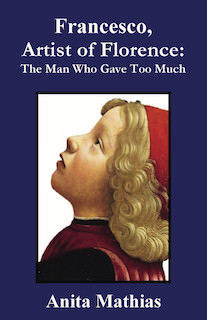
Francesco, Artist of Florence: The Man Who Gave Too Much

Francesco, Artist of Florence
US

UK

The Story of Dirk Willems

The Story of Dirk Willems
US

UK

My Latest Meditation

Anita Mathias: About Me

Anita Mathias

Read my blog on Facebook

Follow me on Twitter

Follow @anitamathias1

Recent Posts

  • At the Cross, God Forgives Us Completely
  • Using God’s Gift of Our Talents: A Path to Joy and Abundance
  • The Kingdom of God is Here Already, Yet Not Yet Here
  • All Those Who Exalt Themselves Will Be Humbled & the Humble Will Be Exalted
  • Christ’s Great Golden Triad to Guide Our Actions and Decisions
  • How Jesus Dealt With Hostility and Enemies
  • Do Not Be Afraid, but Do Be Prudent
  • For Scoundrels, Scallywags, and Rascals—Christ Came
  • How to Lead an Extremely Significant Life
  • Don’t Walk Away From Jesus, but if You Do, He Still Looks at You and Loves You
Premier Digital Awards 2015 - Finalist - Blogger of the year
Runner Up Christian Media Awards 2014 - Tweeter of the year

Categories

What I’m Reading


Wolf Hall
Hilary Mantel

Wolf Hall --  Amazon.com
Amazon.com

Amazon.co.uk

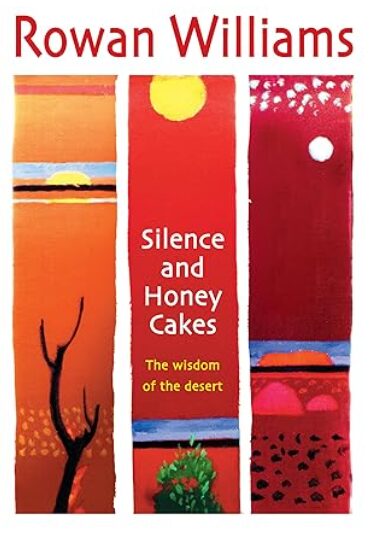
Silence and Honey Cakes:
The Wisdom Of The Desert
Rowan Williams

Silence and Honey Cakes --  Amazon.com
Amazon.com

Amazon.co.uk

The Long Loneliness:
The Autobiography of the Legendary Catholic Social Activist
Dorothy Day

The Long Loneliness --  Amazon.com
Amazon.com

Amazon.co.uk

Country Girl
Edna O'Brien

Country Girl  - Amazon.com
Amazon.com

Amazon.co.uk

Archive by month

My Latest Five Podcast Meditations

INSTAGRAM

anita.mathias

My memoir: Rosaries, Reading, Secrets https://amzn.to/42xgL9t
Oxford, England. Writer, memoirist, podcaster, blogger, Biblical meditation teacher, mum

Well, hello friends! Breaking radio silence to let Well, hello friends! Breaking radio silence to let you know that I have taped a meditation for you on Christ’s famous Parable of the Talents in Matthew 25. https://anitamathias.com/2025/11/05/using-gods-gift-of-our-talents-a-path-to-joy-and-abundance/
Here you are, click the play button in the blog post for a brief meditation, and some moments of peace, and, perhaps, inspiration in your day 🙂
Hi Friends, I have taped a meditation; do listen a Hi Friends, I have taped a meditation; do listen at this link: https://anitamathias.com/2025/04/08/the-kingdom-of-god-is-here-already-yet-not-yet-here-2/
It’s on the Kingdom of God, of which Christ so often spoke, which is here already—a mysterious, shimmering internal palace in which, in lightning flashes, we experience peace and joy, and yet, of course, not yet fully here. We sense the rainbowed presence of Christ in the song which pulses through creation. Christ strolls into our rooms with his wisdom and guidance, and things change. Our prayers are answered; we are healed; our hearts are strangely warmed. Sometimes.
And yet, we also experience evil within & all around us. Our own sin which can shatter our peace and the trajectory of our lives. And the sins of the world—its greed, dishonesty and environmental destruction.
But in this broken world, we still experience the glory of creation; “coincidences” which accelerate once we start praying, and shalom which envelops us like sudden sunshine. The portals into this Kingdom include repentance, gratitude, meditative breathing, and absolute surrender.
The Kingdom of God is here already. We can experience its beauty, peace and joy today through the presence of the Holy Spirit. But yet, since, in the Apostle Paul’s words, we do not struggle only “against flesh and blood, but against the rulers, against the unseen powers of this dark world and against the spiritual forces of evil,” its fullness still lingers…
Our daughter Zoe was ordained into the Church of E Our daughter Zoe was ordained into the Church of England in June. I have been on a social media break… but … better late than never. Enjoy!
First picture has my sister, Shalini, who kindly flew in from the US. Our lovely cousins Anthony and Sarah flank Zoe in the next picture.
The Bishop of London, Sarah Mullaly, ordained Zoe. You can see her praying that Zoe will be filled with the Holy Spirit!!
And here’s a meditation I’ve recorded, which you might enjoy. The link is also in my profile
https://anitamathias.com/2024/11/07/all-those-who-exalt-themselves-will-be-humbled-the-humble-will-be-exalted/
I have taped a meditation on Jesus statement in Ma I have taped a meditation on Jesus statement in Matthew 23, “For those who exalt themselves will be humbled, and those who humble themselves will be exalted.”
Do listen here. https://anitamathias.com/2024/11/07/all-those-who-exalt-themselves-will-be-humbled-the-humble-will-be-exalted/
Link also in bio.
And so, Jesus states a law of life. Those who broadcast their amazingness will be humbled, since God dislikes—scorns that, as much as people do.  For to trumpet our success, wealth, brilliance, giftedness or popularity is to get distracted from our life’s purpose into worthless activity. Those who love power, who are sure they know best, and who must be the best, will eventually be humbled by God and life. For their focus has shifted from loving God, doing good work, and being a blessing to their family, friends, and the world towards impressing others, being enviable, perhaps famous. These things are houses built on sand, which will crumble when hammered by the waves of old age, infirmity or adversity. 
God resists the proud, Scripture tells us—those who crave the admiration and power which is His alone. So how do we resist pride? We slow down, so that we realise (and repent) when sheer pride sparks our allergies to people, our enmities, our determination to have our own way, or our grandiose ego-driven goals, and ambitions. Once we stop chasing limelight, a great quietness steals over our lives. We no longer need the drug of continual achievement, or to share images of glittering travel, parties, prizes or friends. We just enjoy them quietly. My life is for itself & not for a spectacle, Emerson wrote. And, as Jesus advises, we quit sharp-elbowing ourselves to sit with the shiniest people, but are content to hang out with ordinary people; and then, as Jesus said, we will inevitably, eventually, be summoned higher to the sparkling conversation we craved. 
One day, every knee will bow before the gentle lamb who was slain, now seated on the throne. We will all be silent before him. Let us live gently then, our eyes on Christ, continually asking for his power, his Spirit, and his direction, moving, dancing, in the direction that we sense him move.
Link to new podcast in Bio https://anitamathias.co Link to new podcast in Bio https://anitamathias.com/2024/02/20/how-jesus-dealt-with-hostility-and-enemies/
3 days before his death, Jesus rampages through the commercialised temple, overturning the tables of moneychangers. Who gave you the authority to do these things? his outraged adversaries ask. And Jesus shows us how to answer hostile questions. Slow down. Breathe. Quick arrow prayers!
Your enemies have no power over your life that your Father has not permitted them. Ask your Father for wisdom, remembering: Questions do not need to be answered. Are these questioners worthy of the treasures of your heart? Or would that be feeding pearls to hungry pigs, who might instead devour you?
Questions can contain pitfalls, traps, nooses. Jesus directly answered just three of the 183 questions he was asked, refusing to answer some; answering others with a good question.
But how do we get the inner calm and wisdom to recognise
and sidestep entrapping questions? Long before the day of
testing, practice slow, easy breathing, and tune in to the frequency of the Father. There’s no record of Jesus running, rushing, getting stressed, or lacking peace. He never spoke on his own, he told us, without checking in with the Father. So, no foolish, ill-judged statements. Breathing in the wisdom of the Father beside and within him, he, unintimidated, traps the trappers.
Wisdom begins with training ourselves to slow down and ask
the Father for guidance. Then our calm minds, made perceptive, will help us recognise danger and trick questions, even those coated in flattery, and sidestep them or refuse to answer.
We practice tuning in to heavenly wisdom by practising–asking God questions, and then listening for his answers about the best way to do simple things…organise a home or write. Then, we build upwards, asking for wisdom in more complex things.
Listening for the voice of God before we speak, and asking for a filling of the Spirit, which Jesus calls streams of living water within us, will give us wisdom to know what to say, which, frequently, is nothing at all. It will quieten us with the silence of God, which sings through the world, through sun and stars, sky and flowers.
Especially for @ samheckt Some very imperfect pi Especially for @ samheckt 
Some very imperfect pictures of my labradoodle Merry, and golden retriever Pippi.
And since, I’m on social media, if you are the meditating type, here’s a scriptural meditation on not being afraid, while being prudent. https://anitamathias.com/2024/01/03/do-not-be-afraid-but-do-be-prudent/
A new podcast. Link in bio https://anitamathias.c A new podcast. Link in bio
https://anitamathias.com/2024/01/03/do-not-be-afraid-but-do-be-prudent/
Do Not Be Afraid, but Do Be Prudent
“Do not be afraid,” a dream-angel tells Joseph, to marry Mary, who’s pregnant, though a virgin, for in our magical, God-invaded world, the Spirit has placed God in her. Call the baby Jesus, or The Lord saves, for he will drag people free from the chokehold of their sins.
And Joseph is not afraid. And the angel was right, for a star rose, signalling a new King of the Jews. Astrologers followed it, threatening King Herod, whose chief priests recounted Micah’s 600-year-old prophecy: the Messiah would be born in Bethlehem, as Jesus had just been, while his parents from Nazareth registered for Augustus Caesar’s census of the entire Roman world. 
The Magi worshipped the baby, offering gold. And shepherds came, told by an angel of joy: that the Messiah, a saviour from all that oppresses, had just been born.
Then, suddenly, the dream-angel warned: Flee with the child to Egypt. For Herod plans to kill this baby, forever-King.
Do not be afraid, but still flee? Become a refugee? But lightning-bolt coincidences verified the angel’s first words: The magi with gold for the flight. Shepherds
telling of angels singing of coming inner peace. Joseph flees.
What’s the difference between fear and prudence? Fear is being frozen or panicked by imaginary what-ifs. It tenses our bodies; strains health, sleep and relationships; makes us stingy with ourselves & others; leads to overwork, & time wasted doing pointless things for fear of people’s opinions.
Prudence is wisdom-using our experience & spiritual discernment as we battle the demonic forces of this dark world, in Paul’s phrase.It’s fighting with divinely powerful weapons: truth, righteousness, faith, Scripture & prayer, while surrendering our thoughts to Christ. 
So let’s act prudently, wisely & bravely, silencing fear, while remaining alert to God’s guidance, delivered through inner peace or intuitions of danger and wrongness, our spiritual senses tuned to the Spirit’s “No,” his “Slow,” his “Go,” as cautious as a serpent, protected, while being as gentle as a lamb among wolves.
Link to post with podcast link in Bio or https://a Link to post with podcast link in Bio or https://anitamathias.com/2023/09/22/dont-walk-away-from-jesus-but-if-you-do-he-still-looks-at-you-and-loves-you/
Jesus came from a Kingdom of voluntary gentleness, in which
Christ, the Lion of Judah, stands at the centre of the throne in the guise of a lamb, looking as if it had been slain. No wonder his disciples struggled with his counter-cultural values. Oh, and we too!
The mother of the Apostles James and John, asks Jesus for a favour—that once He became King, her sons got the most important, prestigious seats at court, on his right and left. And the other ten, who would have liked the fame, glory, power,limelight and honour themselves are indignant and threatened.
Oh-oh, Jesus says. Who gets five talents, who gets one,
who gets great wealth and success, who doesn’t–that the
Father controls. Don’t waste your one precious and fleeting
life seeking to lord it over others or boss them around.
But, in his wry kindness, he offers the ambitious twelve
and us something better than the second or third place.
He tells us how to actually be the most important person to
others at work, in our friend group, social circle, or church:Use your talents, gifts, and energy to bless others.
And we instinctively know Jesus is right. The greatest people in our lives are the kind people who invested in us, guided us and whose wise, radiant words are engraved on our hearts.
Wanting to sit with the cleverest, most successful, most famous people is the path of restlessness and discontent. The competition is vast. But seek to see people, to listen intently, to be kind, to empathise, and doors fling wide open for you, you rare thing!
The greatest person is the one who serves, Jesus says. Serves by using the one, two, or five talents God has given us to bless others, by finding a place where our deep gladness and the world’s deep hunger meet. By writing which is a blessing, hospitality, walking with a sad friend, tidying a house.
And that is the only greatness worth having. That you yourself,your life and your work are a blessing to others. That the love and wisdom God pours into you lives in people’s hearts and minds, a blessing
https://anitamathias.com/.../dont-walk-away-from-j https://anitamathias.com/.../dont-walk-away-from-jesus.../
Sharing this podcast I recorded last week. LINK IN BIO
So Jesus makes a beautiful offer to the earnest, moral young man who came to him, seeking a spiritual life. Remarkably, the young man claims that he has kept all the commandments from his youth, including the command to love one’s neighbour as oneself, a statement Jesus does not challenge.
The challenge Jesus does offers him, however, the man cannot accept—to sell his vast possessions, give the money to the poor, and follow Jesus encumbered.
He leaves, grieving, and Jesus looks at him, loves him, and famously observes that it’s easier for a camel to squeeze through the eye of a needle than for a rich person to live in the world of wonders which is living under Christ’s kingship, guidance and protection. 
He reassures his dismayed disciples, however, that with God even the treasure-burdened can squeeze into God’s kingdom, “for with God, all things are possible.”
Following him would quite literally mean walking into a world of daily wonders, and immensely rich conversation, walking through Israel, Lebanon, Syria, and Jordan, quite impossible to do with suitcases and backpacks laden with treasure. 
For what would we reject God’s specific, internally heard whisper or directive, a micro-call? That is the idol which currently grips and possesses us. 
Not all of us have great riches, nor is money everyone’s greatest temptation—it can be success, fame, universal esteem, you name it…
But, since with God all things are possible, even those who waver in their pursuit of God can still experience him in fits and snatches, find our spirits singing on a walk or during worship in church, or find our hearts strangely warmed by Scripture, and, sometimes, even “see” Christ stand before us. 
For Christ looks at us, Christ loves us, and says, “With God, all things are possible,” even we, the flawed, entering his beautiful Kingdom.
Follow on Instagram

© 2026 Dreaming Beneath the Spires · All Rights Reserved. · Cookie Policy · Privacy Policy