Anita Mathias: Dreaming Beneath the Spires

Anita Mathias's Blog on Faith and Art

  • Home
  • My Books
  • Meditations
  • Essays
  • Contact
  • About Me

No man is a hero to his valet–except Jesus

By Anita Mathias

Raphael, The Transfiguration
Yes another proof (to my way of thinking) that Jesus was who he claimed he was. John who observed Jesus closely and lovingly, almost 24/7, for 3 years could claim that He was the Word who became flesh and tabernacled among us. “And we have seen his glory, who came from the Father, full of grace and truth.”

All our idols fail and disappoint, and we ourselves will disappoint anyone we allow to idolise us. But he remains, the one whom men could scrutinise for three years and declare that they had seen the glory of Jesus, “the glory of the One and Only, full of grace and truth.” (John 1:14)

Filed Under: In Which I am again Amazed by Jesus

Why not be totally changed into fire?

By Anita Mathias

Image
Abbot Lot came to Abbot Joseph and said:
Father, according as I am able, I keep my little rule, and my little fast, my prayer, meditation and contemplative silence; and according as I am able I strive to cleanse my heart of thoughts; now what more should I do?
The elder rose up in reply and stretched out his hands to heaven, and his fingers became like ten lamps of fire. 
He said: Why not be totally changed into fire?
                                                               * * *
So what is preventing you from being totally changed into fire? 
One of my own impediments would, in fact, be a joy to cast aside. And casting it aside will be casting fear aside, and gaining time.
Lord, be with us and strengthen us as we seek to be totally changed into fire.

Filed Under: random

Whiskey Priests, Todd Bentley, the Lakeland Revival and Why “the Wicked” Prosper

By Anita Mathias

The Whiskey Priest is the hero of Graham Greene’s powerful novel, “The Power and the Glory.” The Mexican government in the state of Tabasco outlaws Catholicism. But as this weak, sick, despairing, alcoholic priest with an illegitimate daughter, goes from village to village at the risk of his life, taking communion to those who believe it is indeed the body and blood of Jesus and yearn for it, something happens.   The power and the glory of God insistently breaks out, and the desperate villagers see it.
We saw a modern Whiskey Priest recently in Todd Bentley who worked creative miracles at his crusades attended by several thousands.
The vicars in the church I was then attending, St. Aldate’s, Oxford, Charlie Cleverly, Simon Ponsonby and Gordon Hickson flew to Florida to listen and learn.
They came back all excited. Monkey see, monkey do. The leaders lined up on either side of the aisle, and the congregation ran through it, and each of them blessed and prayed for us. It’s called “a fire tunnel,” and the procedure is called prophetic impartation, or activation.
Well, I went through it too, and it was a powerful experience, as if electricity coursed through me. I was shaking. Was it mere psychosomatic excitation on my part? At the time, I thought not. I have a writer’s temperament, and part of me stands apart and wryly observes things, even in times of great stress, sorrow, anger, or joy. So I noticed, amused and a bit annoyed, that all the wannebe leaders, and ecclesiastical  social climbers joined the leaders to bless, rather than be blessed. Keenly observing, with some amusement and scepticism, the drama and histrionics in progress, I went through the tunnels. Not the right frame of mine for psychosomatic excitation, huh?
Anyway, there was no enduring change in myself as a result of that fire tunnel, which so reminded me of a child’s party game. (And if there was any positive change in the church, it was invisible to the naked eye J.) If however, we had been sincerely blessed and prayed for by several dozen people, we would have been blessed. Perhaps all the drama of the fire tunnels, and its histrionic thaumaturgic potential interfered with simple prayer. (Shut up, Anita; stop being cynical!)
* * *
And meanwhile in Florida (the perfect locale for a revival: the beaches, the sunsets, the Mouse; I remember youngsters going to Pensacola from my church in Williamsburg for the Pensacola Revival, and coming back, short-term on fire, long-term, unchanged), meanwhile in Florida, the Lakeland revival continued.
I heard John Mumford (father of Marcus Mumford and Sons!) say at a St. Aldate’s retreat that a friend of his in New York was healed just watching it on GodTV!
And the young Todd Bentley gradually became wilder, weirder and wackier. He said he saw (or indeed saw?) an angel called Emma who scattered showers of gold dust.  
He brought in so much money that the church who hosted him had him work 7 days a week. At the start of the revival, he sensibly spent his mornings in prayer and Bible study. Later on, he went drinking with the interns, drunk too much, had an affair with his nanny, eventually divorced his wife, married the nanny.
But all through this, through all this, the miracles continued.
                                     * * *
Why should God work like that through a whiskey priest like Todd Bentley?
Well, why shouldn’t he?
What unlocks the power of God in our lives? Firstly, his sovereign decision: I will have mercy on whom I will have mercy,Romans 9:15. And secondly, our humility and faith.
 And perhaps, in the sight of God, the open sin of Todd Bentley was no worse that the secret sin of other people. We rank sin. Sexual sin is the worst, followed by drugs, and alcohol. Evangelists love catches with glamorous testimonies—drugs, drinking, promiscuity, overdoses, suicide attempts. I once was wild, but now am tame; was cool, but now I’m not. 
But, for all we know, it’s the dreadful churchly sins–the subtle judging and exclusion; the ranking of people by wealth or social status or church status; the gossip, the looking through, the mean little judgements—that makes God cringe more than the golden glories of a passion-driven tumble beneath the sheets, or glorious wine. (Perhaps. David, the repentant adulterer, was known as a man after God’s own heart. Haven’t read many of the Chief Priests and Pharisees Psalms recently.)
And so perhaps a whiskey priest is no worse than the ambitious clergyman who gauges his congregation for what they can do for him, in terms of money or willing labour, or adding lustre to his reputation, and looks through those who have nothing he can use, as through the invisible.
And perhaps the visible sin in Lakeland, Florida, was less displeasing to God than secret, vicious and hypocritical sin in wannabe Lakeland churches. And that’s why God chose to show up in Lakeland.
* * *
Yes, I am convinced that this is why “the wicked” prosper: Because in the eyes of God, they are no more or less wicked, than those who wring their hands at their wickedness. 

In the eyes of God, it’s the heart matters, whether we lust in our heart or limbs, whether we murder with words or weapons (Matthew 5:28-29).
The sin of the wicked is obvious. And obvious sin is more acceptable to God than the petty hidden little sin and hypocrisies of the chosen frozen, the merciless, pitiless, judgemental little “men and women of God.”
Who went home justified before God? Not the pompous small group leader, who fasts and prays and tithes, but the sinner who knew he was a sinner, and beat his breast and prayed, “Lord be merciful to me a sinner.”
And so perhaps Christ, who stands watching in the aisles of the temple, ensures he prospers. We are dealing with God, you know, and he has the most annoyingly egalitarian habits. He makes the sun shine and the rain fall on the good and evil alike, and is kind to the ungrateful and the wicked.
* * *
Bill Johnson and John Arnott became part of a committee of restoration for Todd Bentley. Bentley apparently had faith, he took God at his word, he worked miracles. He sinned like David did. Why shouldn’t be restored as David was?
Is blowing it the worst thing for a Christian? Nope, not at all.
In fact, it may be just the opposite.
Publicly blowing it will slow down and impede your public ministry, but then you are forced to go underground, to be silent and still with God. And even while all excoriate you for how you blew it, you get strong, and you burrow into the secret places of God, and grow in grace and strength and wisdom. And God may choose to, again, show you visible, undisputable favour. What you touch may turn to gold—whether business ventures, or creative ventures, or ministry. Your prayers might be answered by miracles. The peace and joy which glimmers around you like gold dust may become evident.
We haven’t heard the last of Todd Bentley, I suspect. Stay tuned.

Filed Under: random

“Strengthen yourself in the Lord” by Bill Johnson: A guest post from Roy Mathias

By Anita Mathias

 
(Guest post by Roy Mathias)
I read this book while at Ffald-y-Brenin. Here are some of the ideas–chapter by chapter.    Bill Johnson describes some of the methods he uses to strengthen his inner man – it is not an exhaustive list, just what he himself has found helpful.  These are some of the conscious ways in which he choose to respond when warning lights go on in  his life.
Frequently others will strengthen us, but there are times when we must do it for ourselves in order to mature.
David’s Secret
What made David so great?  David is remembered for his heart.  While the Israel, for the most part, interacted with the Lord through the Law and a system of ritual sacrifices, David, as a shepherd, had a direct relationship with the Lord, singing to the Lord, and relying on the Lord in battling lion and bear.  He was clearly different – his oldest brother Eliab brothers sensed this saying  “I know how conceited you are and how wicked your heart is” .
However, after being anointed King, he had to wait 10-13 years, mostly in testing circumstances, before being crowned king.  This further testing ensured that when he was king he would not stumble as seriously as Saul, whose public victories exposed his hidden faults.
Why the inner man?
The sin of biting the apple in the garden was preceded by the error of believing a lie.
“As a man thinks in his heart so he is”  (Pr 23:7) is an oft quoted expression, but it usually refers just to thoughts.  In Hebrew, the heart referred to the entirety of the inner man – mind, imagination, will, desires, emotions, memory, conscience, and so Johnson focussed on more than just the mind and intellect here.
Stay connected to your destiny
 Live aware of where you are going, not where you are.  Live aware of the unseen reality that God is both good and sovereign.
The frontlines of the fight is the safest place — we receive an umbrella of  grace — rather than taking up a defensive position, like the servant who buried his coin.
Disarming Hell Through Thanksgiving
Almost every Christian book, regardless of perspective, book has a chapter on the importance of thanksgiving. Why?
1.      “Rejoice always, pray without ceasing, give thanks in all circumstances; for this is the will of God in Christ Jesus for you.”( 1 Thess 5:16-18)  Being thankful is the will of God.  But to be truly thankful, one must appreciate what one has – frequently Christians are not thankful for spiritual gifts, and even the mere fact of life.
2.      “Thanksgiving brings me into the presence of God where you sense His ability to do the impossible and sense of his love for and delight in me.  It is hard to stay depressed when I am filled with the awareness of this love and goodness of God around me.”
3.       Not giving thanks and praise leads to futility and spiritual darkness.   “ … they neither glorified Him, nor gave Him thanks, but became futile in their thoughts and their foolish minds were darkened.”    On the other hand, thanksgiving keeps us sane (seeing reality the way it is)  and alive (in contact with our source of life).
The Personal Breakthrough Moment – Praise
“Physical obedience brings spiritual breakthrough”. Our identity as believers is first as worshipers–ministering to the Lord.  Worship with the whole self, including the body, dancing, clapping, and making a joyful noise as in the Old Testament, and in celebrations the world over.
“It is not irresponsible to ignore problems around one, and even inside one, to give GOD praise.  We think that we can solve a problem by looking at it from every angle.  But this can consume our attention, and we end up focussing on the problem, not the Lord.”
Praise can bring one into a divine encounter.  Worship may be understood only by the worshiper and the Lord (c.f., the woman who poured expensive perfume on Jesus feet was criticised/judged by all.)
Bill Johnson closes the chapter with “I challenge you to take the time each day to look past the problems and needs around you long enough to give God an extravagant expression of praise and rejoicing”.
Releasing the Hidden Things
 How do we build ourselves up?  Ans: “But you, beloved, building yourselves up on your most hold faith, praying in the Holy Spirit.”  “He who speaks in a tongue edifies himself.”
Praying in the Spirit (i.e., in tongues for Bill Johnson)
  • Is powerful because  our spirits pray in  agreement with God
  • Invites the Spirit of understanding to enlighten the eyes of our understanding (esp. when we want to understand things in times of crisis and tragedy.)
  • Bypasses the intellect and activates our Spirit born faith (for faith does not come from the intellect)
  • Bypassing the intellect, allows us to pray when we lack understanding for how to pray.
Conclusion:  “As you learn how to ‘build yourself up on your most holy faith’ using this tool, a sign of growth will be that God will wean you away from expecting quick fixes, and you will find yourself in situations that just will not shift until you lean into His voice, hear what he is saying, and stand in faith to make that declaration over your life. … we learn that while getting answers to prayer is wonderful and important, hearing His voice in the intimacy of prayer is the true source of our strength.”
 Possessed by Promises
“Meditating on the Promises of God will strengthen you.”   We strengthen ourselves by remaining connected with identity and purpose.  But we only know our identity and purpose because God tells us what they are
 In general, meditate on the promises from the position of “Let it be to me according to your Word” when it is not clear how His word will be fulfilled.
In particular,  re-read portions of Scripture that have been quickened in your heart.  He says “If I feel heavy or discouraged, I’ll read these passages until I sense the reality of that dwelling place and can feel the promise burning in my heart again”.
Similarly, when mentally or spiritually bombarded, read Psalms, until you find “your heart cry in a Psalm”.  Then read that over and over and make it your prayer.
Life comes not from every word that has already been spoken, but from “every word that proceeds from the mouth of God”. (Note present tense.)   The Holy Spirit brings Scripture to life.  Don’t just gather information from Scripture–expect Scripture to speak to your spirit.  When you receive a personal word, record it.
(Biblical meditation fills the mind, and even the mouth, with truth.  Joshua 1:8, This book of the Law shall not depart from your mouth, but you shall mediate it day and night.  Apparently the Hebrew word translated mediate can also be translated “mutter”.)
Keeping the Testimony
“Jesus perfectly represented God.  One of the primary truths He proved is that it is impossible to represent God accurately without demonstrations of power.   Miracles aren’t something only Jesus and a few highly anointed ministers can be expected to perform. “
Ps 78: 2-7   Tell of the Lord’s works –his power and wonders–that the next generation will know and believe
2 I will open my mouth with a parable;
   I will utter hidden things, things from of old—
3 things we have heard and known,
   things our ancestors have told us.
4 We will not hide them from their descendants;
   we will tell the next generation
the praiseworthy deeds of the LORD,
   his power, and the wonders he has done.
5 He decreed statutes for Jacob
   and established the law in Israel,
which he commanded our ancestors
   to teach their children,
6 so the next generation would know them,
   even the children yet to be born,
   and they in turn would tell their children.
7 Then they would put their trust in God
   and would not forget his deeds
   but would keep his commands.
However, the men of Ephraim, forgetting, lost their nerve in battle, and did not obey God’s law.
 9 The men of Ephraim, though armed with bows,
   turned back on the day of battle;
10 they did not keep God’s covenant
   and refused to live by his law.
11 They forgot what he had done,
   the wonders he had shown them.
12 He did miracles in the sight of their ancestors
   in the land of Egypt, in the region of Zoan.
13 He divided the sea and led them through;
   he made the water stand up like a wall.
14 He guided them with the cloud by day
   and with light from the fire all night.
15 He split the rocks in the wilderness
   and gave them water as abundant as the seas;
16 he brought streams out of a rocky crag
   and made water flow down like rivers.
Johnson applies the remembering of testimonies (the record of Gods deeds) also to the remembering of God’s deeds that are not recorded in Scripture.  By talking about these things we remember was God has done and are” aware of a God who invades the impossible.”
If we lack awareness of God’s action in our world, we lose faith and courage, and our plans will fall short of what He intends for us.
Conclusion: record and repeat testimonies of God’s deeds in our life and in lives we know. (BJ has a special journal solely to record miracles.)   Journaling is recommended by many Christian authors, but Johnson equates it with the OT command of repeating the Lord’s deeds.
Controlling Your Environment
A virtuous cycle: “As I developed a lifestyle of feeding on the promises and prophecies of God over my file and meditating on His testimonies, something interesting has happened.  People with testimonies now constantly find me, like heat seeking missiles.  Because the nature of testimony carries a prophetic anointing, it’s as though I am prophesied over continually.   As a result, I have a steady supply of encouragement and strength.”
Strength comes from covenant friendships. Covenant allows the spiritual reality that governs your life to flow in the other’s and vice versa.  It is vital to develop friendships with people whose lives show the fruit of the Kingdom.
“I have strong personal boundaries for interacting with people who speak from a position of negativity or unbelief.    Normally I minister to them but do not give them access to my life.  When I’m lacking in strength, however, I intentionally avoid them.   It does not sound very compassionate, but I am the only one responsible for keeping my heart free from Doubt and judgement, and I alone can recognise when I am vulnerable.”
The place of solitude.   “In case after case, the same person who carried a marvellous anointing that brought healing, deliverance and salvation to thousands lacked the wisdom to see that we wouldn’t be able to sustain that ministry if he did learn to get away from the crowds long enough to get physical rest and cultivate life-giving relationships with family and friends who would reaffirm his or her focus on the Kingdom.”
“Jesus took his disciples away from the crowds to rest and to be together.   Jesus was moved to action, not by human need, but by his Father’s heart.”
If this seems like a deadly serious book, that is because it is.  However Johnson sneaks in a paragraph saying that he takes himself too seriously and resists laughter in difficult times, but that the people of faith who support him in hard times have a great sense of humour.
The Desperate Cry
Response to being convicted of sin—feel convicted not condemned.  Remember that in the fullness of his grace not only forgives our sins, but also empowers us to live like Him.
Focus on God’s answers, not you problems.
Our personal ambition is to be transformed into His image.

Filed Under: In which I explore Living as a Christian, In which I explore the Spiritual Life

It’s pure logic. It’s inevitable. Love has to become an action. There must be an incarnation. Bono

By Anita Mathias

Giorgione

It dawned on me for the first time, really. It had dawned on me before, but it really sank in: the Christmas story.
The idea that God, if there is a force of Love and Logic in the universe, that it would seek to explain itself is amazing enough.
That it would seek to explain itself and describe itself by becoming a child in straw poverty …a child … I just thought: “Wow!” Just the poetry …
Unknowable love, unknowable power, describes itself as the most vulnerable. There it was. I was sitting there, and it’s not that it hadn’t struck me before, but tears came down my face, and I saw the genius of this, utter genius of picking a particular point in time, and deciding to turn on this …

It’s actually logical. It’s pure logic. Essence has to manifest itself. It’s inevitable.

Love has to become an action or something concrete. It would have had to happen. There must be an incarnation. Love must be made flesh.
Bono

Filed Under: random

The Shop of Ghosts of G.K. Chesterton

By Anita Mathias


The Shop Of Ghosts by G. K. Chesterton
Nearly all the best and most precious things in the universe you can get for a halfpenny. I make an exception, of course, of the sun, the moon, the earth, people, stars, thunderstorms, and such trifles. You can get them for nothing. Also I make an exception of another thing, which I am not allowed to mention in this paper, and of which the lowest price is a penny halfpenny. But the general principle will be at once apparent. In the street behind me, for instance, you can now get a ride on an electric tram for a halfpenny. To be on an electric tram is to be on a flying castle in a fairy tale. You can get quite a large number of brightly coloured sweets for a halfpenny. Also you can get the chance of reading this article for a halfpenny; along, of course, with other and irrelevant matter.
But if you want to see what a vast and bewildering array of valuable things you can get at a halfpenny each you should do as I was doing last night. I was gluing my nose against the glass of a very small and dimly lit toy shop in one of the greyest and leanest of the streets of Battersea. But dim as was that square of light, it was filled (as a child once said to me) with all the colours God ever made. Those toys of the poor were like the children who buy them; they were all dirty; but they were all bright. For my part, I think brightness more important than cleanliness; since the first is of the soul, and the second of the body. You must excuse me; I am a democrat; I know I am out of fashion in the modern world.
. . . . .
As I looked at that palace of pigmy wonders, at small green omnibuses, at small blue elephants, at small black dolls, and small red Noah’s arks, I must have fallen into some sort of unnatural trance. That lit shop-window became like the brilliantly lit stage when one is watching some highly coloured comedy. I forgot the grey houses and the grimy people behind me as one forgets the dark galleries and the dim crowds at a theatre. It seemed as if the little objects behind the glass were small, not because they were toys, but because they were objects far away. The green omnibus was really a green omnibus, a green Bayswater omnibus, passing across some huge desert on its ordinary way to Bayswater. The blue elephant was no longer blue with paint; he was blue with distance. The black doll was really a negro relieved against passionate tropic foliage in the land where every weed is flaming and only man is black. The red Noah’s ark was really the enormous ship of earthly salvation riding on the rain-swollen sea, red in the first morning of hope.
Every one, I suppose, knows such stunning instants of abstraction, such brilliant blanks in the mind. In such moments one can see the face of one’s own best friend as an unmeaning pattern of spectacles or moustaches. They are commonly marked by the two signs of the slowness of their growth and the suddenness of their termination. The return to real thinking is often as abrupt as bumping into a man. Very often indeed (in my case) it is bumping into a man. But in any case the awakening is always emphatic and, generally speaking, it is always complete. Now, in this case, I did come back with a shock of sanity to the consciousness that I was, after all, only staring into a dingy little toy-shop; but in some strange way the mental cure did not seem to be final. There was still in my mind an unmanageable something that told me that I had strayed into some odd atmosphere, or that I had already done some odd thing. I felt as if I had worked a miracle or committed a sin. It was as if I had at any rate, stepped across some border in the soul.
To shake off this dangerous and dreamy sense I went into the shop and tried to buy wooden soldiers. The man in the shop was very old and broken, with confused white hair covering his head and half his face, hair so startlingly white that it looked almost artificial. Yet though he was senile and even sick, there was nothing of suffering in his eyes; he looked rather as if he were gradually falling asleep in a not unkindly decay. He gave me the wooden soldiers, but when I put down the money he did not at first seem to see it; then he blinked at it feebly, and then he pushed it feebly away.
“No, no,” he said vaguely. “I never have. I never have. We are rather old-fashioned here.”
“Not taking money,” I replied, “seems to me more like an uncommonly new fashion than an old one.”
“I never have,” said the old man, blinking and blowing his nose; “I’ve always given presents. I’m too old to stop.”
“Good heavens!” I said. “What can you mean? Why, you might be Father Christmas.”
“I am Father Christmas,” he said apologetically, and blew his nose again.
The lamps could not have been lighted yet in the street outside. At any rate, I could see nothing against the darkness but the shining shop-window. There were no sounds of steps or voices in the street; I might have strayed into some new and sunless world. But something had cut the chords of common sense, and I could not feel even surprise except sleepily. Something made me say, “You look ill, Father Christmas.”
“I am dying,” he said.
I did not speak, and it was he who spoke again.
“All the new people have left my shop. I cannot understand it. They seem to object to me on such curious and inconsistent sort of grounds, these scientific men, and these innovators. They say that I give people superstitions and make them too visionary; they say I give people sausages and make them too coarse. They say my heavenly parts are too heavenly; they say my earthly parts are too earthly; I don’t know what they want, I’m sure. How can heavenly things be too heavenly, or earthly things too earthly? How can one be too good, or too jolly? I don’t understand. But I understand one thing well enough. These modern people are living and I am dead.”
“You may be dead,” I replied. “You ought to know. But as for what they are doing, do not call it living.”
. . . . .
A silence fell suddenly between us which I somehow expected to be unbroken. But it had not fallen for more than a few seconds when, in the utter stillness, I distinctly heard a very rapid step coming nearer and nearer along the street. The next moment a figure flung itself into the shop and stood framed in the doorway. He wore a large white hat tilted back as if in impatience; he had tight black old-fashioned pantaloons, a gaudy old-fashioned stock and waistcoat, and an old fantastic coat. He had large, wide-open, luminous eyes like those of an arresting actor; he had a pale, nervous face, and a fringe of beard. He took in the shop and the old man in a look that seemed literally a flash and uttered the exclamation of a man utterly staggered.
“Good lord!” he cried out; “it can’t be you! It isn’t you! I came to ask where your grave was.”
“I’m not dead yet, Mr. Dickens,” said the old gentleman, with a feeble smile; “but I’m dying,” he hastened to add reassuringly.
“But, dash it all, you were dying in my time,” said Mr. Charles Dickens with animation; “and you don’t look a day older.”
“I’ve felt like this for a long time,” said Father Christmas.
Mr. Dickens turned his back and put his head out of the door into the darkness.
“Dick,” he roared at the top of his voice; “he’s still alive.”
. . . . .
Another shadow darkened the doorway, and a much larger and more full-blooded gentleman in an enormous periwig came in, fanning his flushed face with a military hat of the cut of Queen Anne. He carried his head well back like a soldier, and his hot face had even a look of arrogance, which was suddenly contradicted by his eyes, which were literally as humble as a dog’s. His sword made a great clatter, as if the shop were too small for it.
“Indeed,” said Sir Richard Steele, “’tis a most prodigious matter, for the man was dying when I wrote about Sir Roger de Coverley and his Christmas Day.”
My senses were growing dimmer and the room darker. It seemed to be filled with newcomers.
“It hath ever been understood,” said a burly man, who carried his head humorously and obstinately a little on one side–I think he was Ben Jonson–“It hath ever been understood, consule Jacobo, under our King James and her late Majesty, that such good and hearty customs were fallen sick, and like to pass from the world. This grey beard most surely was no lustier when I knew him than now.”
And I also thought I heard a green-clad man, like Robin Hood, say in some mixed Norman French, “But I saw the man dying.”
“I have felt like this a long time,” said Father Christmas, in his feeble way again.
Mr. Charles Dickens suddenly leant across to him.
“Since when?” he asked. “Since you were born?”
“Yes,” said the old man, and sank shaking into a chair. “I have been always dying.”
Mr. Dickens took off his hat with a flourish like a man calling a mob to rise.
“I understand it now,” he cried, “you will never die.”

Filed Under: random

“Follow me”

By Anita Mathias


Follow me
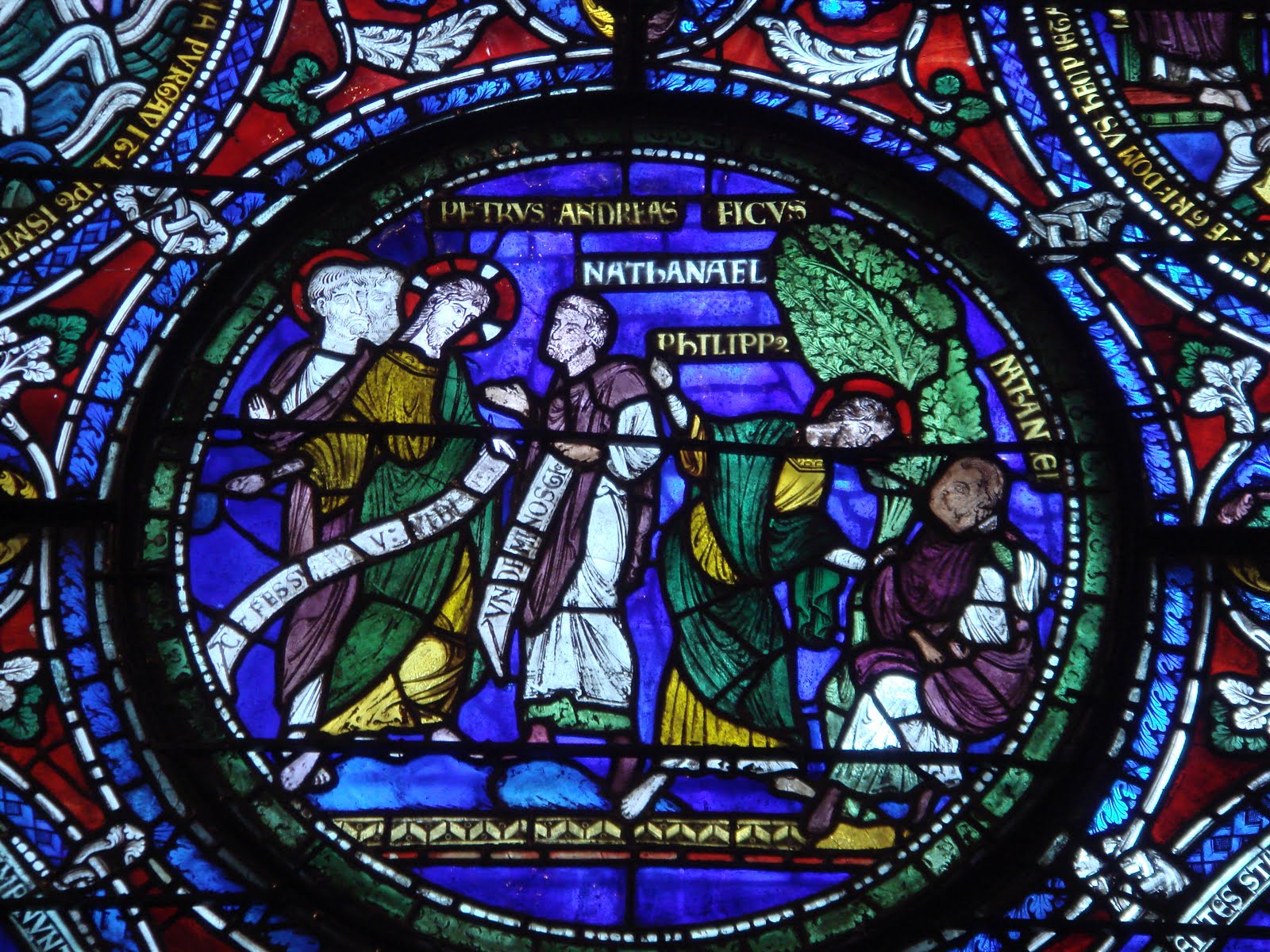
Finding Philip, he said to him, “Follow me.” (John 1:43)
Well, where are we going?
Oh, I never tell people that,
It’s all a surprise:
The beauty and danger of the ravines and crevasses
The glory of the mountain tops
The valley of the shadow of death
The still waters, the spacious places.
You will just have to come and see.
You mean you want me to follow you,
But refuse to tell where we are going?
Yes.
                                 * * *
Hmm. I kind of like him.
No, well, I really like him
He has kind eyes.
I want to be with him.
What gets me is this: he is just so kind.
And that sense of barely suppressed joy:
He’s alive, really alive.
He seems to be standing on tiptoes,
ready to take flight
into some adventure.
I want to follow him.
And my old life,
well, it’s no great shakes.
Nets, fish, stink.
Even if I became a partner,
bought everyone else out,
and retired to a mansion in Galilee,
Well, so what?
So what?
I would be an old rich man,
sitting under my wine and fig trees,
remembering him who called me into adventure
and whom I refused.
He looks like a man who knows what he is doing.
And when he looks at me,
I can tell he cares for me.
Do I trust him?
How can anyone look at him and
NOT trust him.
I think of the options:
Let this man, who is all life, all flame, all light,
his eyes full of merriment,
go on his way without me?
I cannot do it.
The thought makes me too sad.
And then, the other option:
Following him,
though I do not know where he is going?
Oh, that’s the exciting option.
                             * * *
Come follow me, you say
But where are you going? What are we going to do?
Shouldn’t I know that before I set out to follow you?
I ask, once again. No harm in asking, as they say.
I am enough.
I will satisfy your soul’s needs as in a sun-scorched land.
You will be like a well-watered garden, like a spring which never fails.
Those who pass up the chance to follow me
For their stuff, their status, their old identity
For safety or security,
are simply not worthy of me.
You do not know where I am going,
but that is okay.
All you need to do is to put one foot in front of the other,
and follow me step by step.
My yoke is easy.
There will be glad times,
and sad times,
but this will never change:
Following me will always be
simply putting one step in front of the other.

Filed Under: random

Friend, Come Higher

By Anita Mathias

Peter, from Franco Zeffirelli’s Jesus of Nazareth
  
“You are Simon son of John. You will be called Cephas” (which, when translated, is Peter, the rock). John 1:42

Yes, I do know you.
I see you
and know you better than you know yourself.
I know you are friable.
I know you can crumble,
though these things may surprise you.
But your strength shall emerge from the weakness
you shall thoroughly conquer,
and thoroughly renounce.
I am calling you
from being Peter, the impulsive,
to becoming Peter who unshakeably loves me,
who is built rocklike on the bedrock of me.
I am calling you from being a fisherman
to being a fisher of men.
Following my will
will always lead you upward and onward
to a higher place.
Friend, come higher.
Come follow me.
0

Filed Under: The Gospel of John

  • « Previous Page
  • 1
  • …
  • 106
  • 107
  • 108
  • 109
  • 110
  • …
  • 279
  • Next Page »

Sign Up and Get a Free eBook!

Sign up to be emailed my blog posts (one a week) and get the ebook of "Holy Ground," my account of working with Mother Teresa.

Join 536 Other Readers

My Books

Rosaries, Reading, Secrets: A Catholic Childhood in India

Rosaries, Reading Secrets, B&N
USA

UK

Wandering Between Two Worlds: Essays on Faith and Art

Wandering Between Two Worlds
USA

UK

Francesco, Artist of Florence: The Man Who Gave Too Much

Francesco, Artist of Florence
US

UK

The Story of Dirk Willems

The Story of Dirk Willems
US

UK

My Latest Meditation

Anita Mathias: About Me

Anita Mathias

Read my blog on Facebook

Follow me on Twitter

Follow @anitamathias1

Recent Posts

  • At the Cross, God Forgives Us Completely
  • Using God’s Gift of Our Talents: A Path to Joy and Abundance
  • The Kingdom of God is Here Already, Yet Not Yet Here
  • All Those Who Exalt Themselves Will Be Humbled & the Humble Will Be Exalted
  • Christ’s Great Golden Triad to Guide Our Actions and Decisions
  • How Jesus Dealt With Hostility and Enemies
  • Do Not Be Afraid, but Do Be Prudent
  • For Scoundrels, Scallywags, and Rascals—Christ Came
  • How to Lead an Extremely Significant Life
  • Don’t Walk Away From Jesus, but if You Do, He Still Looks at You and Loves You
Premier Digital Awards 2015 - Finalist - Blogger of the year
Runner Up Christian Media Awards 2014 - Tweeter of the year

Categories

What I’m Reading


Wolf Hall
Hilary Mantel

Wolf Hall --  Amazon.com
Amazon.com

Amazon.co.uk

Silence and Honey Cakes:
The Wisdom Of The Desert
Rowan Williams

Silence and Honey Cakes --  Amazon.com
Amazon.com

Amazon.co.uk

The Long Loneliness:
The Autobiography of the Legendary Catholic Social Activist
Dorothy Day

The Long Loneliness --  Amazon.com
Amazon.com

Amazon.co.uk

Country Girl
Edna O'Brien

Country Girl  - Amazon.com
Amazon.com

Amazon.co.uk

Archive by month

My Latest Five Podcast Meditations

INSTAGRAM

anita.mathias

My memoir: Rosaries, Reading, Secrets https://amzn.to/42xgL9t
Oxford, England. Writer, memoirist, podcaster, blogger, Biblical meditation teacher, mum

Well, hello friends! Breaking radio silence to let Well, hello friends! Breaking radio silence to let you know that I have taped a meditation for you on Christ’s famous Parable of the Talents in Matthew 25. https://anitamathias.com/2025/11/05/using-gods-gift-of-our-talents-a-path-to-joy-and-abundance/
Here you are, click the play button in the blog post for a brief meditation, and some moments of peace, and, perhaps, inspiration in your day 🙂
Hi Friends, I have taped a meditation; do listen a Hi Friends, I have taped a meditation; do listen at this link: https://anitamathias.com/2025/04/08/the-kingdom-of-god-is-here-already-yet-not-yet-here-2/
It’s on the Kingdom of God, of which Christ so often spoke, which is here already—a mysterious, shimmering internal palace in which, in lightning flashes, we experience peace and joy, and yet, of course, not yet fully here. We sense the rainbowed presence of Christ in the song which pulses through creation. Christ strolls into our rooms with his wisdom and guidance, and things change. Our prayers are answered; we are healed; our hearts are strangely warmed. Sometimes.
And yet, we also experience evil within & all around us. Our own sin which can shatter our peace and the trajectory of our lives. And the sins of the world—its greed, dishonesty and environmental destruction.
But in this broken world, we still experience the glory of creation; “coincidences” which accelerate once we start praying, and shalom which envelops us like sudden sunshine. The portals into this Kingdom include repentance, gratitude, meditative breathing, and absolute surrender.
The Kingdom of God is here already. We can experience its beauty, peace and joy today through the presence of the Holy Spirit. But yet, since, in the Apostle Paul’s words, we do not struggle only “against flesh and blood, but against the rulers, against the unseen powers of this dark world and against the spiritual forces of evil,” its fullness still lingers…
Our daughter Zoe was ordained into the Church of E Our daughter Zoe was ordained into the Church of England in June. I have been on a social media break… but … better late than never. Enjoy!
First picture has my sister, Shalini, who kindly flew in from the US. Our lovely cousins Anthony and Sarah flank Zoe in the next picture.
The Bishop of London, Sarah Mullaly, ordained Zoe. You can see her praying that Zoe will be filled with the Holy Spirit!!
And here’s a meditation I’ve recorded, which you might enjoy. The link is also in my profile
https://anitamathias.com/2024/11/07/all-those-who-exalt-themselves-will-be-humbled-the-humble-will-be-exalted/
I have taped a meditation on Jesus statement in Ma I have taped a meditation on Jesus statement in Matthew 23, “For those who exalt themselves will be humbled, and those who humble themselves will be exalted.”
Do listen here. https://anitamathias.com/2024/11/07/all-those-who-exalt-themselves-will-be-humbled-the-humble-will-be-exalted/
Link also in bio.
And so, Jesus states a law of life. Those who broadcast their amazingness will be humbled, since God dislikes—scorns that, as much as people do.  For to trumpet our success, wealth, brilliance, giftedness or popularity is to get distracted from our life’s purpose into worthless activity. Those who love power, who are sure they know best, and who must be the best, will eventually be humbled by God and life. For their focus has shifted from loving God, doing good work, and being a blessing to their family, friends, and the world towards impressing others, being enviable, perhaps famous. These things are houses built on sand, which will crumble when hammered by the waves of old age, infirmity or adversity. 
God resists the proud, Scripture tells us—those who crave the admiration and power which is His alone. So how do we resist pride? We slow down, so that we realise (and repent) when sheer pride sparks our allergies to people, our enmities, our determination to have our own way, or our grandiose ego-driven goals, and ambitions. Once we stop chasing limelight, a great quietness steals over our lives. We no longer need the drug of continual achievement, or to share images of glittering travel, parties, prizes or friends. We just enjoy them quietly. My life is for itself & not for a spectacle, Emerson wrote. And, as Jesus advises, we quit sharp-elbowing ourselves to sit with the shiniest people, but are content to hang out with ordinary people; and then, as Jesus said, we will inevitably, eventually, be summoned higher to the sparkling conversation we craved. 
One day, every knee will bow before the gentle lamb who was slain, now seated on the throne. We will all be silent before him. Let us live gently then, our eyes on Christ, continually asking for his power, his Spirit, and his direction, moving, dancing, in the direction that we sense him move.
Link to new podcast in Bio https://anitamathias.co Link to new podcast in Bio https://anitamathias.com/2024/02/20/how-jesus-dealt-with-hostility-and-enemies/
3 days before his death, Jesus rampages through the commercialised temple, overturning the tables of moneychangers. Who gave you the authority to do these things? his outraged adversaries ask. And Jesus shows us how to answer hostile questions. Slow down. Breathe. Quick arrow prayers!
Your enemies have no power over your life that your Father has not permitted them. Ask your Father for wisdom, remembering: Questions do not need to be answered. Are these questioners worthy of the treasures of your heart? Or would that be feeding pearls to hungry pigs, who might instead devour you?
Questions can contain pitfalls, traps, nooses. Jesus directly answered just three of the 183 questions he was asked, refusing to answer some; answering others with a good question.
But how do we get the inner calm and wisdom to recognise
and sidestep entrapping questions? Long before the day of
testing, practice slow, easy breathing, and tune in to the frequency of the Father. There’s no record of Jesus running, rushing, getting stressed, or lacking peace. He never spoke on his own, he told us, without checking in with the Father. So, no foolish, ill-judged statements. Breathing in the wisdom of the Father beside and within him, he, unintimidated, traps the trappers.
Wisdom begins with training ourselves to slow down and ask
the Father for guidance. Then our calm minds, made perceptive, will help us recognise danger and trick questions, even those coated in flattery, and sidestep them or refuse to answer.
We practice tuning in to heavenly wisdom by practising–asking God questions, and then listening for his answers about the best way to do simple things…organise a home or write. Then, we build upwards, asking for wisdom in more complex things.
Listening for the voice of God before we speak, and asking for a filling of the Spirit, which Jesus calls streams of living water within us, will give us wisdom to know what to say, which, frequently, is nothing at all. It will quieten us with the silence of God, which sings through the world, through sun and stars, sky and flowers.
Especially for @ samheckt Some very imperfect pi Especially for @ samheckt 
Some very imperfect pictures of my labradoodle Merry, and golden retriever Pippi.
And since, I’m on social media, if you are the meditating type, here’s a scriptural meditation on not being afraid, while being prudent. https://anitamathias.com/2024/01/03/do-not-be-afraid-but-do-be-prudent/
A new podcast. Link in bio https://anitamathias.c A new podcast. Link in bio
https://anitamathias.com/2024/01/03/do-not-be-afraid-but-do-be-prudent/
Do Not Be Afraid, but Do Be Prudent
“Do not be afraid,” a dream-angel tells Joseph, to marry Mary, who’s pregnant, though a virgin, for in our magical, God-invaded world, the Spirit has placed God in her. Call the baby Jesus, or The Lord saves, for he will drag people free from the chokehold of their sins.
And Joseph is not afraid. And the angel was right, for a star rose, signalling a new King of the Jews. Astrologers followed it, threatening King Herod, whose chief priests recounted Micah’s 600-year-old prophecy: the Messiah would be born in Bethlehem, as Jesus had just been, while his parents from Nazareth registered for Augustus Caesar’s census of the entire Roman world. 
The Magi worshipped the baby, offering gold. And shepherds came, told by an angel of joy: that the Messiah, a saviour from all that oppresses, had just been born.
Then, suddenly, the dream-angel warned: Flee with the child to Egypt. For Herod plans to kill this baby, forever-King.
Do not be afraid, but still flee? Become a refugee? But lightning-bolt coincidences verified the angel’s first words: The magi with gold for the flight. Shepherds
telling of angels singing of coming inner peace. Joseph flees.
What’s the difference between fear and prudence? Fear is being frozen or panicked by imaginary what-ifs. It tenses our bodies; strains health, sleep and relationships; makes us stingy with ourselves & others; leads to overwork, & time wasted doing pointless things for fear of people’s opinions.
Prudence is wisdom-using our experience & spiritual discernment as we battle the demonic forces of this dark world, in Paul’s phrase.It’s fighting with divinely powerful weapons: truth, righteousness, faith, Scripture & prayer, while surrendering our thoughts to Christ. 
So let’s act prudently, wisely & bravely, silencing fear, while remaining alert to God’s guidance, delivered through inner peace or intuitions of danger and wrongness, our spiritual senses tuned to the Spirit’s “No,” his “Slow,” his “Go,” as cautious as a serpent, protected, while being as gentle as a lamb among wolves.
Link to post with podcast link in Bio or https://a Link to post with podcast link in Bio or https://anitamathias.com/2023/09/22/dont-walk-away-from-jesus-but-if-you-do-he-still-looks-at-you-and-loves-you/
Jesus came from a Kingdom of voluntary gentleness, in which
Christ, the Lion of Judah, stands at the centre of the throne in the guise of a lamb, looking as if it had been slain. No wonder his disciples struggled with his counter-cultural values. Oh, and we too!
The mother of the Apostles James and John, asks Jesus for a favour—that once He became King, her sons got the most important, prestigious seats at court, on his right and left. And the other ten, who would have liked the fame, glory, power,limelight and honour themselves are indignant and threatened.
Oh-oh, Jesus says. Who gets five talents, who gets one,
who gets great wealth and success, who doesn’t–that the
Father controls. Don’t waste your one precious and fleeting
life seeking to lord it over others or boss them around.
But, in his wry kindness, he offers the ambitious twelve
and us something better than the second or third place.
He tells us how to actually be the most important person to
others at work, in our friend group, social circle, or church:Use your talents, gifts, and energy to bless others.
And we instinctively know Jesus is right. The greatest people in our lives are the kind people who invested in us, guided us and whose wise, radiant words are engraved on our hearts.
Wanting to sit with the cleverest, most successful, most famous people is the path of restlessness and discontent. The competition is vast. But seek to see people, to listen intently, to be kind, to empathise, and doors fling wide open for you, you rare thing!
The greatest person is the one who serves, Jesus says. Serves by using the one, two, or five talents God has given us to bless others, by finding a place where our deep gladness and the world’s deep hunger meet. By writing which is a blessing, hospitality, walking with a sad friend, tidying a house.
And that is the only greatness worth having. That you yourself,your life and your work are a blessing to others. That the love and wisdom God pours into you lives in people’s hearts and minds, a blessing
https://anitamathias.com/.../dont-walk-away-from-j https://anitamathias.com/.../dont-walk-away-from-jesus.../
Sharing this podcast I recorded last week. LINK IN BIO
So Jesus makes a beautiful offer to the earnest, moral young man who came to him, seeking a spiritual life. Remarkably, the young man claims that he has kept all the commandments from his youth, including the command to love one’s neighbour as oneself, a statement Jesus does not challenge.
The challenge Jesus does offers him, however, the man cannot accept—to sell his vast possessions, give the money to the poor, and follow Jesus encumbered.
He leaves, grieving, and Jesus looks at him, loves him, and famously observes that it’s easier for a camel to squeeze through the eye of a needle than for a rich person to live in the world of wonders which is living under Christ’s kingship, guidance and protection. 
He reassures his dismayed disciples, however, that with God even the treasure-burdened can squeeze into God’s kingdom, “for with God, all things are possible.”
Following him would quite literally mean walking into a world of daily wonders, and immensely rich conversation, walking through Israel, Lebanon, Syria, and Jordan, quite impossible to do with suitcases and backpacks laden with treasure. 
For what would we reject God’s specific, internally heard whisper or directive, a micro-call? That is the idol which currently grips and possesses us. 
Not all of us have great riches, nor is money everyone’s greatest temptation—it can be success, fame, universal esteem, you name it…
But, since with God all things are possible, even those who waver in their pursuit of God can still experience him in fits and snatches, find our spirits singing on a walk or during worship in church, or find our hearts strangely warmed by Scripture, and, sometimes, even “see” Christ stand before us. 
For Christ looks at us, Christ loves us, and says, “With God, all things are possible,” even we, the flawed, entering his beautiful Kingdom.
Follow on Instagram

© 2026 Dreaming Beneath the Spires · All Rights Reserved. · Cookie Policy · Privacy Policy