Anita Mathias: Dreaming Beneath the Spires

Anita Mathias's Blog on Faith and Art

  • Home
  • My Books
  • Meditations
  • Essays
  • Contact
  • About Me

Archives for September 2011

A Guest Post by Jan Sassenberg: The Meek Shall Inherit the Earth

By Anita Mathias

I love this post in which my friend, Jan Sassenberg grapples with the statement that the meek shall inherit the earth.

Jan and Karoline Sassenberg, who were born in Germany, have been serving for the last three years with WORD MADE FLESH in Freetown, Sierra Leone.

Find out more at www.wordmadeflesh.org or email thesassenbergsATyahoo.co.uk.

Jan and Karoline Sassenberg


Blessed are the Meek and the Great Commission

As a teenager, I was scared of the Beatitudes. Brought up in a conservative Free Evangelical Church, it didn’t make sense to me that Christ’s longest and best recorded sermon opened with words about the poor, the meek and the persecuted. Why not have the most important come first? Why not start with: “Surrender to me, Jesus, and you shall be saved!” Was Jesus perhaps more political than my pastors and teachers wanted me to believe? Too scared of becoming “a liberal” and of watering down the gospel I did not dare following this uncomfortable train of thought.


By now, 20 years later, without abandoning my love and complete trust in God’s precious word, I am not scared of liberals anymore. I sometimes rather enjoy looking at our faith from their fresh perspective.

Now, I can see the Beatitudes inspiring South American church leaders to instigate peaceful revolutions against dictators and drug cartels. I am humbled when seeing how liberation theology has given a voice to the voiceless and oppressed.

Now, I live in Sierra Leone, West Africa, as member of Word Made Flesh, a community that is dedicated to serving Jesus among the poorest of the poor of this world. We are reaching out into the slums and favelas of the booming mega cities in the majority world, or as I prefer to call it, the oppressed world. We want to be Jesus’ hands and feet, touching the untouchables, protecting the orphan children, clothing the naked, feeding the hungry, comforting the broken, sheltering the homeless.

Nevertheless, I still find myself puzzled over Jesus’ radical claim. What is it that Christ praises about the attitude of meekness? How can he promise the meek to inherit the earth? Does this reflect reality in a world ruled by social injustice, cruelty, and the survival of the most brutal?


Matthew’s third Beatitude is particularly uncomfortable as it is the only one with the promise of a reward in this world rather than in heaven. All other Beatitudes could be interpreted as finding their fulfillment solely in the after-world: being comforted, hunger being stilled, shown mercy, seeing God, being called sons of God and receiving the kingdom of heaven.

With the blessing of the meek, however, you need to bend the text far to say that “inheriting the earth” simply means inheriting the Christian’s promised land, our eternal home in heaven. I want to believe that this blessing as much as all of them have direct relevance to our identity in Christ now, on this side of the curtain. We know that the promised kingdom of Christ has already started to appear. We believe that we are not just having to wait it out until we reach the other side.

The word “meek” implies peacefulness although it does not only mean the act of peacemaking. The peacemakers receive their own promise later. With the word “meek” Jesus uses the same expression as in His self proclamation: “Come to me, all you who are weary for I am meek and humble in heart.” (Mat. 11:32) The NIV translates “… for I am gentle…”. Jesus is calling to himself the weary and a few verses later Jesus refers to himself as the one who does not quench the smoldering wick.


In Jesus’ own ministry, meekness and humilty are inseparably linked to ministering to the weak and broken. Jesus himself demonstrates his mild and humble approach when he kindly rebukes Martha’s busy bitterness towards her sister Mary. His loving gentleness is woven into his conversation with the Samaritan woman at the well. But despite the softness of his gloves, Jesus is never a conflict-avoiding harmony seeker. He corrects in love.

So how will such a meek disciple inherit the earth? As with all Beatitudes, Jesus does not come up with new ideas but refers here to the Old Testament. Psalm 37:11 says: “The Meek will inherit the land.” From the patriarchs to Jesus’ day, the Israelites had been anticipating the fulfillment of this promise. Becoming again a sovereign independent nation was the ultimate Jewish dream.


But now that Jesus, who said he did not come to abandon the law but to fulfill it, announces his own mission, he goes way beyond that. He promises the whole earth but he does not refer to political power. Jesus speaks here of the new worldwide “Kingdom of God“. We see this wider perspective throughout all his teaching. Asked about taxes Jesus says, “Give to Caesar, what belongs to Caesar and give God what belongs to God.” He refuses to be made king. And nearly all his parables are starting with the phrase: “The kingdom of God is like…” (a mustard seed etc…) All Jesus cares about is to birth this kingdom. Jesus promises “the earth” because it is His declared intention to expand his father’s Kingdom to the very last corner of this planet.

So, how does meekness empower us to reach this world for Christ? Is global mission a question of converting souls, large stadium crusades, and efficient strategies?


Are we in our churches more interested in the message than the recipient? How often do we in our churches and missions run our programmes by means of superior knowledge, skills, finances and powers? And how much do we really achieve with that? Jesus invites us back to caring for the one in front of us. Investing our time, resources and compassion in the “hopeless cases”.

In our community in Freetown, Sierra Leone, we find ourselves often overwhelmed by the vastness of the suffering around us. Children beaten mercilessly and dying needlessly, young women forced into prostitution, hopeless unemployed men turning to crimes and drugs. But in all this we find that God can use us best, when we turn away from programmes and let God use us in our weaknesses and limitations. Where He brings us low we are ready to truly meet our friends in the slum of Kroo Bay at their level. And when we gently touch wounds we see God touch and heal and restore.

Filed Under: random

Guest Post by Virginia Woodward : “The meek shall inherit the earth”

By Anita Mathias


Virginia Woodward has spent 12 years as a relief & development worker, primarily with World Vision International (Jerusalem-West Bank/Gaza, Kosovo, Tanzania). For the last five years, she has been helping her parents, Ginny and Dick Woodward, author of the Mini-Bible College (who will be writing tomorrow’s guest post).

Virginia blogs at Roses in the Rubble.
She suggests you might visit World Vision International WVI.

“Blessed are the meek, for they shall inherit the earth…”


Anita asked us to unpack this Beatitude theologically (exegeting & all that),but with all those heavy-duty theological types over there in Oxford, I’d like to focus on what it means to BE meek. Practically. What does meekness look like?

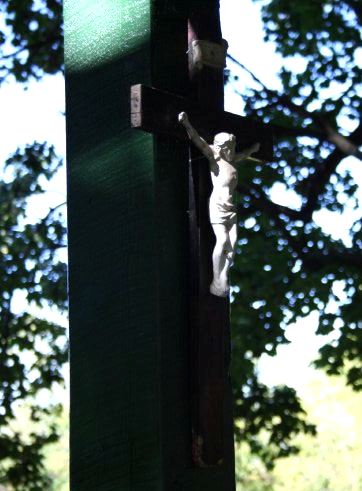
It’s simple. Look at a crucifix (I know, I know…Jesus is risen, but he DIED first.)
Jesus Christ on the Cross: meekness personified, exemplified…deified.
To be meek means to lay down our lives for others after laying down our very ‘selves’ – for GOD. This laying down of self is quite different from putting ourselves down. It’s very tricky walking the Heavenly meekness line, reaching the end of self, yet recognizing the beauty of our belovedness in God’s sight- letting our lives and gifts be all for the Glory of GOD’s Kingdom vs. the Kingdom of ME.
Meekness is in the ‘how’ – letting go and letting GOD work in and through us. If we are TRULY meek, we will love (I Corinthians 13 style) with a love that reaches even our enemies. We won’t be so quick to condemn but will put ourselves in others’ shoes. We will be quick to forgive (although it’s still quite hard!) Meekness makes the hard stuff possible by letting GOD dish out the grace-filled-means that makes what seems impossible,possible.
Meekness and mercy go hand in hand. Meek folks are usually on-their-knees Mercy groupies, recognizing their need for God’s mercy…and the need to BE MERCY in this whacked-out-whack-everyone-to-get-ahead world.
Back to the crucifixion. See Mary standing at the foot of the cross. Did she flashback through images of angels, shepherds, three kings, ministry & miracles? Her son, God’s son, hangs crucified. Yet she stands: humble in meekness to maybe not understand, but in meek persevering faith to STAND.
Being meek does not mean being a doormat. It means courageously opening the doors of our hearts, minds and spirits to let God in …and then… again and again.
Lookat the cross. Really look at it.
“Blessed are the Meek, for they shall be like Jesus.”


Filed Under: random

31 Days to Finding your Blogging Mojo by Bryan Allain

By Anita Mathias


I slowly worked my way through some of Darren Rowse’s encyclopedic ebook

http://www.problogger.net/31-days-to-building-a-better-blog/ last month. It’s freely available online, though I bought the ebook, so I could read bits when offline, i.e. on holiday–well, until my laptop got nicked.

I found it so helpful that I volunteered to briefly review Bryan Allain’s 31 Days to Finding your Blogging Mojo.

.
Though I would recommend reading Darren’s ebook (which is hundreds of pages, including links) first, I think Bryan’s book might be useful to a beginner, or to someone who has lost her focus, stalled, whose blog is not growing, or who is no longer sure why she is doing this silly thing in the first place. It’s a nice “get back to basics, and start afresh” kind of book.

Bryan has useful chapters and lots of good ideas on the philosophy of blogging, on discovering content, and on finding and keeping readers. He’s good at helping you see your blog with fresh eyes. I have worked through a few days, and will work through the whole book–once I have got through the Rowse one.

If one has decided to blog, it’s worth making sure one does it well–writing (mostly) good posts and finding an audience so that your blog is a growing, thriving, satisfying one.

Both these books will help you in this enterprise.

Blogging is a rapidly developing art form, and part of its pleasure is that there are no rules. Some blogs are conversational, with lots of comments, but the posts won’t be worth reading a year later. Some, like John Piper’s or Ann Voskamp’s are more magisterial, carefully-thought out, well-written. These have turned off comments, for the most part, and the posts have the evidence of time spent on them, and will be worth reading five years hence.

So one needs to develop one’s blogging philosophy. Write prolifically, but stuff which has little lasting value? Or write less, but things which you are proud of, and which can be re-posted a year later, and still be a blessing to people?

Bryan’s book sets out his philosophy of blogging. I personally did not agree with several chapters, since my own philosophy is different, but read it, and develop your own philosophy, which suits your time, energy, talents, values and goals.

Thank you, Bryan for the preview.

Filed Under: random

The Meek Shall Inherit the Earth: A Guest Post by Julian Clarke

By Anita Mathias


Today’s lovely guest post is by Julian Clarke, a Husband – Father of 4 – Mission-minded Marketeer and Musician–Volunteer and supporter of the most wonderful organisation in the world: Viva – Together for Children http://www.viva.org/home.aspx—Sales Director of Caseco a company supplying opticians www.caseco.co.uk
Follow Julian on twitter http://twitter.com/julianclarke

Tune in tomorrow for a wonderful guest post from the remarkable Virginia Woodward, who worked as a relief and development worker with World Vision in Jerusalem and the West Bank, Kosovo and Tanzania

On Saturday, we’ll hear from her remarkable father, Dick Woodward, author of the brilliant Mini Bible College, and pastor emeritus of Williamsburg Community Chapel..


Julian Clarke

Jules’ Meek Speak

The first time I heard “The meek shall inherit theearth” it was sung, spliced between power-chords and drum fills, the likeof which I’d never heard before (for those who’re familiar with the Canadian band Rush, you’ll know what I mean).
As I was swung left and right in a coach climbing through the Alps (on a school skiing trip) the red Walkman introduced me to music that on reflection seemedto alter the trajectory of my adolescence. The ensuing period of my life, ironically, could be described more as care-less than care-free.
I went there, did that, bought the T-shirt and thankfully buried it with Christ just over a decade later. This was not however before being threshed by the words of 2 Timothy 3: 1-9. After I read the list it was safe to assumeI had a distinct lack of meekness.


As Luke Tarassenko expressedexpertly in a previous pondering, the Greek word “meek” does noteasily translate into English and does not mean “weak” as our culture would deem. Moreover it embodies a regard to the inner life, the attitudes ofthe heart, in a way that suggests strength in gentleness.
Jesus explains of Himself in Matthew 11v29 “Take my yoke upon you andlearn from me, for I am gentle and humble in heart, and you will find rest foryour souls.” That “gentle” is the same Greek word translated”meek” in Matthew 5. In the same measure that Jesus was gentle, Hewas also strong and powerful. He rebuked men, demons and the elements with authority;and finally endured the cross (over which he was so troubled he sweated blood) without faltering or being discouraged. (Isaiah 42: 4).
He pushed through fear. Now does that sound like our take on “meek”to you?
Thatstrength is difficult to comprehend but is present and grows in all who suffer and persevere, all who are oppressed and remain steadfast, all who cleave to Him who is close to the broken-hearted.
Forgive me, I can’t remember who said (when considering ministers regretfullycaught in sin that so easily entangles) “We can only go as far as our character runs deep.” For me meekness encompasses that quiet quality ofcharacter that embraces perseverance – sheer bull-headed single-minded perseverance that doesn’t shout about it or perform to the camera.
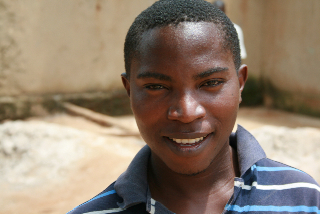
Brendan, from the Viva Project, Kampala, Uganda


This quality is exhibited by someone who madea great impression on me last month in Kampala, Uganda. As Brendan approaches his 21st birthday the orphanage he started (with one boy called Juan* rescued from the gutter, washed by a recent downpour’s run-off,shrivelling and showing a fever) now houses and cares for 70 children all withstories to tell of trauma and suffering like Juan (who incidentally is now one of the brightest in the local school).

Brendan explained that when people see abandoned children in Kampala they feararrest whilst the police corroborate the child’s background – so the children are left for the authorities or NGOs to identify and rescue – if they’re not too late.
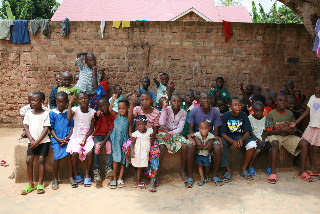
Brenden did it anyway. Not only that but every morning he opens the compound doors to another 120 children from the nearby community to share breakfast.
Some of the 120 children rescued by Brendan, aged 21. Kampala, Uganda

Stories from all over the world in projects like Brendan’s, part of the Viva Network, point to that elusive kingdom where suffering andlack seem to be doorways to beauty and abundant life.
I often say that in Uganda life seems more “alive” and I wonder why that is – the extremes of life there maybe. Or perhaps it’s because amongst the desperate ashes there is true beauty manifested by the hearts and actions of young men and women like Brendan giving up their lives to help the poor, marginalised and suffering (can you see the parallel with our Lord?)
Is that the nub of it? That meekness emanates from the cross of Christ and that the fruits and evidence of heaven can be glimpsed (inherited from his last will and testament) in the here and now. That inwardly we should aspire to meekness defined by the cross and the pull of that which we all struggle against with futility – to die to ourselves and to our preferred ways of doing life.
In summary – “Seek first the kingdom of God and all these things will beadded to you” Matthew 6v33
How will you seek it?


*The names of children and adults mentioned in this blog have been changed in accordance with Viva’s confidentiality and safety policies.

Filed Under: random

The Methodist Covenant Prayer

By Anita Mathias

I am no longer my own but yours.

Put me to what you will,
Rank me with whom you will;
put me to doing, put me to suffering;
let me be employed for you or laid aside for you,
exalted for you or brought low for you;
let me be full, let me be empty,
let me have all things, let me have nothing;
I freely and wholeheartedly yield all things to your pleasure and disposal.

And now, glorious and blessed God,
Father, Son and Holy Spirit,
you are mine and I am yours.
So be it.
And the covenant made on earth,

let it be ratified in heaven. Amen.


I love this beautiful prayer, and was trying to pray it this evening. Big fail!! I think if things don’t work out as I hoped, I can honestly pray it. However, in the middle of doing and striving, in the middle of embarking on a challenging and joyful enterprise, it’s hard to even contemplate the possibility of its failure, as the Methodist Covenant Prayer so clear-sightedly does. 

And I think it is fine to ask God to bless and prosper the work of your hands, with the understanding, of course, that you will still love him with all your heart if your plans and enterprises do not succeed.


Filed Under: random

Why, when you learn to trust God, you smile!

By Anita Mathias

Irene at 4
I have heard Jack Miller of World Harvest Mission tell this story, and Max Lucado too.

Tom walks down the street and meets Dick, who is grinning from ear to ear.
Tom, “What are you so happy about?”
Dick, “Well, I’ve met a man who promised to do all my worrying for me for $40,000 a year.”
Tom, “40,000 dollars a year! How are you going to get that?”
Dick, grinning, “That’s HIS worry!


Filed Under: random

The Meek Shall Inherit the Earth. A Guest Post by Dr. Kaaren Mathias

By Anita Mathias

Drs. Kaaren and Jeph Mathias, with their children, Shar, Shanti, Rohan and Jalori
Dr. Kaaren Mathias

Dr. Kaaren Mathias is the Programme Manger for Public Health Training for Emmanuel Hospital Association, an umbrella organization for 22 mission hospitals and 30 development projects in widespread parts of North and East India.  Kaaren is a medical graduate from Auckland School of Medicine. She has worked with NGOs in Cambodia and Colombia with Servants of Asia’s Poor and Doctors without Borders. Over the last few months, she has facilitated a workshop on gender equality, running a course for hospital administrators on social determinants of health and edited Safar magazine; she is now starting a large new project, a two year Fellowship in Community Health and Transformation for 15 to 20 community health project directors.

Kaaren is married to Dr. Jeph Mathias, consultant in Climate Change for EHA, is mum to Shar, Shanti, Rohan and Jalori (and is my sister-in-law!)


              THE MEEK SHALL INHERIT THE EARTH

The meek shall inherit the earth – words  I struggle with and wonder about (along with most of the Beatitudes.)   I desperately want them to be true despite the seemingly overwhelming evidence to the contrary –  and somehow they resonate deeply inside me as words relevant for here and now. Shall and inherit both are words that carry concepts of future tense. I really hope that the meek will inherit the earth in a glorious new heaven and earth, but I believe they can ring true today too – if keep my eyes peeled…

I think of a group of children I played with by a river ten years ago. They were leaping, splashing, flipping, jubilant, trying new tricks and scheming gleefully to dive bomb me. We were on the edge of a swathe of rainforest in the Amazon basin, just inside the Bolivian border. There were logging trucks plying across the ferry 2km downstream and there was no school, few resources and a deeply uncertain future as their families, land and homes teetered on the edge of vulnerability. Meek and powerless, yet the river was entirely for their joy and delight. They asked no questions about if they were allowed to swim there, when they had to get out or if they could float on downstream. The earth was all theirs.

I think of a friend of mine, Tej Ram who lives in a remote village in the foothills of the Indian Himalayas. We met as he accompanied his brother who was thin as a skeleton at 27 years, riddled with TB and carrying little hope of surviving. Tej Ram meekly served and supported his sick brother. Then he asked if he could help us as we ran busily around with clinic patients, our own children and training nutrition promoters. He turned out to be an excellent carpenter, cleaner, cook and driver.  Tej Ram belongs to a group classified as Dalit – the lowest caste in India’s highly stratified society. In our clinic and home we had to plead with him to sit and eat with us, and even then he kept his eyes averted. But when we trekked together back to his village he stood tall and strode along the high ridge, expansively indicating the forests, fields and deep valleys: “This is our place.”

I think of a neighbour I often sat with when we lived in a crowded, grimy corner of Delhi. Mariam lives alone. She is a widow. For a living she sells chewing tobacco, a few sweets and tiny packets of salty snacks. Her story of betrayal by relatives who took over her tiny flat when her husband died, her tale of setting up house on the pavement with planks and plastics and her meek existence now on alms and scant sales seems very far from inheriting the earth. Amazingly though, she is thankful for each day, she is quick to share a hot chai cooked over her charcoal burner and she tells proudly how many different people in the neighbourhood share their evening dhal and roti with her. So OK, it’s not inheriting the earth but sitting with Mariam I realise she is more joyful and grateful, more free from rancour and more able to embrace each new morning than many of my neighbours in New Zealand.

If I am honest there are also many, many examples of meek, vulnerable, excluded, poor, disabled, marginalised people I know who aren’t anywhere near inheriting the earth – so maybe that’s where becoming part of the answer to my prayers comes in – looking for places to build justice and bring God’s kingdom on earth….

Kaaren Mathias is a mother and community health doctor living and working in North India.


Do read yesterday’s post on the same theme by Luke Tarassenko.


What do you think? Have you had similar experiences and observations? Tell us your story.

Filed Under: random

“The Meek Will Inherit the Earth” Guest post by Luke Tarassenko

By Anita Mathias

This deep and thought-provoking guest post was written by Luke Tarassenko, a doctoral student in theology at the University of Oxford, and, until recently, a youth worker at St. Aldate’s Church, Oxford. Luke worked with Rolland and Heidi Baker’s Iris Ministries in Mozambique this summer.


We’d love to hear your comments and reactions. Tune in tomorrow for Dr. Kaaren Mathias, who has worked with Servants of Asia’s Poor, Doctors Without Borders etc.


“Blessed are the meek, for they will inherit the Earth.” -Matthew 5:5 by Luke Tarassenko

“Meek” is not a cool word. Rarely, if ever, will you hear someone pay the compliment “You’re really meek,” remark “That was so meek,” or simply exclaim “Wow, meek!”

 In fact, the word is in such infrequent use in our common parlance that it is hard to bring a definition readily to mind. The familiar phrase “gentle Jesus meek and mild” certainly rings a bell, but that is not much help in pinning down its precise meaning. The (Concise) Oxford English Dictionary can lend a hand here. Apparently, meek comes from the Old Norse “mjukr” which means “soft, gentle” and so in English comes across as 1. Humble and submissive and 2. Piously gentle in nature. Similarly, the Greek word PRAEIS, which English translations render “meek”, can equally well be rendered “humble” or “gentle”.

It now becomes a bit clearer why the word isn’t used so much. After all, who wants to be thought of as soft? Who wants to be gentle, humble and submissive? The world mocks such people. On the contrary, the world teaches us to be confident in ourselves, to look out for number one, to take what we can get and to make sure we don’t let people walk all over us. We are to stand up for our rights, and avoid people manipulating us or taking us for a ride at all costs by making sure we’re always in control and in charge of what’s going on. Jesus taught exactly the opposite attitude : he commended meekness. And he lived it too. Of course, he knew there was a right time for getting angry, for passionate confrontation and speaking out (like when he overturned the tables in the temple) but he also knew the value of meekness. He knew that there was actually a gargantuan power in gentleness, because exhibiting it requires faith in God, that he is in control, that he is able to transform humanly pathetic situations with resurrection glory.

Jesus was soft and gentle time and time again with people, even “sinners” who he knew were living wrongly before God (take Zacchaeus, the woman at the well, the woman caught in adultery, to name but a few). He was lovingly submissive to his Heavenly Father for his entire life, even to the point of death, when he submitted himself to the Roman authorities and allowed himself to be unfairly tried, horrifically beaten and executed on a cross.

Why on Earth should we copy him? Jesus says the meek are blessed, happy, fortunate. In the Book of Revelation, God promises us that he will one day recreate the Heavens and the Earth anew and that those who follow Jesus will have a place with him in it. Jesus was referring to this Renewal when he promised us that those who exhibit the quality of meekness will one day inherit the Earth. He himself came into a part of the inheritance of his submissive meekness when he rose again from the dead. The beatitudes are all about this “Great Reversal”, the topsy-turvy nature of the Kingdom of Heaven: If we lift ourselves up, God will bring us down; if we lower ourselves, God will lift us up.

For the great irony is that those who so un-meekly strive to dominate and possess the material things of this world will one day be robbed of even what little they really have, while those who out of humility submit themselves to Christ Jesus and consider all as loss compared with him will one day join him in the New Creation of Heaven and Earth. In this sense every Christian is someone who has to become meek and so will inherit the Earth. But, as again with the other beatitudes, the promise is not just one for a far-off time at the culmination of history but one which be fulfilled a billion times in miniature before that day comes. Just as we pray “thy Kingdom come on Earth as in Heaven”, there are instances of Heaven breaking into Earth here and now where we see the principle of the inheritance of the meek playing itself out.

Take for example Iris Ministries, a missionary organisation working in Mozambique. When their founders, Heidi and Rolland Baker, initially entered the country, the locals were extremely hostile to them and their white, Western religion. However, over time, as they witnessed the work they did and saw the fruit that it bore morally, socially and even economically, they were won over. Now the Mozambican Government actually GIVES Iris buildings to use as orphanages and development centers! The Bakers could have responded badly to the initial hostility they met with, Instead, they persisted in gently, humbly loving the people of Mozambique, in submission to them and to God. Through their meek and humble attitude, the Bakers have inherited portions of the Earth to use for God’s Kingdom.

So let us be meek. Let us be soft, gentle, humble and submissive in how we relate to God and how we relate to others, and take joy that such people will one day inherit the Earth.

For more information about NGO Iris Ministires, and to donate to them, please see www.irismin.org

Missionary Organization to Mozambique, Africa & the World, Sponsor a Child, School for Ministry |
www.irismin.org
Iris ministries is a missionary organization founded by Rolland and Heidi Baker in 1980, dedicated to revival in the Holy Spirit wherever the love and power of God are needed and appreciated, especially among the poor
 

Filed Under: random

  • « Previous Page
  • 1
  • 2
  • 3
  • 4
  • Next Page »

Sign Up and Get a Free eBook!

Sign up to be emailed my blog posts (one a week) and get the ebook of "Holy Ground," my account of working with Mother Teresa.

Join 536 Other Readers

My Books

Rosaries, Reading, Secrets: A Catholic Childhood in India

Rosaries, Reading Secrets, B&N
USA

UK

Wandering Between Two Worlds: Essays on Faith and Art

Wandering Between Two Worlds
USA

UK

Francesco, Artist of Florence: The Man Who Gave Too Much

Francesco, Artist of Florence
US

UK

The Story of Dirk Willems

The Story of Dirk Willems
US

UK

My Latest Meditation

Anita Mathias: About Me

Anita Mathias

Read my blog on Facebook

Follow me on Twitter

Follow @anitamathias1

Recent Posts

  • At the Cross, God Forgives Us Completely
  • Using God’s Gift of Our Talents: A Path to Joy and Abundance
  • The Kingdom of God is Here Already, Yet Not Yet Here
  • All Those Who Exalt Themselves Will Be Humbled & the Humble Will Be Exalted
  • Christ’s Great Golden Triad to Guide Our Actions and Decisions
  • How Jesus Dealt With Hostility and Enemies
  • Do Not Be Afraid, but Do Be Prudent
  • For Scoundrels, Scallywags, and Rascals—Christ Came
  • How to Lead an Extremely Significant Life
  • Don’t Walk Away From Jesus, but if You Do, He Still Looks at You and Loves You
Premier Digital Awards 2015 - Finalist - Blogger of the year
Runner Up Christian Media Awards 2014 - Tweeter of the year

Categories

What I’m Reading


Wolf Hall
Hilary Mantel

Wolf Hall --  Amazon.com
Amazon.com

Amazon.co.uk

Silence and Honey Cakes:
The Wisdom Of The Desert
Rowan Williams

Silence and Honey Cakes --  Amazon.com
Amazon.com

Amazon.co.uk

The Long Loneliness:
The Autobiography of the Legendary Catholic Social Activist
Dorothy Day

The Long Loneliness --  Amazon.com
Amazon.com

Amazon.co.uk

Country Girl
Edna O'Brien

Country Girl  - Amazon.com
Amazon.com

Amazon.co.uk

Archive by month

My Latest Five Podcast Meditations

INSTAGRAM

anita.mathias

My memoir: Rosaries, Reading, Secrets https://amzn.to/42xgL9t
Oxford, England. Writer, memoirist, podcaster, blogger, Biblical meditation teacher, mum

Looking at photos from our week in beautiful Sevil Looking at photos from our week in beautiful Seville and Cordoba over New Year with Irene, who had a week off.
And, ICYMI, here’s my latest meditation on the Gospel of Matthew… I’ve recorded it, should you want a few minutes of peace.
https://anitamathias.com/2026/04/29/gods-complete-forgiveness/
Hello Friends, I'm resumed recording my meditation Hello Friends, I'm resumed recording my meditations on the Gospel of Matthew. Do click on this link to listen. 
https://anitamathias.com/.../29/gods-complete-forgiveness/
Christ is the most influential figure in the history of the world, though his life ended in shame, humiliation and failure. But he so completely turned things round in his great reversal that the cross on which he died when all seemed hopeless is now the most common, and revered, symbol in history.
He emerged from and was anchored in Judaism. And as the sins of the people were laid on the scapegoat who was sent into the wilderness to perish, Christ died as the lamb of God voluntarily bearing the guilt of the wrongdoing of the whole world. He paid the price for our forgiveness with his life-blood--in accordance with the iron law of the physical and moral universe, of sowing and reaping, cause and effect. 
And so, God, who appeared as flames of fire to Moses, can now dwell within us, purifying us, whose hearts have darkness and shards of ice. 
And now that Christ was crucified, died, but rose again, His Spirit, no longer contained within his earthly body, is poured out like living water onto all humans, at our humble request. The Spirit pours the love of God into us; he reminds us of the words of Jesus and slowly writes Christ’s sweet law on our hearts. This transfusion of grace helps us do hard things we previously couldn’t do. Our dance with the Spirit gradually breaks the power of sin over us. It transforms us.
Now we, the forgiven, protected by the blood of Jesus poured out over us, and filled with His Spirit, who sings within us, Abba, Father, are adopted by God as his children in his joyful new covenant. We are cells grafted into the vine of our new family--Father, Son, Spirit—who now live in us as we live in them. As we choose by our thoughts and actions to continue living in the vine of Jesus, their energy pulsing through us makes us fruitful. And now, all our prayers which flow in the river of God’s good purposes are kindly heard. Waves of love and power flood from the cross! 
Thank you!
Well, hello friends! Breaking radio silence to let Well, hello friends! Breaking radio silence to let you know that I have taped a meditation for you on Christ’s famous Parable of the Talents in Matthew 25. https://anitamathias.com/2025/11/05/using-gods-gift-of-our-talents-a-path-to-joy-and-abundance/
Here you are, click the play button in the blog post for a brief meditation, and some moments of peace, and, perhaps, inspiration in your day 🙂
Hi Friends, I have taped a meditation; do listen a Hi Friends, I have taped a meditation; do listen at this link: https://anitamathias.com/2025/04/08/the-kingdom-of-god-is-here-already-yet-not-yet-here-2/
It’s on the Kingdom of God, of which Christ so often spoke, which is here already—a mysterious, shimmering internal palace in which, in lightning flashes, we experience peace and joy, and yet, of course, not yet fully here. We sense the rainbowed presence of Christ in the song which pulses through creation. Christ strolls into our rooms with his wisdom and guidance, and things change. Our prayers are answered; we are healed; our hearts are strangely warmed. Sometimes.
And yet, we also experience evil within & all around us. Our own sin which can shatter our peace and the trajectory of our lives. And the sins of the world—its greed, dishonesty and environmental destruction.
But in this broken world, we still experience the glory of creation; “coincidences” which accelerate once we start praying, and shalom which envelops us like sudden sunshine. The portals into this Kingdom include repentance, gratitude, meditative breathing, and absolute surrender.
The Kingdom of God is here already. We can experience its beauty, peace and joy today through the presence of the Holy Spirit. But yet, since, in the Apostle Paul’s words, we do not struggle only “against flesh and blood, but against the rulers, against the unseen powers of this dark world and against the spiritual forces of evil,” its fullness still lingers…
Our daughter Zoe was ordained into the Church of E Our daughter Zoe was ordained into the Church of England in June. I have been on a social media break… but … better late than never. Enjoy!
First picture has my sister, Shalini, who kindly flew in from the US. Our lovely cousins Anthony and Sarah flank Zoe in the next picture.
The Bishop of London, Sarah Mullaly, ordained Zoe. You can see her praying that Zoe will be filled with the Holy Spirit!!
And here’s a meditation I’ve recorded, which you might enjoy. The link is also in my profile
https://anitamathias.com/2024/11/07/all-those-who-exalt-themselves-will-be-humbled-the-humble-will-be-exalted/
I have taped a meditation on Jesus statement in Ma I have taped a meditation on Jesus statement in Matthew 23, “For those who exalt themselves will be humbled, and those who humble themselves will be exalted.”
Do listen here. https://anitamathias.com/2024/11/07/all-those-who-exalt-themselves-will-be-humbled-the-humble-will-be-exalted/
Link also in bio.
And so, Jesus states a law of life. Those who broadcast their amazingness will be humbled, since God dislikes—scorns that, as much as people do.  For to trumpet our success, wealth, brilliance, giftedness or popularity is to get distracted from our life’s purpose into worthless activity. Those who love power, who are sure they know best, and who must be the best, will eventually be humbled by God and life. For their focus has shifted from loving God, doing good work, and being a blessing to their family, friends, and the world towards impressing others, being enviable, perhaps famous. These things are houses built on sand, which will crumble when hammered by the waves of old age, infirmity or adversity. 
God resists the proud, Scripture tells us—those who crave the admiration and power which is His alone. So how do we resist pride? We slow down, so that we realise (and repent) when sheer pride sparks our allergies to people, our enmities, our determination to have our own way, or our grandiose ego-driven goals, and ambitions. Once we stop chasing limelight, a great quietness steals over our lives. We no longer need the drug of continual achievement, or to share images of glittering travel, parties, prizes or friends. We just enjoy them quietly. My life is for itself & not for a spectacle, Emerson wrote. And, as Jesus advises, we quit sharp-elbowing ourselves to sit with the shiniest people, but are content to hang out with ordinary people; and then, as Jesus said, we will inevitably, eventually, be summoned higher to the sparkling conversation we craved. 
One day, every knee will bow before the gentle lamb who was slain, now seated on the throne. We will all be silent before him. Let us live gently then, our eyes on Christ, continually asking for his power, his Spirit, and his direction, moving, dancing, in the direction that we sense him move.
Link to new podcast in Bio https://anitamathias.co Link to new podcast in Bio https://anitamathias.com/2024/02/20/how-jesus-dealt-with-hostility-and-enemies/
3 days before his death, Jesus rampages through the commercialised temple, overturning the tables of moneychangers. Who gave you the authority to do these things? his outraged adversaries ask. And Jesus shows us how to answer hostile questions. Slow down. Breathe. Quick arrow prayers!
Your enemies have no power over your life that your Father has not permitted them. Ask your Father for wisdom, remembering: Questions do not need to be answered. Are these questioners worthy of the treasures of your heart? Or would that be feeding pearls to hungry pigs, who might instead devour you?
Questions can contain pitfalls, traps, nooses. Jesus directly answered just three of the 183 questions he was asked, refusing to answer some; answering others with a good question.
But how do we get the inner calm and wisdom to recognise
and sidestep entrapping questions? Long before the day of
testing, practice slow, easy breathing, and tune in to the frequency of the Father. There’s no record of Jesus running, rushing, getting stressed, or lacking peace. He never spoke on his own, he told us, without checking in with the Father. So, no foolish, ill-judged statements. Breathing in the wisdom of the Father beside and within him, he, unintimidated, traps the trappers.
Wisdom begins with training ourselves to slow down and ask
the Father for guidance. Then our calm minds, made perceptive, will help us recognise danger and trick questions, even those coated in flattery, and sidestep them or refuse to answer.
We practice tuning in to heavenly wisdom by practising–asking God questions, and then listening for his answers about the best way to do simple things…organise a home or write. Then, we build upwards, asking for wisdom in more complex things.
Listening for the voice of God before we speak, and asking for a filling of the Spirit, which Jesus calls streams of living water within us, will give us wisdom to know what to say, which, frequently, is nothing at all. It will quieten us with the silence of God, which sings through the world, through sun and stars, sky and flowers.
Especially for @ samheckt Some very imperfect pi Especially for @ samheckt 
Some very imperfect pictures of my labradoodle Merry, and golden retriever Pippi.
And since, I’m on social media, if you are the meditating type, here’s a scriptural meditation on not being afraid, while being prudent. https://anitamathias.com/2024/01/03/do-not-be-afraid-but-do-be-prudent/
A new podcast. Link in bio https://anitamathias.c A new podcast. Link in bio
https://anitamathias.com/2024/01/03/do-not-be-afraid-but-do-be-prudent/
Do Not Be Afraid, but Do Be Prudent
“Do not be afraid,” a dream-angel tells Joseph, to marry Mary, who’s pregnant, though a virgin, for in our magical, God-invaded world, the Spirit has placed God in her. Call the baby Jesus, or The Lord saves, for he will drag people free from the chokehold of their sins.
And Joseph is not afraid. And the angel was right, for a star rose, signalling a new King of the Jews. Astrologers followed it, threatening King Herod, whose chief priests recounted Micah’s 600-year-old prophecy: the Messiah would be born in Bethlehem, as Jesus had just been, while his parents from Nazareth registered for Augustus Caesar’s census of the entire Roman world. 
The Magi worshipped the baby, offering gold. And shepherds came, told by an angel of joy: that the Messiah, a saviour from all that oppresses, had just been born.
Then, suddenly, the dream-angel warned: Flee with the child to Egypt. For Herod plans to kill this baby, forever-King.
Do not be afraid, but still flee? Become a refugee? But lightning-bolt coincidences verified the angel’s first words: The magi with gold for the flight. Shepherds
telling of angels singing of coming inner peace. Joseph flees.
What’s the difference between fear and prudence? Fear is being frozen or panicked by imaginary what-ifs. It tenses our bodies; strains health, sleep and relationships; makes us stingy with ourselves & others; leads to overwork, & time wasted doing pointless things for fear of people’s opinions.
Prudence is wisdom-using our experience & spiritual discernment as we battle the demonic forces of this dark world, in Paul’s phrase.It’s fighting with divinely powerful weapons: truth, righteousness, faith, Scripture & prayer, while surrendering our thoughts to Christ. 
So let’s act prudently, wisely & bravely, silencing fear, while remaining alert to God’s guidance, delivered through inner peace or intuitions of danger and wrongness, our spiritual senses tuned to the Spirit’s “No,” his “Slow,” his “Go,” as cautious as a serpent, protected, while being as gentle as a lamb among wolves.
Follow on Instagram

© 2026 Dreaming Beneath the Spires · All Rights Reserved. · Cookie Policy · Privacy Policy