Anita Mathias: Dreaming Beneath the Spires

Anita Mathias's Blog on Faith and Art

  • Home
  • My Books
  • Meditations
  • Essays
  • Contact
  • About Me

Archives for 2010

Beware of most Writing Workshop teachers. And get a deadline

By Anita Mathias

Here’s a good piece on why most advice from writing workshop leaders should be taken with caution. Caveat Emptor. And on how one’s learns best by deadlines. Even self-imposed deadlines like writing a blog post or two or three a day.

Forget those creative writing workshops. If you want to write, get threatened

And don’t ask me for advice. I’d prefer you to never achieve anything. Ever

  • Charlie Brooker
    • Charlie Brooker
    • The Guardian, Monday 16 August 2010
    • Article history
Cockroach
Words are like cockroaches – only once the lights are off do they feel free to scuttle around on the kitchen floor. Photograph: Alamy
One of the side-effects of having your work appear in a public forum such as this is that people often email me asking for advice on how to break into writing, presumably figuring that if a drooling gum-brain like me can scrape a living witlessly pawing at a keyboard, there’s hope for anyone.
I rarely respond; partly because there isn’t much advice I can give them (apart from “keep writing and someone might notice”), and partly because I suspect they’re actually seeking encouragement rather than practical guidance. And I’m a terrible cheerleader. I can’t egg you on. I just can’t. My heart’s not in it. To be brutally honest, I’d prefer you to never achieve anything, ever. What if you create a timeless work of art that benefits all humankind? I’m never going to do that – why should you have all the glory? It’s selfish of you to even try. Don’t you dare so much as start a blog. Seriously. Don’t.
Sometimes people go further, asking for advice on the writing process itself. Here I’m equally unhelpful. I’ve been writing for a living for around 15 years now and whatever method I practise remains a mystery. It’s random. Some days I’ll rapidly thump out an article in a steady daze, scarcely aware of my own breath. Other times it’s like slowly dragging individual letters of the alphabet from a mire of cold glue. The difference, I think, is the degree of self-awareness. When you’re consciously trying to write, the words just don’t come out. Every sentence is a creaking struggle, and staring out the window with a vague sense of desperation rapidly becomes a coping strategy. To function efficiently as a writer, 95% of your brain has to teleport off into nowhere, taking its neuroses with it, leaving the confident, playful 5% alone to operate the controls. To put it another way: words are like cockroaches; only once the lights are off do they feel free to scuttle around on the kitchen floor. I’m sure I could think of a more terrible analogy than that given another 100,000 years.
Anyway the trick (which I routinely fail to pull off) is to teleport yourself into that productive trance-state as quickly as possible, thereby minimising procrastination and maximising output. I’m insanely jealous of prolific writers, who must either murder their inner critic and float into a productive reverie with ease, or have been fortunate enough to be born with absolutely zero self-critical reflex to begin with.
As for me, I’m stuck in a loveless relationship with myself, the backseat driver who can’t stop tutting and nagging. There’s no escape from me’s relentless criticism. Me even knows what I’m thinking, and routinely has a pop at Me for that. “You’re worrying about your obsessive degree of self-criticism again,” whines Me. “How pathetically solipsistic.” And then it complains about its own bleating tone of voice and starts petulantly kicking the back of the seat, asking if we’re there yet.
Some days, when a deadline’s looming and my brain’s refusing to co-operate, I’m tempted to perform some kind of psychological cleansing ceremony. More than once I’ve wondered whether I should prepare for the writing process by wishing my inner critic inside a nearby object – a tennis ball, say – which I could then symbolically hurl out of the window before taking a seat at my desk.
It sounds like the kind of thing Paul McKenna would do. He’s massively successful and can probably levitate.
But before I can even get round to it, I’m plagued with doubts. How far should I throw it? How hard? If I toss 95% of my personality into the garden, do I have to go and retrieve it later? What if it actually works? What if I wind up utterly dependent, and need to perform this ritual every time I’m called upon to do anything – even something as simple as asking for change in a newsagent’s – and before long I’m zealously carting a trolley full of tennis balls everywhere I go, violently hurling one into the distance at the start of every sentence, breath, facial expression or bowel movement, and before I know it I’ve woken up screaming in my own filth in a hospital bed until the man comes in with the needle to make it all go away again? What if that happens?
Yes, what if? So the tennis ball remains untossed, and those typing fingers move unsurely and slowly until the deadline draws sufficiently near enough to become a palpable threat; a looming iceberg whose ominous proximity transforms whines of self-doubt into cries of abject panic. And eventually the page is filled.
So then. To everyone who has ever emailed to ask me for advice on writing, my answer is: get a deadline. That’s all you really need. Forget about luck. Don’t fret about talent. Just pay someone larger than you to kick your knees until they fold the wrong way if you don’t hand in 800 words by five o’clock. You’ll be amazed at what comes out.

Delicious Bookmark this on Delicious

Filed Under: Becoming a writer, books_blog

Irene’s new bedroom furniture–seriously cool!!

By Anita Mathias

I have just bought this from John Lewis for Irene’s room in preparation for high school next month–and a serious declutter of childhood, and its lovely toys. Isn’t it a seriously cool and imaginative, space-maximizing, and practical piece of furniture? Though I would have preferred it in dark wood. She chose it herself. I really wanted to buy her John Lewis’s camper van bed, desk and lounge set–and she thought it was cool, but thought her friends might not. Such a consideration would no longer cramp my style–but then, I am no longer 11!

The more I look at it, the more I like it. A desk, a dresser, and two bookshelves and a bed–in the space formerly utilized by her bed. Perennial problems of keeping Irene’s room organized on the way to be solved–I hope!
Larger View

Larger View
Room Setting

Room Setting
Close up view

Close up view
Showing with mattress

Showing with mattress
Close up view
Close up view


Filed Under: random

Allah and Jesus: Thoughts at Ramadan

By Anita Mathias

When we moved into our house in Garsington, Oxfordshire, four and a half years ago, we hired a local Muslim moving company. No complaints, they liked us, we liked them, we are accustomed to dealing with Muslims and understand them.

Oh, one oddity! Like clockwork, they stopped at certain times, put our boxes down, put their heads to the floor, their bums in the air, and prayed. When we hired them by the day, we were told that they would take prayer times off. And not move any alcohol or our massive Celtic cross. Fair enough. Then we needed odd bits of manual labour, and they worked for us at an hourly wage, on condition that we paid them for prayer breaks and lunch breaks. We did.
I thought there was something lovely about it–taking time off in the middle of a busy day, to prostrate yourself in a yogic posture and commune with the Almighty.
We are committed Christians. They cross-questioned us on how often we go to church, on how many times a day we pray. Once, in the sense of sitting down to pray, but many, many times, when it comes to asking for wisdom or guidance or help or protection, or saying, “thank you.” They were unimpressed!
Then I wondered if the God they were communing with, Allah, as they knew and understood him, was quite the same entity as the Jesus we knew and understood, a wonderful friend.
Jesus is unique among all Gods in being a fully rounded person. Who loves his friends, is hurt by them, betrayed by them. Who is hungry, thirsty, sleepy, exhausted. Who is confronted, mocked. Who feasts, weeps, is astonished. A wise story-teller. A magnetic teacher. Who faces our dilemmas with calm, with strength and wisdom.
But most of all, he is unique in his death. A most unlikely death for a God. He dies as an utter failure. Thereby redeeming failure and changing its meaning forever. He dies a shameful, humiliating, ignominious, excruciatingly painful death. The End. Apparently.
And from that, springs a second act of glory.
His death, as the historian H.G. Wells says, was the turning point of human history. More human beings define themselves by his name than by any other. It is the most common name of schools, colleges, hospitals, orphanages. More to the point, his counter-intuitive teaching of paradoxes changes lives and changes hearts 21 centuries later.
The more I think about it, it is so unlikely–this humble life, ending in shame and ignominy, becoming the most potent transformer of  history on a macro level, and individual lives and hearts on a microcosmic level–that it just has to be true. If it wasn’t true, it couldn’t, wouldn’t have survived with such potency. Though, perhaps this argument, like Christianity itself, is heart-logic, not head-logic.


Filed Under: random

A Message in a Bottle. Une Bouteille a la Mer.

By Anita Mathias


What an interesting story!

I found a message in a bottle

When a Frenchwoman wrote a love letter to her dead son, put it in a bottle and threw it into the sea, she never dreamed anyone would read it. But author Karen Liebreich did and, moved by the anonymous mother’s grief, set out to find her
  • Share on facebook (74)
  • Phil Daoust
  • The Guardian, Saturday 14 August 2010
  • Article history
Karen Liebreich
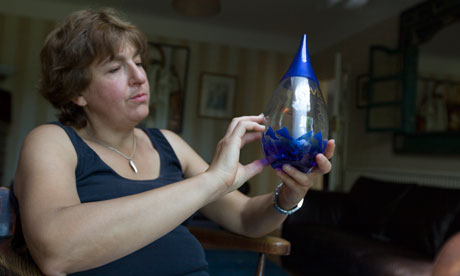
Karen Liebreich with the bottle washed up by the sea on a Kent beach. Photograph: Martin Argles for the Guardian
One spring day in 2002, a French woman whose name we may never know, stood on a cross-Channel ferry and threw a bundle of clothes into the sea. After it, went some lilies and a bottle in the shape of a teardrop. The clothes had belonged to her son, Maurice, who had died at the age of 13, and the bottle held her letter to the boy “that no wind … no storm … not even death could ever destroy”.
“Forgive me for being so angry at your disappearance,” the letter went. “I still think there’s been some mistake, and I keep waiting for God to fix it … Forgive me for not having known how to protect you from death. Forgive me for not having been able to find the words at that terrible moment when you slipped through my fingers … “
The bottle vanished, the ship docked, the mourner went home to get on with her life. She never dreamed the letter would reach shore, let alone that someone would read it.
Karen Liebreich, a London-based author, did just that a few weeks later. The bottle had washed up on a beach in Kent, where it caught the eye of her friend Sioux Peto, who was walking her dogs. Inside, Peto found a thin scroll tied with a ribbon and enclosing a lock of hair. The handwriting was in French and, as Liebreich is fluent in the language, Peto sent her the letter for translation.
This was tougher than it might have been, with the anonymous writer addressing now her son, now an imagined reader, and piling watery image upon watery image. “You can’t just skim it and understand it,” Liebreich says.
As far as she could tell, the boy had died early one summer, probably by drowning. “For a long time,” his mother wrote, “he travelled between two waters, between two lights, trying tirelessly to use up the strength in his outstretched arms. He submitted to the silence, the terrors and the cold … “
She had, of course, been devastated – “My life started when he was born, and I thought it was over when he left me” – and for a while Liebreich was afraid she might be reading a suicide note. But no, the woman was ready to move on. “While God gives me life,” she wrote, “I promise you to live it to the full, to savour each instant in richness and serenity. I know that we will find one another, when the time comes.”
As she translated, Liebreich found herself crying. “I’m not a weepy person,” she says, “but the letter was very beautiful and very moving.”
Liebreich couldn’t sleep that night. In the days that followed, she found herself becoming more protective of her own children – Sam, then 10, and Hannah, eight – even, perhaps, of her husband, who is a doctor. “When your children are young, you can get lost in all the banality,” she says. “The house is full of toys and laundry and stuff from school, and in the boredom of the domestic routine you forget how precious they are. Something like this reminds you how important they are.”
Still, that could have been the end of the affair. Liebreich might have dried her tears, regained her rhythm and only occasionally thought of the woman whose story had shaken her. Instead, she set out to find her. “I was plagued by unworthy emotions,” she explains in the book she subsequently wrote about the search. “I wanted to know how Maurice had died; I wanted to know what his mother was like; I wanted to know whether I could track the origin of an unsigned letter in a bottle. I wanted the writer to know that the bottle had been found on an English shore and that I had read her letter. I wanted to reassure myself that she was all right.”
Did the woman want to be found? Wouldn’t that just rake up all that pain again? “Sending a letter in a bottle invites a stranger to pick it up and read it,” Liebreich told herself. “I think the unknown mother wanted the tale of her love for her son, the knowledge of his death and her despair, to be known.”
Liebreich has experience as an investigator, having tracked down old Nazis for the BBC series Timewatch and a previous generation of paedophile priests for her book Fallen Order. The only things she knew for sure, however, were Maurice’s first name, the age at which he died, that he was his mother’s first son, and the name of one of her friends, Christine, described in the letter as “gentleness itself”. And she soon discovered that much of this knowledge was useless, with France recording deaths not in one central register but in 36,000 local ones. There was no hint of foul play, so no reason for the police to get involved.
Over the next few years, Liebreich consulted newspapers, bottle-makers, sailors, doctors, graphologists, psychologists, psychotherapists, secret servicemen, literature professors, forensic scientists, private detectives, even clairvoyants and tarot readers. “The letter would not leave me in peace,” Liebreich writes. “But each time I considered giving up I thought I would make one more effort – one more email, one more phone call, one more visit to the library. The answer might be round the next corner.”
Experts provided various explanations. The boy had indeed drowned, said one. Water was not involved, said another. He might have overdosed on ecstasy, said a third. The mother and child were close. Unhealthily close. Estranged. The letter had been thrown from a cliff. No, a boat. The woman was dead. No, she was a survivor. She was definitely a lesbian, unless of course she wasn’t.
When others weren’t feeding her red herrings, Liebreich was doing it herself. “The fact that the letter was so opaque meant that I went off on tangents,” she admits. It took her six months to realise that perhaps Maurice hadn’t drowned at all, and the letter’s “water”, “harbour”, “vessel” and so on were nothing but metaphors. It never occurred to her that his death “at the dawn of summer” might have referred to his age rather than the calendar.
After three years, Liebreich decided enough was enough. If she couldn’t find Maurice’s mother, she could at least write about the search. “If, somewhere, the letter-writer is alive,” her book concludes, “then perhaps this book can serve as a clumsy ‘letter-in-a-bottle’ reply … I wonder if she will receive my message.”
She did. In 2009, three years after The Letter in the Bottle came out in Britain, the nameless “she” got in touch to say she felt violated. As she put it, it was as though her story, her suffering, her very intimate being no longer belonged to her.
By then, the book had been published in French, to huge media coverage. “In Britain the story was seen as a failed quest,” Liebreich recalls. “In France it was an unsolved mystery.” Years before, she had struggled to interest the media; now she was worried that Maurice’s mother would be outed by a friend or neighbour. Instead, the mother contacted Liebreich via the psychologist Olivier Roussel, who runs the website unebouteillealamer.com – A Bottle in the Sea. She apparently saw him as one of the few sympathetic voices in the book. She might be willing to talk to Liebreich directly, but she needed time.
The author, who had no intention of upsetting her any more, gave her time. Readers wrote with tips for finding the woman or stories of their own losses. One Swiss man emailed that she should be ashamed of herself: she was hunting the mother like prey. Perhaps he was right, she thought.
The two women finally met a month later, in a nameless town in northern France. “She was very pretty, slim and elegant,” Liebreich writes in the new, updated version of her book, “with a delicate face and good cheekbones … Though she later told me she was 60, she looked much younger … After searching for so many years, I could not believe I was there, face to face with the author of the letter. And so we talked.”
Largely, it seems, about the many things Liebreich and her helpers had got wrong. Maurice had not drowned, but been knocked off his bicycle. He had died in 1981, 21 years before the letter was written, not just a few. The “dawn of summer”? “Just a lyrical expression.” The talk of rupture, alienation, conflicts? “I was never in conflict with my son at all.” The claim that they had lived together “almost as a couple”? “A shocking thing to say.” The lesbianism? She had had a good laugh over that – probably one of her few while reading the book. And the medium’s claim: “I don’t think you will ever find her … she is no longer alive.” “Well, I am alive and you have found me.”
One false trail was laid by the woman herself – but she has paid the price for that. The letter’s first draft had described Maurice as “the only person in the world (with my other sons) that I was born to love for ever”. Somehow she omitted that nod to Maurice’s three brothers while writing out the fair copy. It was not deliberate; it was not because she didn’t love them. “The reason she didn’t kill herself was the other children,” Liebreich says. “She is their mother as well.” It still took some explaining.
But what about Liebreich’s own belief that the writer wanted to be found? “It never occurred to me that anyone would find my letter in the bottle,” the woman explains in a postscript to the new edition. “I thought it would smash in the waves and the fragments of glass and paper would gently disperse through the oceans. I gave it to the sea, to the universe: it was perhaps my way of talking to God.”
Maurice’s mother, who Liebreich has promised never to name, seems to have forgiven her for reopening old wounds. “It was a terrible shock that it all came out,” says Liebreich. “But I think she felt it was done sensitively. That was a great relief.”
They have met again and may even be on the way to becoming friends. “We have found other things to talk about,” Liebreich says. “We email each other. I think there’s a friendship evolving that’s not linked totally to this book and the death of the child.”
“I still have the bottle,” she adds. “We don’t know what to do with it.”
The Letter in the Bottle is published by Atlantic Books, £7.99. To order a copy for £7.49 with free UK p&p go to guardian/bookshop or call 0330 333 6846

Delicious Bookmark this on Delicious

Filed Under: books_blog

Facebook Posts from mid-May

By Anita Mathias

Jake the Collie now thinks he’s Zoe. We are going through our list of house and garden chores with frequent summons to strong, practical helpful Zoe when the going gets tough. She, working on her Othello essay, has developed selective hearing. But Jake appears each time, happily wagging his tail!


Anita Mathias now has a freshly painted kitchen, painted by Roy. I so wanted to paint it lavender, like the kitchens I saw in Provence (yellow, bright blue…) but Roy said if it was lavender, I would have to do all the cooking as he wouldn’t step into it. “Haven’t you heard of feminism?” I asked him. “I want a lavender kitchen” “And you are going to Ireland in July, and will then want a green kitchen,” he growled. He won! White!


So one man, Nick Clegg, is essentially choosing the next Prime Minister of Great Britain. So much for the democratic process! It reminds me of 2000, when, after all the expense and hassle of an election, the Supreme Court essentially chose the next President of the United States.


Anita Mathias hosted a tea party today for 14 adults & 17 children, all of whom got on well & none of whom were scratched by rabbits, chased by horses, barked at by the dog, or slipped into ponds. The party motivated us to mow our grass, trim our shrubs, re-do our rock garden, paint our kitchen & walls, & get rid of 10 loitering boxes of stuff, none of which our guests would have noticed either way, but it’s good to have it done!


As I walked down the country lane outside my house, a cup of tea in hand, I saw a herd of cows, very attractive Guernseys, in our farmer-neighbour’s field. It was a beautiful bird-loud day. It could have been out of a Constable painting or a Dylan Thomas poem. Timeless England!


Apple tree in the garden covered with dazzling white blossoms, soon to be replaced by bright red apples. Thank you!


Gordon Brown’s future according to today’s Guardian. “He will resign as an MP – the modern fashion – and has sufficient international standing to get a big job, probably in tackling global poverty, the passion he acquired from the David Livingstone stories of his Presbyterian childhood.” I think that is so sweet and touching. I wish him well. Good luck and God bless, Gordon! You were a man of integrity!


Wonders never cease. Roy, who is too reserved & shy to get Facebook, has decided to have a blog (about what he reads, learns, and experiences, with lots of photos i.e. not too touchy-feely). After we all commented on the dearness of ROY having a blog, I offered him “Blogging for Dummies.” He refused, “My readers are not dummies.” Then slunk back to pick it up. I asked, “But you’ve decided you might be one?” Silence!


‎”Dave and Nick: extras from Four Weddings, only with executive authority over a nuclear-armed G8 power,” tweets James Kirkup.


Cameron, once asked what his favourite joke was said, “Nick Clegg.” He now says, “If we sometimes have to eat humble pie, and we sometimes have to eat our words, then I cannot think of a more excellent diet.” Amen and Amen!


The writer G.P. Taylor on Philip Pullman’s new book, “Pullman shouldn’t be a coward and should write a book about Mohammed on his birthday and see what happens!” Hilarious!


 ‎”He did not think that there was enough quiet in the world. To realise God you need silence. He loved spaces for silence, and places of silence. He encouraged the practice of retreats. He was an inspiring conductor of retreats. He thought of the religious communities as little havens of quiet scattered across society ...” Owen Chadwick on Michael Ramsey, 100th Archbishop of Canterbury


We watched “The Secret Life of Plants.” A shriveled seedpod waited for the rain to burst it open and release its seeds; fungi waited for the rain to release their myriad spores. And in our own lives, prayer releases that rain. When we do not pray, we settle into dry and barren hopelessness; we shrivel. Prayer is like rain to those seedpods, releasing hope into what we considered the intractable areas of our lives.


Can miracles happen today? Breakthroughs in creativity? In writing? In publishing? Financial miracles? Breakthroughs in health? I retain my faith in them, because you see, I am incredibly well-connected. I know a guy who can change 5 loaves to 5000; can help me walk on water, and change that water into wine. And he whispers to me, “Do not be afraid. Trust in my Father. Trust also in me.”

Filed Under: random

The Greek Rooms, Ashmolean, "I have gazed upon the face of Agamemnon"

By Anita Mathias

Roy and I spent the afternoon with Irene in the Ashmolean in the Greek rooms.

She can now spell Mediterranean, and rattle off the names of the 12 Olympian Gods.

Loved the jewellery, a lot like Indian jewellery, and still beautiful after 25 centuries.
Good replicas of Schliemann’s horde, including the famous mask of Agamemmon–“I have gazed upon the face of Agammemnon”–which we saw the original of in Athens.


Filed Under: random

La Cage Aux Folles

By Anita Mathias

I love French comedies, partly because so much is left unstated, relying on understated facial expressions.

We enjoyed watching La Cage Aux Folles, the old French comedy recently. It was tender and touching–the unbreakable bond between the Renato, the aging nightclub owner, and his star attraction and gay lover, the transvestite diva, Albin, and about the love between Renato, and his young, straight son who has just  got engaged to the daughter of France’s leading ultra-conservative politician.

She brings her parents to meet them, and the aging gays pretend to be models of respectability–with hilarious, and predictable conclusions.

But it turns out, the in-laws-to-be, like all holier than thou folk, have secrets of their own.

Okay, it’s campy, both sets of parents are so stereotypical that they are almost caricatures,  but it’s a fun film to laugh at on a Friday night, and what’s more, practise your French, while laughing.

Filed Under: random Tagged With: La Cage Aux Folles

In Which Irene’s Room is Like the Room of Requirement in Harry Potter

By Anita Mathias

Yesterday, Roy took on the the Herculean task of combatting the clutter in Irene’s room.

It is like the Room of Requirement in Harry Potter, Zoe says. Whatever we needed and missed is to be found there–under her bed!!

Filed Under: random

  • « Previous Page
  • 1
  • …
  • 19
  • 20
  • 21
  • 22
  • 23
  • …
  • 89
  • Next Page »

Sign Up and Get a Free eBook!

Sign up to be emailed my blog posts (one a week) and get the ebook of "Holy Ground," my account of working with Mother Teresa.

Join 536 Other Readers

My Books

Rosaries, Reading, Secrets: A Catholic Childhood in India

Rosaries, Reading Secrets, B&N
USA

UK

Wandering Between Two Worlds: Essays on Faith and Art

Wandering Between Two Worlds
USA

UK

Francesco, Artist of Florence: The Man Who Gave Too Much

Francesco, Artist of Florence
US

UK

The Story of Dirk Willems

The Story of Dirk Willems
US

UK

My Latest Meditation

Anita Mathias: About Me

Anita Mathias

Read my blog on Facebook

Follow me on Twitter

Follow @anitamathias1

Recent Posts

  • At the Cross, God Forgives Us Completely
  • Using God’s Gift of Our Talents: A Path to Joy and Abundance
  • The Kingdom of God is Here Already, Yet Not Yet Here
  • All Those Who Exalt Themselves Will Be Humbled & the Humble Will Be Exalted
  • Christ’s Great Golden Triad to Guide Our Actions and Decisions
  • How Jesus Dealt With Hostility and Enemies
  • Do Not Be Afraid, but Do Be Prudent
  • For Scoundrels, Scallywags, and Rascals—Christ Came
  • How to Lead an Extremely Significant Life
  • Don’t Walk Away From Jesus, but if You Do, He Still Looks at You and Loves You
Premier Digital Awards 2015 - Finalist - Blogger of the year
Runner Up Christian Media Awards 2014 - Tweeter of the year

Categories

What I’m Reading


Wolf Hall
Hilary Mantel

Wolf Hall --  Amazon.com
Amazon.com

Amazon.co.uk

Silence and Honey Cakes:
The Wisdom Of The Desert
Rowan Williams

Silence and Honey Cakes --  Amazon.com
Amazon.com

Amazon.co.uk

The Long Loneliness:
The Autobiography of the Legendary Catholic Social Activist
Dorothy Day

The Long Loneliness --  Amazon.com
Amazon.com

Amazon.co.uk

Country Girl
Edna O'Brien

Country Girl  - Amazon.com
Amazon.com

Amazon.co.uk

Archive by month

My Latest Five Podcast Meditations

INSTAGRAM

anita.mathias

My memoir: Rosaries, Reading, Secrets https://amzn.to/42xgL9t
Oxford, England. Writer, memoirist, podcaster, blogger, Biblical meditation teacher, mum

Looking at photos from our week in beautiful Sevil Looking at photos from our week in beautiful Seville and Cordoba over New Year with Irene, who had a week off.
And, ICYMI, here’s my latest meditation on the Gospel of Matthew… I’ve recorded it, should you want a few minutes of peace.
https://anitamathias.com/2026/04/29/gods-complete-forgiveness/
Hello Friends, I'm resumed recording my meditation Hello Friends, I'm resumed recording my meditations on the Gospel of Matthew. Do click on this link to listen. 
https://anitamathias.com/.../29/gods-complete-forgiveness/
Christ is the most influential figure in the history of the world, though his life ended in shame, humiliation and failure. But he so completely turned things round in his great reversal that the cross on which he died when all seemed hopeless is now the most common, and revered, symbol in history.
He emerged from and was anchored in Judaism. And as the sins of the people were laid on the scapegoat who was sent into the wilderness to perish, Christ died as the lamb of God voluntarily bearing the guilt of the wrongdoing of the whole world. He paid the price for our forgiveness with his life-blood--in accordance with the iron law of the physical and moral universe, of sowing and reaping, cause and effect. 
And so, God, who appeared as flames of fire to Moses, can now dwell within us, purifying us, whose hearts have darkness and shards of ice. 
And now that Christ was crucified, died, but rose again, His Spirit, no longer contained within his earthly body, is poured out like living water onto all humans, at our humble request. The Spirit pours the love of God into us; he reminds us of the words of Jesus and slowly writes Christ’s sweet law on our hearts. This transfusion of grace helps us do hard things we previously couldn’t do. Our dance with the Spirit gradually breaks the power of sin over us. It transforms us.
Now we, the forgiven, protected by the blood of Jesus poured out over us, and filled with His Spirit, who sings within us, Abba, Father, are adopted by God as his children in his joyful new covenant. We are cells grafted into the vine of our new family--Father, Son, Spirit—who now live in us as we live in them. As we choose by our thoughts and actions to continue living in the vine of Jesus, their energy pulsing through us makes us fruitful. And now, all our prayers which flow in the river of God’s good purposes are kindly heard. Waves of love and power flood from the cross! 
Thank you!
Well, hello friends! Breaking radio silence to let Well, hello friends! Breaking radio silence to let you know that I have taped a meditation for you on Christ’s famous Parable of the Talents in Matthew 25. https://anitamathias.com/2025/11/05/using-gods-gift-of-our-talents-a-path-to-joy-and-abundance/
Here you are, click the play button in the blog post for a brief meditation, and some moments of peace, and, perhaps, inspiration in your day 🙂
Hi Friends, I have taped a meditation; do listen a Hi Friends, I have taped a meditation; do listen at this link: https://anitamathias.com/2025/04/08/the-kingdom-of-god-is-here-already-yet-not-yet-here-2/
It’s on the Kingdom of God, of which Christ so often spoke, which is here already—a mysterious, shimmering internal palace in which, in lightning flashes, we experience peace and joy, and yet, of course, not yet fully here. We sense the rainbowed presence of Christ in the song which pulses through creation. Christ strolls into our rooms with his wisdom and guidance, and things change. Our prayers are answered; we are healed; our hearts are strangely warmed. Sometimes.
And yet, we also experience evil within & all around us. Our own sin which can shatter our peace and the trajectory of our lives. And the sins of the world—its greed, dishonesty and environmental destruction.
But in this broken world, we still experience the glory of creation; “coincidences” which accelerate once we start praying, and shalom which envelops us like sudden sunshine. The portals into this Kingdom include repentance, gratitude, meditative breathing, and absolute surrender.
The Kingdom of God is here already. We can experience its beauty, peace and joy today through the presence of the Holy Spirit. But yet, since, in the Apostle Paul’s words, we do not struggle only “against flesh and blood, but against the rulers, against the unseen powers of this dark world and against the spiritual forces of evil,” its fullness still lingers…
Our daughter Zoe was ordained into the Church of E Our daughter Zoe was ordained into the Church of England in June. I have been on a social media break… but … better late than never. Enjoy!
First picture has my sister, Shalini, who kindly flew in from the US. Our lovely cousins Anthony and Sarah flank Zoe in the next picture.
The Bishop of London, Sarah Mullaly, ordained Zoe. You can see her praying that Zoe will be filled with the Holy Spirit!!
And here’s a meditation I’ve recorded, which you might enjoy. The link is also in my profile
https://anitamathias.com/2024/11/07/all-those-who-exalt-themselves-will-be-humbled-the-humble-will-be-exalted/
I have taped a meditation on Jesus statement in Ma I have taped a meditation on Jesus statement in Matthew 23, “For those who exalt themselves will be humbled, and those who humble themselves will be exalted.”
Do listen here. https://anitamathias.com/2024/11/07/all-those-who-exalt-themselves-will-be-humbled-the-humble-will-be-exalted/
Link also in bio.
And so, Jesus states a law of life. Those who broadcast their amazingness will be humbled, since God dislikes—scorns that, as much as people do.  For to trumpet our success, wealth, brilliance, giftedness or popularity is to get distracted from our life’s purpose into worthless activity. Those who love power, who are sure they know best, and who must be the best, will eventually be humbled by God and life. For their focus has shifted from loving God, doing good work, and being a blessing to their family, friends, and the world towards impressing others, being enviable, perhaps famous. These things are houses built on sand, which will crumble when hammered by the waves of old age, infirmity or adversity. 
God resists the proud, Scripture tells us—those who crave the admiration and power which is His alone. So how do we resist pride? We slow down, so that we realise (and repent) when sheer pride sparks our allergies to people, our enmities, our determination to have our own way, or our grandiose ego-driven goals, and ambitions. Once we stop chasing limelight, a great quietness steals over our lives. We no longer need the drug of continual achievement, or to share images of glittering travel, parties, prizes or friends. We just enjoy them quietly. My life is for itself & not for a spectacle, Emerson wrote. And, as Jesus advises, we quit sharp-elbowing ourselves to sit with the shiniest people, but are content to hang out with ordinary people; and then, as Jesus said, we will inevitably, eventually, be summoned higher to the sparkling conversation we craved. 
One day, every knee will bow before the gentle lamb who was slain, now seated on the throne. We will all be silent before him. Let us live gently then, our eyes on Christ, continually asking for his power, his Spirit, and his direction, moving, dancing, in the direction that we sense him move.
Link to new podcast in Bio https://anitamathias.co Link to new podcast in Bio https://anitamathias.com/2024/02/20/how-jesus-dealt-with-hostility-and-enemies/
3 days before his death, Jesus rampages through the commercialised temple, overturning the tables of moneychangers. Who gave you the authority to do these things? his outraged adversaries ask. And Jesus shows us how to answer hostile questions. Slow down. Breathe. Quick arrow prayers!
Your enemies have no power over your life that your Father has not permitted them. Ask your Father for wisdom, remembering: Questions do not need to be answered. Are these questioners worthy of the treasures of your heart? Or would that be feeding pearls to hungry pigs, who might instead devour you?
Questions can contain pitfalls, traps, nooses. Jesus directly answered just three of the 183 questions he was asked, refusing to answer some; answering others with a good question.
But how do we get the inner calm and wisdom to recognise
and sidestep entrapping questions? Long before the day of
testing, practice slow, easy breathing, and tune in to the frequency of the Father. There’s no record of Jesus running, rushing, getting stressed, or lacking peace. He never spoke on his own, he told us, without checking in with the Father. So, no foolish, ill-judged statements. Breathing in the wisdom of the Father beside and within him, he, unintimidated, traps the trappers.
Wisdom begins with training ourselves to slow down and ask
the Father for guidance. Then our calm minds, made perceptive, will help us recognise danger and trick questions, even those coated in flattery, and sidestep them or refuse to answer.
We practice tuning in to heavenly wisdom by practising–asking God questions, and then listening for his answers about the best way to do simple things…organise a home or write. Then, we build upwards, asking for wisdom in more complex things.
Listening for the voice of God before we speak, and asking for a filling of the Spirit, which Jesus calls streams of living water within us, will give us wisdom to know what to say, which, frequently, is nothing at all. It will quieten us with the silence of God, which sings through the world, through sun and stars, sky and flowers.
Especially for @ samheckt Some very imperfect pi Especially for @ samheckt 
Some very imperfect pictures of my labradoodle Merry, and golden retriever Pippi.
And since, I’m on social media, if you are the meditating type, here’s a scriptural meditation on not being afraid, while being prudent. https://anitamathias.com/2024/01/03/do-not-be-afraid-but-do-be-prudent/
A new podcast. Link in bio https://anitamathias.c A new podcast. Link in bio
https://anitamathias.com/2024/01/03/do-not-be-afraid-but-do-be-prudent/
Do Not Be Afraid, but Do Be Prudent
“Do not be afraid,” a dream-angel tells Joseph, to marry Mary, who’s pregnant, though a virgin, for in our magical, God-invaded world, the Spirit has placed God in her. Call the baby Jesus, or The Lord saves, for he will drag people free from the chokehold of their sins.
And Joseph is not afraid. And the angel was right, for a star rose, signalling a new King of the Jews. Astrologers followed it, threatening King Herod, whose chief priests recounted Micah’s 600-year-old prophecy: the Messiah would be born in Bethlehem, as Jesus had just been, while his parents from Nazareth registered for Augustus Caesar’s census of the entire Roman world. 
The Magi worshipped the baby, offering gold. And shepherds came, told by an angel of joy: that the Messiah, a saviour from all that oppresses, had just been born.
Then, suddenly, the dream-angel warned: Flee with the child to Egypt. For Herod plans to kill this baby, forever-King.
Do not be afraid, but still flee? Become a refugee? But lightning-bolt coincidences verified the angel’s first words: The magi with gold for the flight. Shepherds
telling of angels singing of coming inner peace. Joseph flees.
What’s the difference between fear and prudence? Fear is being frozen or panicked by imaginary what-ifs. It tenses our bodies; strains health, sleep and relationships; makes us stingy with ourselves & others; leads to overwork, & time wasted doing pointless things for fear of people’s opinions.
Prudence is wisdom-using our experience & spiritual discernment as we battle the demonic forces of this dark world, in Paul’s phrase.It’s fighting with divinely powerful weapons: truth, righteousness, faith, Scripture & prayer, while surrendering our thoughts to Christ. 
So let’s act prudently, wisely & bravely, silencing fear, while remaining alert to God’s guidance, delivered through inner peace or intuitions of danger and wrongness, our spiritual senses tuned to the Spirit’s “No,” his “Slow,” his “Go,” as cautious as a serpent, protected, while being as gentle as a lamb among wolves.
Follow on Instagram

© 2026 Dreaming Beneath the Spires · All Rights Reserved. · Cookie Policy · Privacy Policy