Anita Mathias: Dreaming Beneath the Spires

Anita Mathias's Blog on Faith and Art

  • Home
  • My Books
  • Meditations
  • Essays
  • Contact
  • About Me

Archives for August 2012

The Deep Play of Blogging, Philosophy or Theology

By Anita Mathias


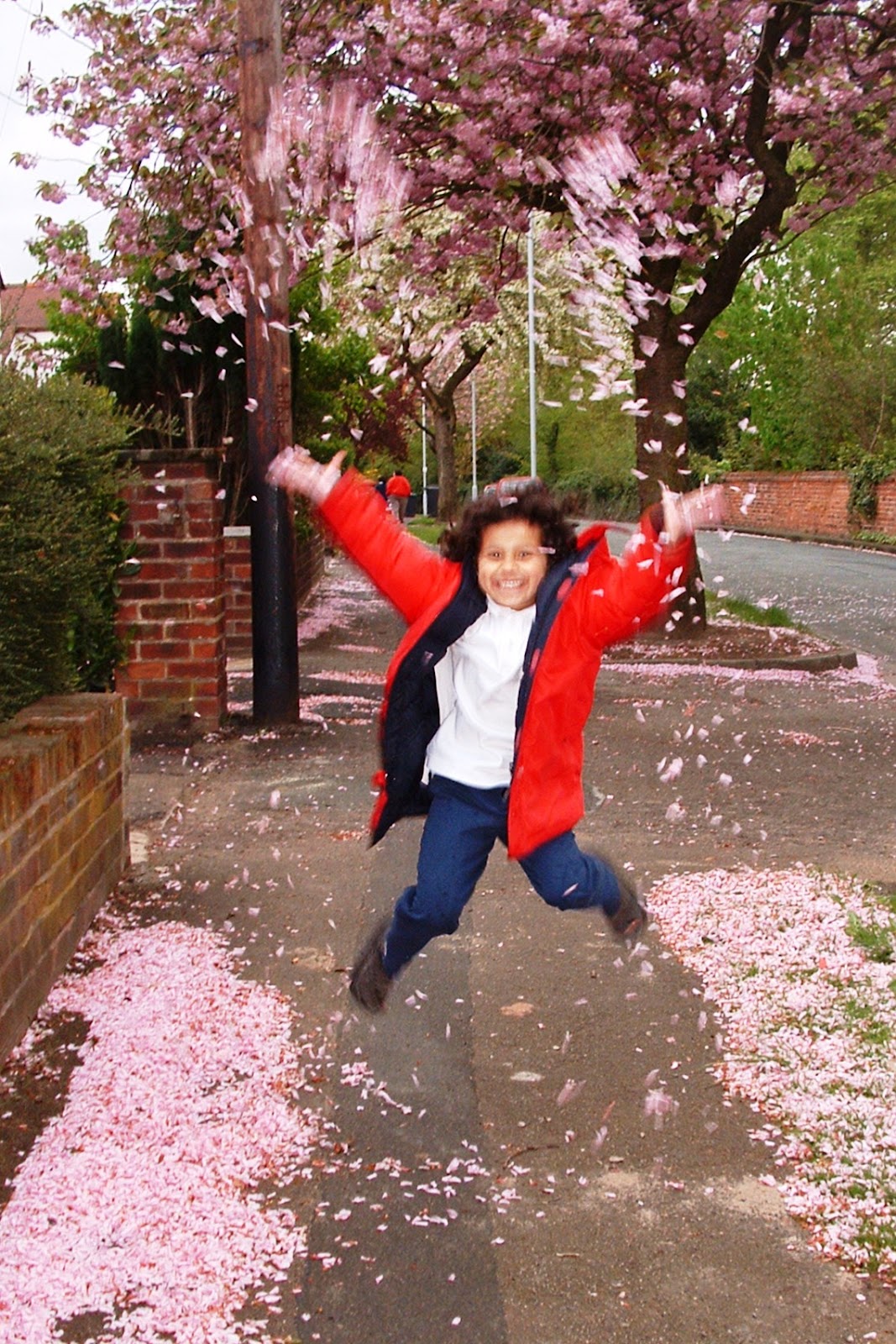
My daughter Irene, aged 5

 The master in the art of living makes little distinction between his work and his play, his labor and his leisure, his mind and his body, his information and his recreation, his love and his religion. He hardly knows which is which. He simply pursues his vision of excellence at whatever he does, leaving others to decide whether he is working or playing. To him he’s always doing both. James A. Michener
Simone Beauvoir, brilliant philosopher and life-long partner of Jean-Paul Sartre describes in Memoirs of a Dutiful Daughter her pleasure in studying philosophy.

She found grown up, brilliant people seriously discussing the very same questions which had intrigued her as a child. Eternity. The good life. God. Right. Wrong. Happiness. Time. Goodness.

* * *

I find the same pleasure in theology. It deals with the same questions which puzzled me as a child. Is there a God? Is Christ God? Why did Christ die, and for whom? How can I be happy? How should I live? What is the purpose of life?

* * *

And blogging for me only retains its fun when it has a child-like sense of play. When I can play with ideas, think them through, record my conclusions, capturing stray bluebirds and hummingbirds of thought. Occasionally sharing cool things I’ve learned– beach glass and starfish of facts; little ideas, little insights, little delights. When I can write short imperfect posts every day, rather than one perfect post a week.

Whenever I get too ninja about it, and want to write big, significant, meaty posts, which make people think, and get shared and retweeted, blah-di-blah, blogging takes too long, and loses its fun. Stress enters the domain of play.

And my life becomes slightly less pleasurable because my blog is taking too much time, making “real writing” impossible.

* * *

So, when I was praying about my blog today, I heard surprising advice, but advice I hear each time I pray about my blog, “Lower your standards. Write shorter posts. Try just one idea per post.”

Yeah!!

I no longer even try to write the big meaty posts. I don’t have the energy to. Instead, I ask, “So what are you saying to me, Lord? What are you teaching me?” or even “What’s on my mind?”

And these may be small, slight things, but they may speak to someone I do not know.

One aspect of a prophetic ministry is tuning in to God’s thoughts and sharing them with others.

Can a blog do this? I would like mine to try.

* * *

I know that I have the most fun, and the most delight in writing when I calm down, slow down and tap into the stream of what God is saying to me, or even into my own inner stream of consciousness, and then record it, be it a minuscule humble insight or a life-changing one.

For we need both, don’t we? Cups of coffee, glasses of cold water, snacks, and the occasional banquet.
And I find the most joy in blogging when being at play in the fields of the Lord, or the fields of the blog, become one and the same.

 

Filed Under: In which I explore writing and blogging and creativity Tagged With: blogging, philosophy, theology, writing

“Both” and “And” are beautiful theological words, as is “Yes”

By Anita Mathias

Image Credit

I once worshipped at a maverick church in Williamsburg, Virginia, The Williamsburg Community Chapel. It was good to me, and for me. My spiritual gifts of speaking, and leading and teaching Bible studies were identified while I was there, for instance, and I led four Bible studies in a row.

Williamsburg Community Chapel was non-denominational, with members from every Christian denomination, and none.

So, they had an answer to pretty much every theological question put to them.

And that was “Yes!”

* * *

Oh, it drove me nuts. It seems an illogical way of answering an OR question, and an annoying way of deflecting it.

But thinking about it now, I see its brilliance.

Do you believe in infant baptism or in believers’ baptism?

Yes.

Do you believe in water baptism as a once-in-for-all experience, or do you believe in the Baptism in the Holy Spirit?

Yes.

Do you believe the Baptism in the Holy Spirit, the second blessing, is a one-time experience, or can we have a second, third and fourth Baptism in the Spirit?

Yes.

Are we justified and saved by our faith alone, or does true faith need to have an expression in works?

Yes.

Should a Christian woman be a keeper at home, or use her gifts outside the home too?

Yes.

Should a Christian woman be silent or teach and lead, if so gifted?

Yes.

Were Charismatic gifts given to establish the church, or are they still active today?

Yes.

Do you believe in the gift of tongues?

Yes.

But I don’t need the gift of tongues to be a Christian?

Yes.

* * *

It’s because God is so big and so rich that he is unlikely to confined to any of our restrictive, limited theological positions.

If you take rigid theological statements like Calvinism, and more moderate theological statements, truth is often to be found between the two extremes, with each of them having some truth, some Yes.

So the next time, I start getting emotionally involved in a theological controversy, that’s a theological word I am going to remember: AND.  Most positions of sincere Christ-followers are likely have some truth in them, and the absolute truth is likely to be found somewhere in the middle.

* * *

Jesus came to us, full of grace and truth (John 1:14). And where will we find him?

Quite likely between the position of those who interpret scripture rigidly when it comes to homosexuality, let’s say, or abortion or the demographics of hell–and the extreme grace, “everyone is okay because is God is love” position.

Not in the place of controversy, over “circumcision or uncircumsion,” but in the place of gentleness, of truth working through love. (Gal 5:6). In the middle ground between sheer uncompromising truth, and a look-the-other-way love.

The land of And, the place where love and truth meet, (Ps. 85:10) is the place where we are most likely to find Jesus.

Filed Under: In which I play in the fields of Theology Tagged With: and and both, theology

A Guest Post by Jan Sassenberg: The Meek Shall Inherit the Earth

By Anita Mathias

I love this post in which my friend, Jan Sassenberg grapples with the statement that the meek shall inherit the earth.


Jan and Karoline Sassenberg, who were born Germany, have been serving for the last three years with WORD MADE FLESH in Freetown, Sierra Leone.


Find out more at www.wordmadeflesh.org or email thesassenbergsATyahoo.co.uk.

Jan and Karoline Sassenberg


Blessed are the Meek and the Great Commission

As a teenager, I was scared of the Beatitudes. Brought up in a conservative Free Evangelical Church, it didn’t make sense to me that Christ’s longest and best recorded sermon opened with words about the poor, the meek and the persecuted. Why not have the most important come first? Why not start with: “Surrender to me, Jesus, and you shall be saved!” Was Jesus perhaps more political than my pastors and teachers wanted me to believe? Too scared of becoming “a liberal” and of watering down the gospel I did not dare following this uncomfortable train of thought.


By now, 20 years later, without abandoning my love and complete trust in God’s precious word, I am not scared of liberals anymore. I sometimes rather enjoy looking at our faith from their fresh perspective.

Now, I can see the Beatitudes inspiring South American church leaders to instigate peaceful revolutions against dictators and drug cartels. I am humbled when seeing how liberation theology has given a voice to the voiceless and oppressed.

Now, I live in Sierra Leone, West Africa, as member of Word Made Flesh, a community that is dedicated to serving Jesus among the poorest of the poor of this world. We are reaching out into the slums and favelas of the booming mega cities in the majority world, or as I prefer to call it, the oppressed world. We want to be Jesus’ hands and feet, touching the untouchables, protecting the orphan children, clothing the naked, feeding the hungry, comforting the broken, sheltering the homeless.

Nevertheless, I still find myself puzzled over Jesus’ radical claim. What is it that Christ praises about the attitude of meekness? How can he promise the meek to inherit the earth? Does this reflect reality in a world ruled by social injustice, cruelty, and the survival of the most brutal?


Matthew’s third Beatitude is particularly uncomfortable as it is the only one with the promise of a reward in this world rather than in heaven. All other Beatitudes could be interpreted as finding their fulfillment solely in the after-world: being comforted, hunger being stilled, shown mercy, seeing God, being called sons of God and receiving the kingdom of heaven.

With the blessing of the meek, however, you need to bend the text far to say that “inheriting the earth” simply means inheriting the Christian’s promised land, our eternal home in heaven. I want to believe that this blessing as much as all of them have direct relevance to our identity in Christ now, on this side of the curtain. We know that the promised kingdom of Christ has already started to appear. We believe that we are not just having to wait it out until we reach the other side.

The word “meek” implies peacefulness although it does not only mean the act of peacemaking. The peacemakers receive their own promise later. With the word “meek” Jesus uses the same expression as in His self proclamation: “Come to me, all you who are weary for I am meek and humble in heart.” (Mat. 11:32) The NIV translates “… for I am gentle…”. Jesus is calling to himself the weary and a few verses later Jesus refers to himself as the one who does not quench the smoldering wick.


In Jesus’ own ministry, meekness and humilty are inseparably linked to ministering to the weak and broken. Jesus himself demonstrates his mild and humble approach when he kindly rebukes Martha’s busy bitterness towards her sister Mary. His loving gentleness is woven into his conversation with the Samaritan woman at the well. But despite the softness of his gloves, Jesus is never a conflict-avoiding harmony seeker. He corrects in love.

So how will such a meek disciple inherit the earth? As with all Beatitudes, Jesus does not come up with new ideas but refers here to the Old Testament. Psalm 37:11 says: “The Meek will inherit the land.” From the patriarchs to Jesus’ day, the Israelites had been anticipating the fulfillment of this promise. Becoming again a sovereign independent nation was the ultimate Jewish dream.


But now that Jesus, who said he did not come to abandon the law but to fulfill it, announces his own mission, he goes way beyond that. He promises the whole earth but he does not refer to political power. Jesus speaks here of the new worldwide “Kingdom of God“. We see this wider perspective throughout all his teaching. Asked about taxes Jesus says, “Give to Caesar, what belongs to Caesar and give God what belongs to God.” He refuses to be made king. And nearly all his parables are starting with the phrase: “The kingdom of God is like…” (a mustard seed etc…) All Jesus cares about is to birth this kingdom. Jesus promises “the earth” because it is His declared intention to expand his father’s Kingdom to the very last corner of this planet.

So, how does meekness empower us to reach this world for Christ? Is global mission a question of converting souls, large stadium crusades, and efficient strategies?


Are we in our churches more interested in the message than the recipient? How often do we in our churches and missions run our programmes by means of superior knowledge, skills, finances and powers? And how much do we really achieve with that? Jesus invites us back to caring for the one in front of us. Investing our time, resources and compassion in the “hopeless cases”.

In our community in Freetown, Sierra Leone, we find ourselves often overwhelmed by the vastness of the suffering around us. Children beaten mercilessly and dying needlessly, young women forced into prostitution, hopeless unemployed men turning to crimes and drugs. But in all this we find that God can use us best, when we turn away from programmes and let God use us in our weaknesses and limitations. Where He brings us low we are ready to truly meet our friends in the slum of Kroo Bay at their level. And when we gently touch wounds we see God touch and heal and restore.

Filed Under: In which I proudly introduce my guest posters

“God is at the Bottom of the Laundry Basket” and other Half-Truths We Tell Christian Women

By Anita Mathias

Jesus

I read this on the blog of my good friend, Paul .

Mystics can also get stuck in their depravity and not move out in love. I discipled a brilliant, educated couple once because the wife wanted to “experience Jesus” more.

As I got into their lives, I told her that Jesus was at the bottom on the laundry basket. That sounds harsh but it fit her beautifully. She dabbled at some hobbies, but did no real work around the house. 

She wanted to have a deeper experience of Christ without knowing love. I told her that you’ll start getting to know Jesus better when you start doing the laundry. Jesus was at the bottom of the laundry basket. That is just a simple exposition of John 14:21,23.

* * *

I read this with particular interest, because, as it happens, I am the woman he writes about. I was a volunteer editor of his first book,Love Walked Among Us, and he thanks me in the acknowledgements for teaching him to write.

I obviously taught him too well, for Paul, sadly, sacrifices veracity for sweeping statements. For “no work around the house,” read not very much, and for “dabbled at some hobbies,” read “wrote an essay which won a National Endowment for the Arts $20,000 award, published several essays and book reviews, won literary prizes, drafted a big book, and put in many of the 10,000 hours it takes to master writing.”  So, take his description with a grain of salt, as you should take all writing except that of the saints!

* * *

When I first read it, I felt sucker-punched, winded!! And then, the overwhelming sense of God’s love, swept over me.

Well, I was being attacked for being a mystic, wasn’t I?

And I had an image of me, dancing with the Father, so close that none of these slings and arrows could touch me. I wrote:

Dancing with the Lord,
That’s the way I want to live:
moving in so closely

that I’m guided unconsciously.

He doesn’t mind my clumsiness,

the obvious inexpertise.

And when exhaustion

makes me stall, I climb

onto his feet, like a child

on her father’s toes,

and the dance continues

while His music plays.

* * *

But to return, where is God? In the bottom of the laundry basket, or in the utility room, or in the dirty dishes, as Paul said to me so often, as if it was the wittiest bon mot ever. And I, unsurprisingly, did not find it funny, at all.

It poisoned my life with guilt.

For I am made to write. When I don’t write, I am not fully me. Not doing what I am made to do. Not happy.  

I get depressed. I find it hard to get out of bed. I gain weight. And neither the laundry gets done nor the writing.

I know this, because, oh, I have had dozens of tries throughout my married life of saying, “Okay, no writing till the house is tidy, everything in its place, laundry and dishes caught up with, everything ready for the Queen of England, or the King of Kings to drop in for tea.”

But when I try to get my house all picked up before writing, everyone else seems to get messier, and my motivation to live diminishes, and since I can’t write, I pick up a magazine or read online, “Just one last article,” and then, “Just one last article…” and neither writing nor housework gets done.

I went through the last “No writing till the house is tidy” five years ago, and mentioned it to a prayer partner. She said, “Why do you say that? You shouldn’t give up your writing?” And she came and helped me get my house decluttered. And cleaned it for me.

And Roy, who had steadfastly refused to have a cleaner, saying (in denial!), “I can clean it in no time IF….” finally agreed to get a weekly cleaner in 2008.  Better than having Noelle come and clean our house for us!! And this made us pick up the house weekly. And so, this bone of contention—housework and who does it–which had dogged the first 18 years of our marriage was resolved.

* * *

Uncomprehending counsel. That’s another way women are harmed in denominations without sufficient female clergy. We are different genders, almost different species. Women are from Venus, and men are from Mars. Or Pluto!! Is that the most distant planet?

Men have a separate rulebook for women. Would Paul have counselled himself to search for God in the bottom of the laundry basket? Or counselled any “brilliant, educated” (to use his description of us) man to find God in a laundry basket? Roy and I took an IQ test when we had professional pre-marital counseling, and, to Roy’s surprise, we scored the same!! Is it surprising that it would be depressing for me to seek God in laundry while he sought God in academia?

Women have been crushed by this dreadful sexist advice for centuries, this Kinder, Kuche, Kirche. IQ and talent are equally distributed between the genders, and if you wonder why there are more male writers, artists, scientists, academics and theologians than female ones, well, blame variants of Kinder, Kuche, Kirche, children, kitchen, church. And oppressive theological counselling.

* * *

But I digress. The verse Paul quotes, with such immense self-satisfaction, interestingly says, “If anyone loves me, he will keep my word, and my Father will love him, and we will come to him and make our home with him.”

And was keeping God’s word for me just doing laundry to free up more work time for Roy, and not using the writing gifts he had given me? But I was too depressed and too downtrodden to argue with Paul, and just quietly wasted more years to guilt and depression and general down-in-the-mouthness.

Some of the theology fed Christian women is just plain oppressive and cruel and very bad for mental health. And not very intelligent, either.

And probably makes Christ sad, who defended a mystic who sat at his feet while domestic activity swirled around her.  “Martha, Martha, you are worried and upset about many things, but few things are needed—or indeed only one. Mary has chosen what is better, and it will not be taken away from her.”

* * *

Yeah, once again, I was a victim of bad theology!

So is God found at the bottom of the laundry basket?

One of the first revelations I ever had into God’s heart, when I was 17, was that one should go down, as low down as possible to find God. God was born to poor people, in a stable, amid the muck and mire, hung out with the lowly, and died on the cross!

But that was a partial revelation. God is found in the depths, and also in the heights. In Calcutta, where I worked in Mother Teresa’s home for the Dying Destitute, but also in the gorgeous Alps.

The Word can be found in the words we craft. What I do is me, for that I came, Hopkins imagines everything crying. And since, people need clean laundry, God can also be found in the bottom of the laundry basket.

* * *

And where do I find God now? In my writing, and in domesticity!

Our life has changed since Paul wrote that blog post about us. Roy retired early at 47 from his job as a Professor of Mathematics, and now runs the house with intensity and mathematical precision. And finds God in the bottom of the laundry basket!!

I found it daunting to tackle my house when it had gone to the dogs, and I didn’t know where to start. Now that it is not disorderly (though not perfect), I  devote a few hours to heavy duty decluttering, and tidying while the cleaner is here, getting rid of everything not useful or beautiful, and finding a place for everything, and putting everything in it.

AND and BOTH. They are beautiful theological words. God is both in the laundry basket and in the other work he has called us to do, and anyone who tells us he is found in just the laundry or just the writing is guilty of bad theology, and worse–sheer stupidity!


Filed Under: In which I play in the fields of Theology

When Spiritual Giftedness Outstrips Love: There’s Hope!

By Anita Mathias

Michaelangelo’s Painting of the Conversion of Paul

When Roy and I are cross with each other and have to drive places together, we pop a CD of the epistles of Apostle Paul into the car. It’s not safe to argue and drive, trapped in a car with no place to escape, while your adrenalin mounts–and so I don’t!

And sometimes, Paul is sublime, and his words and vision and adulterated brilliance wash over me like a vision of better, quieter, noble lands—lands open to me, lands of which I just have to claim citizenship of, and then behave like a citizen. And I quieten down, and let these lovely words and ideas wash over me, and sometimes drop the bone over which we were contending.

And sometimes, Paul is so combative and sarcastic—oh how biting his sarcasm, how utter his contempt for fools!!—that I just have to laugh. It’s an affectionate laughter. And then Roy says wryly, “He sounds a bit like you!”  (On a bad day!)

Paul was a grumpy guy; he did not tolerate fools gladly, or the illogical. I think we would have enjoyed chatting, and I think he would have had very sharp words for me, if we disagreed!

* * *

I recently listened to the whole of Romans on my iPod on one of these days on which I felt a bit discombobulated, and wanted sanity to return swiftly, and I listened to 1 Corinthians today.

Contentious, argumentative, dismissive, inspired, sublime! Loved it.

And then I come to its most famous chapter. If I speak in the tongues[a] of men or of angels, but do not have love, I am only a resounding gong or a clanging cymbal. 2 If I have the gift of prophecy and can fathom all mysteries and all knowledge, and if I have a faith that can move mountains, but do not have love, I am nothing. 3 If I give all I possess to the poor and give over my body to hardship that I may boast, but do not have love, I gain nothing.

And I laugh. There are very few people on the planet so superlatively gifted, but I happened to have been listening to the words of one of them. Who did Paul know who could speak in the tongues and angels? Who had the gift of prophecy, and could understand mysteries and knowledge, and a faith that could begin moving the Roman Empire? Who owned nothing? Who subjected his body to unbelievable hardships?

Who was Paul describing but himself?

* * *

And human nerves can only be stretched so far. Then there is payback and it is painful.

Speaking and writing in the tongues of men and angels, prophesying, divining mysteries, pursuing and penning knowledge, the rigours of faith and asceticism—all these cause a natural reaction, overstrained nerves—and resultant grumpiness.

So I read it and think, “Oh Paul, sweetheart, you’re being too hard on yourself.”

* * *

But then, I wonder. I too have met those who are superlatively gifted, intellectually and spiritually. And if they are arrogant, or “full of themselves,” in that vivid phrase, or pompous or manipulative, or have time only for those they can use—they leave me cold. Utterly unimpressed!!

If I speak in the tongues of men and of angels, and have not love, I am nothing. Sounds extreme, doesn’t it, but isn’t that how we rate people? Who has time for people who are impatient and unkind, envious, boastful and arrogant, rude and angry? No matter how brilliant they are! There is an instinctive recoil. We might rate their intellect or giftedness highly—but we do not rate them highly.

Patient, kind, not jealous, not boastful, not proud. Not rude, not self-seeking, not easily angered. Forgetting wrongs.

How many of us can read this as a character sketch of ourselves?

What then should we do? We who use words well, and get weary in the penning of them? We who listen in to the spirit of God, and have prophetic insight, and leave our sessions of intense prayer a little exhausted, with our nerves a bit fragile? Who strive to understand spiritual mysteries and spiritual knowledge, and tire in the pursuit? Who pay the price of stepping out in faith, pay the price of our generosity with our time which makes our life more difficult, more challenging, more of a strain, sometimes?

Oh, we’ve got to the heights, the Omega of the spiritual life, and then find ourselves failing in the Alpha Beta of it, in patience and kindness and humility and consideration and keeping our temper—things, come on, which are just good manners!!

What then should we do?

* * *

Yes, there is hope for us.

I love Rolland Baker’s account of his healing from cerebral malaria and advanced dementia. Heidi Baker in her book There is Always Enough recounts her healing from dyslexia and chronic fatigue.

Yes, just as only God can heal the malfunctioning, worn-out cells in our brains or bodies, only He can heal the callouses in our hearts, the atrophied bits, where warm blood does not flow, and which are, consequently, slowly withering.

Only he who brought the dead to life can heal our small, cold and selfish hearts.

So do it, Lord! Create in me  a clean heart, oh Lord, and renew a right spirit within me. (Ps 51:10). Take out of my breast the heart of stone, and give me a heart of flesh. (Ez. 11:19).

Amen.

Filed Under: random Tagged With: 1 Corinthians, Agape, Paul

John Arnott, Bill Johnson, Randy Clark, and Heidi Baker: Who I will be listening to this summer!

By Anita Mathias


Mountain Stream
Okay, I am back from a summer adventure in Copenhagen, and learned lots, and thought lots, and saw lots, but spiritually, my cup is not overflowing!! And physically, I am still a bit tired—all that walking!! which I have valiantly tried to continue, counting steps on a pedometer.
I sense the autumn term is going to be full—of excitement and challenge and interest and new opportunity, and to cope with it, I need to rest spiritually and emotionally this summer, and let God refill my tanks.
So we are going to two Christian family camps/conferences this summer. The first is RiverCamp in Gloucestershire, where Heidi Baker will speak, and Mark Stibbe, whose book From Orphans to Heirs I enjoyed.
The books is about the Fatherhood of God, our adoption as sons and daughters. These are among the most life-changing theological concepts. I was discipled by Paul Miller, one of the writers of the immensely popular American Sonship Course, which helped the material get into my head.
It moved from head to heart during an amazing ILSOM week led by John Arnott in Oxford, during which I discovered soaking prayer.
I think learning to soak in God’s love, and just be, and not do, and just hang out with him, knowing he loved me was life-changing. So I am greatly looking forward to hearing John Arnott again at the Revival Alliance Conference.
   * * *
Bill Johnson will be speaking there. Bill Johnson is known as “the thinking man’s charismatic,” and I really like his speaking style, though from his Facebook postings, he seems to be getting a bit negative and jaded, perhaps burnt out. (Perhaps our heroes should not have Facebook and Twitter pages. Or perhaps they should, so that we have no heroes except the One who rides on a white horse and is called Faithful and True).
I have heard Bill Johnson speak at New Wine, and have read his books, like Dreaming with Godand Strengthen Yourself in the Lord. Reading him is mind-expanding. I suddenly sense there are vast oceans of intimacy with God and of experiencing his power and his glory stretching and rolling all around me while I paddle in the shore of a life of half-faith. Oh Lord, deliver me!!

I am also looking forward to hearing Randy Clark at the latter event. He had known much failure and sadness, but the Toronto Blessing descended when he spoke at the Toronto Airport Church in 1994, a revival which still continues (or so I’ve been told).
We are taking our children to both events. Please could you pray that they will be powerfully touched by God.
And that the spirit of God will once again refill this weary, half-empty, distracted heart of mine to overflowing.
Thank you!


Filed Under: random

A Rhapsody on Heidi Baker, one of the most inspiring Christians alive!

By Anita Mathias

Labels
Heidi Baker
 So I will be hearing Heidi Baker twice this month at River Camp in Gloucestershire and at Revival Alliance in Birmingham.
Heidi Baker is one of the most inspiring Christians I know, along with Dick Woodward, the quadriplegic Pastor Emeritus of our old church, Williamsburg Community Chapel, who, while confined to his bed, wrote and broadcast a survey of the Bible called the Mini Bible College, and is joyful, faith-filled and full of wisdom. People make “pilgrimages” to his bed.
Heidi Baker looks after 10,000 orphans in Mozambique, lives deep in the heart of God, attempts to live the Sermon on the Mount, and experiences miracles on a daily basis.
* * *
I love listening to her.  She is very American, very Californian, blonde, athletic, bouncy, vivacious. Entirely unself-conscious. When she prays, she doesn’t worry whether she looks too showy or devout, as I do. She just goes ahead and prays naturally, folded up on the floor in a foetal position, sometimes coming up with electrifying prayer or prophecy or an entire talk in that position of worship on the floor, holding a microphone. Yeah, a most unusual position for a preacher, but does she care?  
Heidi 53, looks gorgeous, dresses well, eye-catchingly and attractively, but simply and inexpensively (I bet), and radiates health and fitness. Ah, beauty is a gift from God, and he sometimes gives it to his special saints (I think of Beth Moore or Ann Voskamp) to significantly aid their ministries in our appearance-obsessed world.
Heidi, who is a few years older than me, is amazingly simple and joyful. She quotes her husband Rolland, “Heidi when I met you, you were five, and now you’ve become three.” I love that.  I am reminded of G.K. Chesterton’s bon mot, “Angels can fly because they take themselves lightly.” (Incidentally, my husband says I am about ten, so I sure have some growing younger to do!)
* * *
I find this disciple of Jesus very inspiring. My kids love her.
I am called to write, and live in a beautiful old rambling home with a beautiful old rambling garden (now looking a bit unkempt alas) in a country village just outside Oxford. Normally, I wouldn’t go out of my way to go to listen to someone who has adopted 10,000 children in Mozambique, because her life was too alien to mine (in a way that C.S. Lewis’s, for instance, is not).
But Heidi wears her amazing Christ-likeness lightly. She does not even think about it. She is focused on Jesus.
She reminds me of C. S. Lewis’s description of a humble person, “If you meet a really humble man, probably all you will think about him is that he seemed a cheerful, intelligent chap who took a real interest in what you said to him.  You might feel a little envious of anyone who seems to enjoy life so easily. And he will not be thinking about humility: he will not be thinking about himself at all.”
But, in fact, and this is why she has such a successful speaking ministry in the West, and why she is so inspiring, what makes Heidi Baker so special is not actually the work she does. I do not believe her joy comes from the 10,000 orphans. I believe it comes from her very close relationship to God, her surrender to him, the Yes she continually says. Listening to her talk of Jesus, it is immediately clear to me that I do not know Jesus as she does, and while that makes me cry with sadness, it also inspires me to get to know Him better.
Her love affair with Christ, her trust, her faith: These things are open to all of us, those called to write in Oxford and those called to turn Mozambique upside down. Prayer is the most equal opportunity thing there is.
* * *
Heidi lives in miracles as her native element. She was seriously dyslexic, but was healed, and eventually earned a PhD in Theology, and has written lovely, convicting books. Read There is Always Enough, and oh, you will be so inspired.
When she last came to the church I used to attend, she said that her husband Rolland Baker had cerebral malaria and suspected dementia. He could not dress himself, or cut his nails or look after himself. And a boy they had adopted, who had stolen from them, and continued relapsing into rascality, looked after him with utter devotion, protecting him, dressing him etc.
I cried as I left. I was too upset to speak. I felt like chiding God like St. Teresa of Avila, knocked off her donkey into the mud, late on a rainy night, once did, “Lord, if this is the way you treat your servants, it’s no wonder you have so few.”
I was angrier than Heidi was, but then maybe Heidi foreknew something I did not. Rolland Baker was completely cured of his “incurable” cerebral malaria and dementia in a remarkable retreat centre in Germany, called The Community Without Walls.
  
Heidi herself had a complete burnout, suffering from numerous tropical illnesses as well as chronic fatigue and returned to the States, where she was completely healed, physically and spiritually, at Toronto Catch the Fire Church (formerly the Airport Fellowship).
The one thing I do know about faith is that according to our faith it will be done to us (Matt 9:29). Heidi sees so many miracles because she believes she will.
* * *
But she has also long experience of dreams deferred. In a remarkable vision, she had heard God say that the blind would see through her prayers, but prayed over hundreds of blind people before one saw!!
I’ve heard her talk—a long rambling story which took about an hour– about her dream to reach an isolated unreached people group in Mozambique which took twenty years and involved raising money to get a boat, getting a boat which vital parts stolen or rusted, raising money again, finding people to fix the boat, but she finally does reach them, and they accept Jesus.
Sometimes God gives us glimmerings of our destiny to cheer us on and up, and in the long years of waiting for it to be fulfilled, our character forms and is toughened.
And that is as much part of the story as the longed-for conclusion which, in our naivete, we had imagined was the entire story!!

Filed Under: In Which I celebrate Church History and Great Christians

How Spiritual Blogging Keeps One Honest!

By Anita Mathias

Image Credit

 Spiritual blogging is the most joyous and interesting thing I have ever done.
I embark on it with a sense of caution and diffidence though. For one, is it making something public which should be private?
Jesus stresses secrecy in spiritual practices—praying, giving and fasting—because if people are impressed, well, you’ve had your reward, and a pretty paltry reward it is compared to the mysterious, unknown and numinous rewards that the Lord himself might be planning to give you.
The wonderful Norwegian writer, O. Hallesby, said that one’s secret life with Christ in the secret places of prayer is like a cosy, warm Norwegian cottage in a blustery winter. If you talk about your prayer life, you open the door, and cold wintry blasts enter.
* * *
Ah, why do it then? Because it is my calling.
I have been helped by people’s spiritual autobiographies and journals–Hudson Taylor, George Mueller, Frank Laubach and Catherine Marshall come to mind—and their chronicles of their successes and failures, their highs and lows. Wow, so spiritual giants wobbled as I do? And are these heights of the spiritual life open to me? It spurs me on.
 * * *
And the worst thing about Christian blogging is when your life reproaches you. When you sit down to write your blog, and you realize you are angry with your spouse or children or a friend. That you feel spiritual empty and bereft and lifeless. What then are you to write?
I have committed to write every day I can, and I think the discipline and writing skills I’ve gained this way have been invaluable. When I have been feeling grumpy or spiritually limp, I’ve used archive posts, which I believed and felt when I wrote them, and still believe. However, I now think I will write a secular post, on a subject of general interest, and wait for the well to refill.
* * *
Spiritual blogging has helped my spiritual life, because when I feel distracted and discombobulated, it reminds me to enter by the narrow gate. And the narrow gate for me is surrender. Both “please make your will clear to me so I can do it,” and “Here’s my life; please work in it.”
It keeps me honest. I live with three other people, and have a group of close women friends whom I meet with regularly.  I want the online persona and the real person to match.  To be in real life and at home exactly as I am in my blog. I am working on getting more of the lows and dramas of my life in the blog (if I have discovered a way of dealing with them which may be helpful!).
* * *
When my spiritual life is limp and flaccid; when I am not truly pushing forward, learning and getting excited about new things about God, Scripture and the spiritual life; not following Jesus in new and challenging little ways; getting a bit stagnant–then writing my blog is almost a reproach to me.
When I pray well, new ideas for blog posts spring up; when I don’t I am a spider, not a bee.
However, when my spiritual life is exciting, writing my blog is exciting too—and it touches people.
 In fact, in spiritual blogging, the only way to get your blog interesting is to have spiritual adventures, to be continually filled with the spirit, and ask God for fresh ideas, and check out your ideas with Him. Otherwise, the writing can get a bit vapid and empty, a bit repetitive, yesterday’s melodies in yesterday’s words.

Filed Under: random

  • « Previous Page
  • 1
  • 2
  • 3
  • 4
  • 5
  • Next Page »

Sign Up and Get a Free eBook!

Sign up to be emailed my blog posts (one a week) and get the ebook of "Holy Ground," my account of working with Mother Teresa.

Join 543 Other Readers

My Books

Rosaries, Reading, Secrets: A Catholic Childhood in India

Rosaries, Reading Secrets, B&N
USA

UK

Wandering Between Two Worlds: Essays on Faith and Art

Wandering Between Two Worlds
USA

UK

Francesco, Artist of Florence: The Man Who Gave Too Much

Francesco, Artist of Florence
US

UK

The Story of Dirk Willems

The Story of Dirk Willems
US

UK

My Latest Meditation

Anita Mathias: About Me

Anita Mathias

Read my blog on Facebook

Follow me on Twitter

Follow @anitamathias1

Recent Posts

  • Using God’s Gift of Our Talents: A Path to Joy and Abundance
  • The Kingdom of God is Here Already, Yet Not Yet Here
  • All Those Who Exalt Themselves Will Be Humbled & the Humble Will Be Exalted
  • Christ’s Great Golden Triad to Guide Our Actions and Decisions
  • How Jesus Dealt With Hostility and Enemies
  • Do Not Be Afraid, but Do Be Prudent
  • For Scoundrels, Scallywags, and Rascals—Christ Came
  • How to Lead an Extremely Significant Life
  • Don’t Walk Away From Jesus, but if You Do, He Still Looks at You and Loves You
  • How to Find the Freedom of Forgiveness
Premier Digital Awards 2015 - Finalist - Blogger of the year
Runner Up Christian Media Awards 2014 - Tweeter of the year

Categories

What I’m Reading


Wolf Hall
Hilary Mantel

Wolf Hall --  Amazon.com
Amazon.com

Amazon.co.uk

Silence and Honey Cakes:
The Wisdom Of The Desert
Rowan Williams

Silence and Honey Cakes --  Amazon.com
Amazon.com

Amazon.co.uk

The Long Loneliness:
The Autobiography of the Legendary Catholic Social Activist
Dorothy Day

The Long Loneliness --  Amazon.com
Amazon.com

Amazon.co.uk

Country Girl
Edna O'Brien

Country Girl  - Amazon.com
Amazon.com

Amazon.co.uk

Archive by month

My Latest Five Podcast Meditations

INSTAGRAM

anita.mathias

My memoir: Rosaries, Reading, Secrets https://amzn.to/42xgL9t
Oxford, England. Writer, memoirist, podcaster, blogger, Biblical meditation teacher, mum

Well, hello friends! Breaking radio silence to let Well, hello friends! Breaking radio silence to let you know that I have taped a meditation for you on Christ’s famous Parable of the Talents in Matthew 25. https://anitamathias.com/2025/11/05/using-gods-gift-of-our-talents-a-path-to-joy-and-abundance/
Here you are, click the play button in the blog post for a brief meditation, and some moments of peace, and, perhaps, inspiration in your day 🙂
Hi Friends, I have taped a meditation; do listen a Hi Friends, I have taped a meditation; do listen at this link: https://anitamathias.com/2025/04/08/the-kingdom-of-god-is-here-already-yet-not-yet-here-2/
It’s on the Kingdom of God, of which Christ so often spoke, which is here already—a mysterious, shimmering internal palace in which, in lightning flashes, we experience peace and joy, and yet, of course, not yet fully here. We sense the rainbowed presence of Christ in the song which pulses through creation. Christ strolls into our rooms with his wisdom and guidance, and things change. Our prayers are answered; we are healed; our hearts are strangely warmed. Sometimes.
And yet, we also experience evil within & all around us. Our own sin which can shatter our peace and the trajectory of our lives. And the sins of the world—its greed, dishonesty and environmental destruction.
But in this broken world, we still experience the glory of creation; “coincidences” which accelerate once we start praying, and shalom which envelops us like sudden sunshine. The portals into this Kingdom include repentance, gratitude, meditative breathing, and absolute surrender.
The Kingdom of God is here already. We can experience its beauty, peace and joy today through the presence of the Holy Spirit. But yet, since, in the Apostle Paul’s words, we do not struggle only “against flesh and blood, but against the rulers, against the unseen powers of this dark world and against the spiritual forces of evil,” its fullness still lingers…
Our daughter Zoe was ordained into the Church of E Our daughter Zoe was ordained into the Church of England in June. I have been on a social media break… but … better late than never. Enjoy!
First picture has my sister, Shalini, who kindly flew in from the US. Our lovely cousins Anthony and Sarah flank Zoe in the next picture.
The Bishop of London, Sarah Mullaly, ordained Zoe. You can see her praying that Zoe will be filled with the Holy Spirit!!
And here’s a meditation I’ve recorded, which you might enjoy. The link is also in my profile
https://anitamathias.com/2024/11/07/all-those-who-exalt-themselves-will-be-humbled-the-humble-will-be-exalted/
I have taped a meditation on Jesus statement in Ma I have taped a meditation on Jesus statement in Matthew 23, “For those who exalt themselves will be humbled, and those who humble themselves will be exalted.”
Do listen here. https://anitamathias.com/2024/11/07/all-those-who-exalt-themselves-will-be-humbled-the-humble-will-be-exalted/
Link also in bio.
And so, Jesus states a law of life. Those who broadcast their amazingness will be humbled, since God dislikes—scorns that, as much as people do.  For to trumpet our success, wealth, brilliance, giftedness or popularity is to get distracted from our life’s purpose into worthless activity. Those who love power, who are sure they know best, and who must be the best, will eventually be humbled by God and life. For their focus has shifted from loving God, doing good work, and being a blessing to their family, friends, and the world towards impressing others, being enviable, perhaps famous. These things are houses built on sand, which will crumble when hammered by the waves of old age, infirmity or adversity. 
God resists the proud, Scripture tells us—those who crave the admiration and power which is His alone. So how do we resist pride? We slow down, so that we realise (and repent) when sheer pride sparks our allergies to people, our enmities, our determination to have our own way, or our grandiose ego-driven goals, and ambitions. Once we stop chasing limelight, a great quietness steals over our lives. We no longer need the drug of continual achievement, or to share images of glittering travel, parties, prizes or friends. We just enjoy them quietly. My life is for itself & not for a spectacle, Emerson wrote. And, as Jesus advises, we quit sharp-elbowing ourselves to sit with the shiniest people, but are content to hang out with ordinary people; and then, as Jesus said, we will inevitably, eventually, be summoned higher to the sparkling conversation we craved. 
One day, every knee will bow before the gentle lamb who was slain, now seated on the throne. We will all be silent before him. Let us live gently then, our eyes on Christ, continually asking for his power, his Spirit, and his direction, moving, dancing, in the direction that we sense him move.
Link to new podcast in Bio https://anitamathias.co Link to new podcast in Bio https://anitamathias.com/2024/02/20/how-jesus-dealt-with-hostility-and-enemies/
3 days before his death, Jesus rampages through the commercialised temple, overturning the tables of moneychangers. Who gave you the authority to do these things? his outraged adversaries ask. And Jesus shows us how to answer hostile questions. Slow down. Breathe. Quick arrow prayers!
Your enemies have no power over your life that your Father has not permitted them. Ask your Father for wisdom, remembering: Questions do not need to be answered. Are these questioners worthy of the treasures of your heart? Or would that be feeding pearls to hungry pigs, who might instead devour you?
Questions can contain pitfalls, traps, nooses. Jesus directly answered just three of the 183 questions he was asked, refusing to answer some; answering others with a good question.
But how do we get the inner calm and wisdom to recognise
and sidestep entrapping questions? Long before the day of
testing, practice slow, easy breathing, and tune in to the frequency of the Father. There’s no record of Jesus running, rushing, getting stressed, or lacking peace. He never spoke on his own, he told us, without checking in with the Father. So, no foolish, ill-judged statements. Breathing in the wisdom of the Father beside and within him, he, unintimidated, traps the trappers.
Wisdom begins with training ourselves to slow down and ask
the Father for guidance. Then our calm minds, made perceptive, will help us recognise danger and trick questions, even those coated in flattery, and sidestep them or refuse to answer.
We practice tuning in to heavenly wisdom by practising–asking God questions, and then listening for his answers about the best way to do simple things…organise a home or write. Then, we build upwards, asking for wisdom in more complex things.
Listening for the voice of God before we speak, and asking for a filling of the Spirit, which Jesus calls streams of living water within us, will give us wisdom to know what to say, which, frequently, is nothing at all. It will quieten us with the silence of God, which sings through the world, through sun and stars, sky and flowers.
Especially for @ samheckt Some very imperfect pi Especially for @ samheckt 
Some very imperfect pictures of my labradoodle Merry, and golden retriever Pippi.
And since, I’m on social media, if you are the meditating type, here’s a scriptural meditation on not being afraid, while being prudent. https://anitamathias.com/2024/01/03/do-not-be-afraid-but-do-be-prudent/
A new podcast. Link in bio https://anitamathias.c A new podcast. Link in bio
https://anitamathias.com/2024/01/03/do-not-be-afraid-but-do-be-prudent/
Do Not Be Afraid, but Do Be Prudent
“Do not be afraid,” a dream-angel tells Joseph, to marry Mary, who’s pregnant, though a virgin, for in our magical, God-invaded world, the Spirit has placed God in her. Call the baby Jesus, or The Lord saves, for he will drag people free from the chokehold of their sins.
And Joseph is not afraid. And the angel was right, for a star rose, signalling a new King of the Jews. Astrologers followed it, threatening King Herod, whose chief priests recounted Micah’s 600-year-old prophecy: the Messiah would be born in Bethlehem, as Jesus had just been, while his parents from Nazareth registered for Augustus Caesar’s census of the entire Roman world. 
The Magi worshipped the baby, offering gold. And shepherds came, told by an angel of joy: that the Messiah, a saviour from all that oppresses, had just been born.
Then, suddenly, the dream-angel warned: Flee with the child to Egypt. For Herod plans to kill this baby, forever-King.
Do not be afraid, but still flee? Become a refugee? But lightning-bolt coincidences verified the angel’s first words: The magi with gold for the flight. Shepherds
telling of angels singing of coming inner peace. Joseph flees.
What’s the difference between fear and prudence? Fear is being frozen or panicked by imaginary what-ifs. It tenses our bodies; strains health, sleep and relationships; makes us stingy with ourselves & others; leads to overwork, & time wasted doing pointless things for fear of people’s opinions.
Prudence is wisdom-using our experience & spiritual discernment as we battle the demonic forces of this dark world, in Paul’s phrase.It’s fighting with divinely powerful weapons: truth, righteousness, faith, Scripture & prayer, while surrendering our thoughts to Christ. 
So let’s act prudently, wisely & bravely, silencing fear, while remaining alert to God’s guidance, delivered through inner peace or intuitions of danger and wrongness, our spiritual senses tuned to the Spirit’s “No,” his “Slow,” his “Go,” as cautious as a serpent, protected, while being as gentle as a lamb among wolves.
Link to post with podcast link in Bio or https://a Link to post with podcast link in Bio or https://anitamathias.com/2023/09/22/dont-walk-away-from-jesus-but-if-you-do-he-still-looks-at-you-and-loves-you/
Jesus came from a Kingdom of voluntary gentleness, in which
Christ, the Lion of Judah, stands at the centre of the throne in the guise of a lamb, looking as if it had been slain. No wonder his disciples struggled with his counter-cultural values. Oh, and we too!
The mother of the Apostles James and John, asks Jesus for a favour—that once He became King, her sons got the most important, prestigious seats at court, on his right and left. And the other ten, who would have liked the fame, glory, power,limelight and honour themselves are indignant and threatened.
Oh-oh, Jesus says. Who gets five talents, who gets one,
who gets great wealth and success, who doesn’t–that the
Father controls. Don’t waste your one precious and fleeting
life seeking to lord it over others or boss them around.
But, in his wry kindness, he offers the ambitious twelve
and us something better than the second or third place.
He tells us how to actually be the most important person to
others at work, in our friend group, social circle, or church:Use your talents, gifts, and energy to bless others.
And we instinctively know Jesus is right. The greatest people in our lives are the kind people who invested in us, guided us and whose wise, radiant words are engraved on our hearts.
Wanting to sit with the cleverest, most successful, most famous people is the path of restlessness and discontent. The competition is vast. But seek to see people, to listen intently, to be kind, to empathise, and doors fling wide open for you, you rare thing!
The greatest person is the one who serves, Jesus says. Serves by using the one, two, or five talents God has given us to bless others, by finding a place where our deep gladness and the world’s deep hunger meet. By writing which is a blessing, hospitality, walking with a sad friend, tidying a house.
And that is the only greatness worth having. That you yourself,your life and your work are a blessing to others. That the love and wisdom God pours into you lives in people’s hearts and minds, a blessing
https://anitamathias.com/.../dont-walk-away-from-j https://anitamathias.com/.../dont-walk-away-from-jesus.../
Sharing this podcast I recorded last week. LINK IN BIO
So Jesus makes a beautiful offer to the earnest, moral young man who came to him, seeking a spiritual life. Remarkably, the young man claims that he has kept all the commandments from his youth, including the command to love one’s neighbour as oneself, a statement Jesus does not challenge.
The challenge Jesus does offers him, however, the man cannot accept—to sell his vast possessions, give the money to the poor, and follow Jesus encumbered.
He leaves, grieving, and Jesus looks at him, loves him, and famously observes that it’s easier for a camel to squeeze through the eye of a needle than for a rich person to live in the world of wonders which is living under Christ’s kingship, guidance and protection. 
He reassures his dismayed disciples, however, that with God even the treasure-burdened can squeeze into God’s kingdom, “for with God, all things are possible.”
Following him would quite literally mean walking into a world of daily wonders, and immensely rich conversation, walking through Israel, Lebanon, Syria, and Jordan, quite impossible to do with suitcases and backpacks laden with treasure. 
For what would we reject God’s specific, internally heard whisper or directive, a micro-call? That is the idol which currently grips and possesses us. 
Not all of us have great riches, nor is money everyone’s greatest temptation—it can be success, fame, universal esteem, you name it…
But, since with God all things are possible, even those who waver in their pursuit of God can still experience him in fits and snatches, find our spirits singing on a walk or during worship in church, or find our hearts strangely warmed by Scripture, and, sometimes, even “see” Christ stand before us. 
For Christ looks at us, Christ loves us, and says, “With God, all things are possible,” even we, the flawed, entering his beautiful Kingdom.
Follow on Instagram

© 2025 Dreaming Beneath the Spires · All Rights Reserved. · Cookie Policy · Privacy Policy