Anita Mathias: Dreaming Beneath the Spires

Anita Mathias's Blog on Faith and Art

  • Home
  • My Books
  • Meditations
  • Essays
  • Contact
  • About Me

Images and Magic Moments  from my trip to Cambodia with Tearfund

By Anita Mathias

Meeting Sambath. “She’s a woman, but works like a man,” the Tearfund worker said–keeping her family going, growing watermelons and rice on  unused strips of land she rents from neighbours who work in Phomh-Penh’s garment factories.

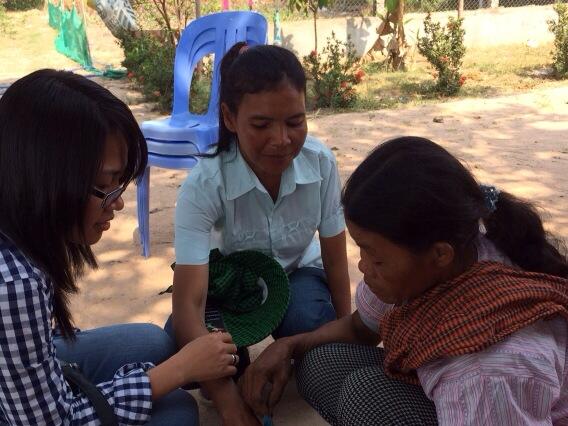
I watched her give a bag of fresh grown rice (which I had never seen before!) to the Tearfund worker, refuse payment, but say, “If you like it, in future, don’t buy from the market, buy from me,” and photographed the conversation, three Asian women all comfortably squatting on the ground, in a way I am now too stiff to contemplate, companionably talking, keeping their clothes clean.
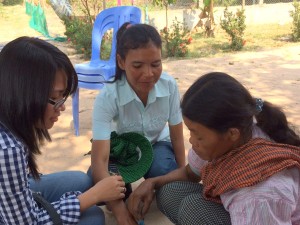
sambath

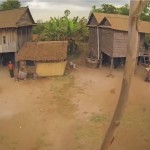
Sambath invited us to her house: a trek down narrow dirt paths to a house built on stilts (because waters rise in the rainy season and there are floods).

I loved being there, following the flock of chicks around, looking at the eggs and the brooding hens.
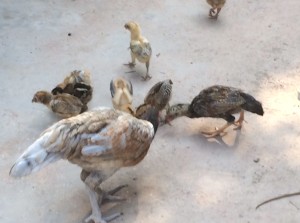
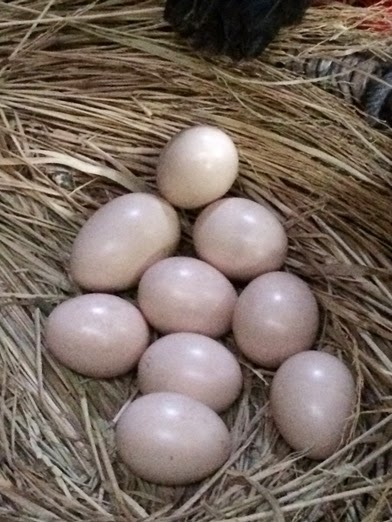
chickens_2

* * *

Cambodians are possibly the slimmest, lithest people in the world. Most women seemed to weigh less than 100 pounds, men too! We clambered onto a lengthy makeshift bridge made of palm trees cut in half to floating platforms: picnic spots.   I tried, but felt anxious at the thought of falling in the dirty water of Tonle Batie Lake to the accompaniment of the laughter of the picnicking Cambodians (whose default reaction to anything out of the ordinary is to laugh).
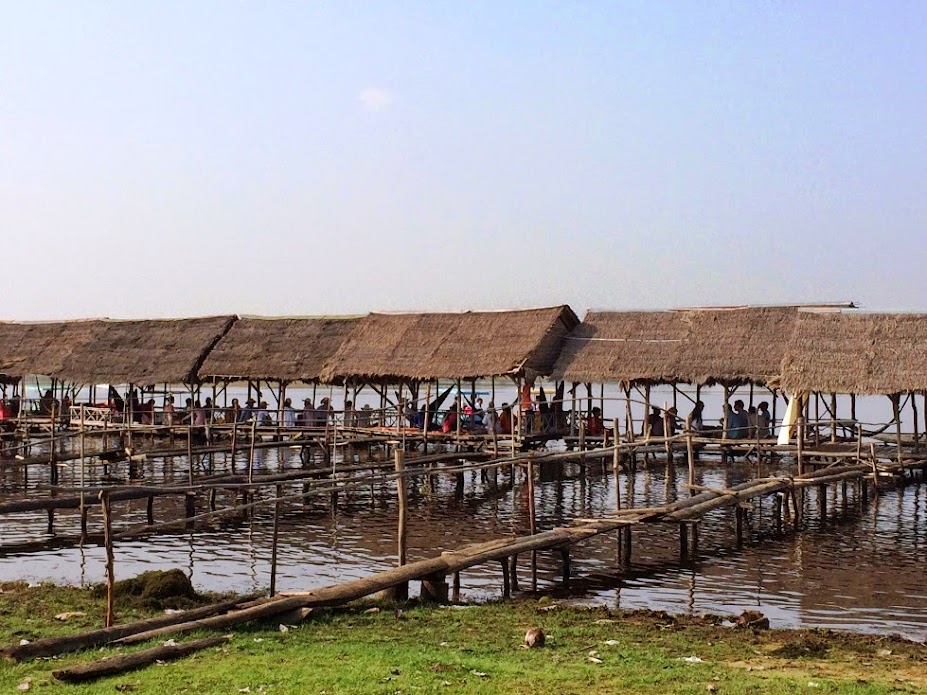
And so I sat on the steps facing the lake, with a 21 year old Cambodian Tearfund volunteer, and chatted in English. He told me about his dream of owning a rice factory and how he was saving for it. It cost USD $8000, he reckoned. He asked me several times to pray that he’d achieve his dream.

I simply could not see how this sweet young man could compete in business in a corrupt country, in which rice, the staple food, is probably controlled by conglomerates; however, my husband and I are dreamy unworldly people and we have managed to run a successful small business. God gave and continues to give me the ideas I need, step by step, and there is no reason that he would not give them to M.

That was another magic moment for me, sitting there, facing Tonle Batie Lake, swapping life stories and sharing precious dreams across a divide of race, gender, decades, culture, and profession, human sympathy a bridge, like the bridges to the floating shelters.

* * *

Cruising at sunset down the Mekong on fire, totally a magic moment.

* * *

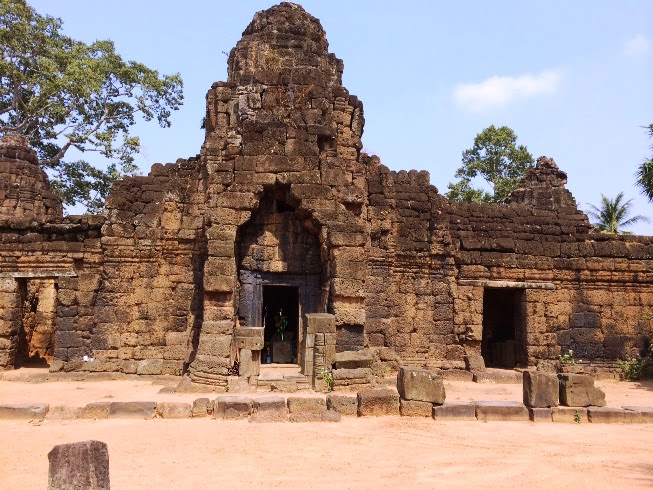
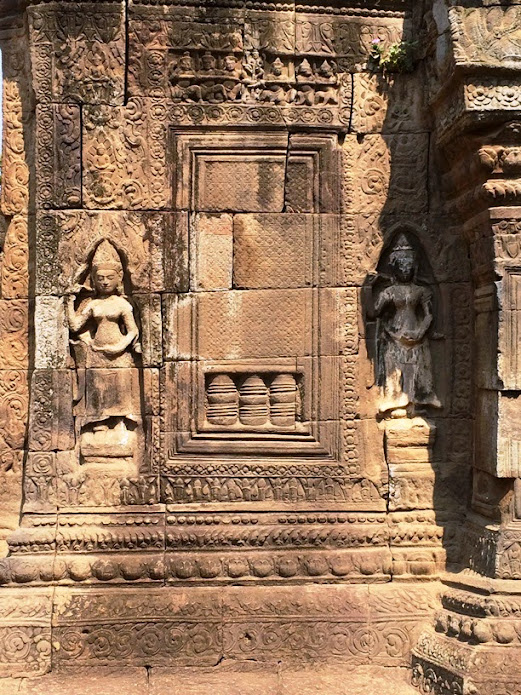
Ta Promh, an atmospheric ruined 12th century temple in Tonle Batie, fascinating, a bit like the spooky ruined Greek temples I saw in Greece—and, oddly, in Sicily too.
* * *

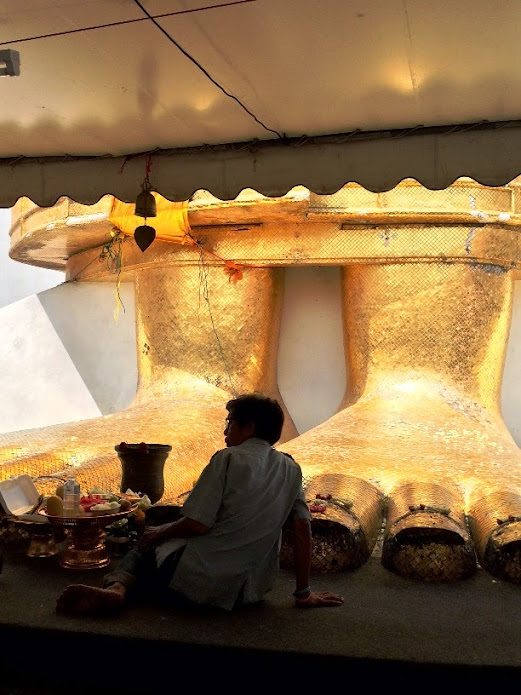
A day in Bangkok on the way, visiting an impossibly over-decorated Buddhist temple.
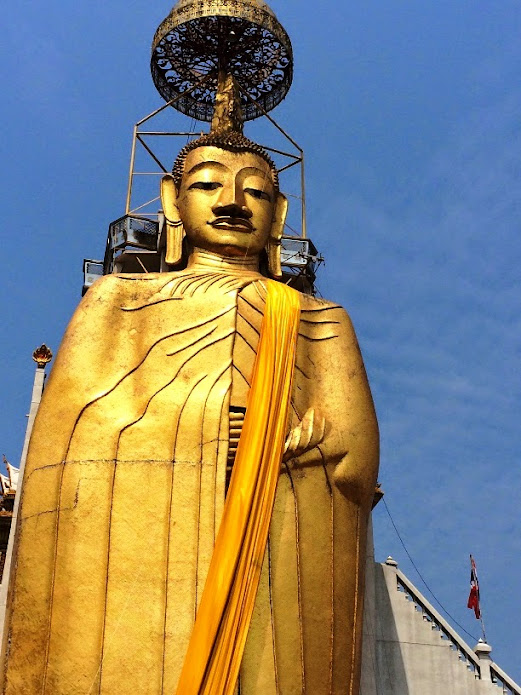
Buddha and his feet

* * *

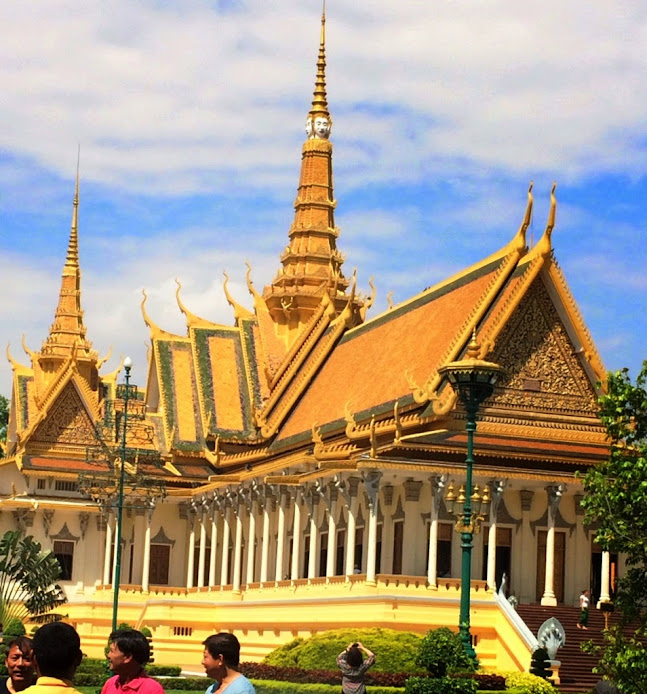
The Royal Palace in Phomh-Penh. Cambodian Flora.
* * *

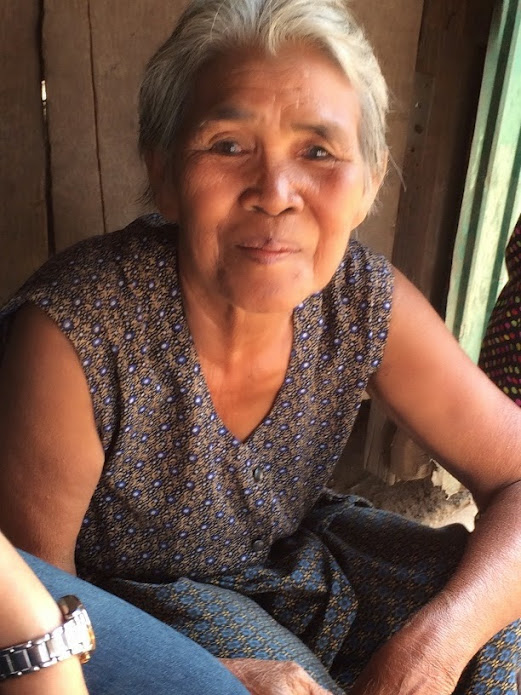
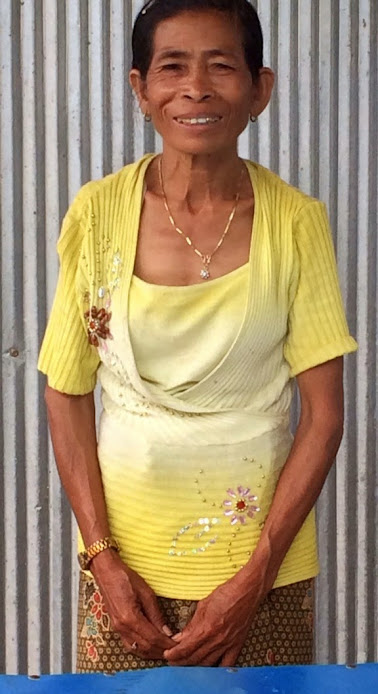
The Cambodians themselves, especially the smiley helpful Tearfund workers. I loved Kagne, the Tearfund worker who accompanied us. Cambodians have a natural restraint and dignity and effortless good manners and courtesy I found very attractive and winsome.
* * *

* * *

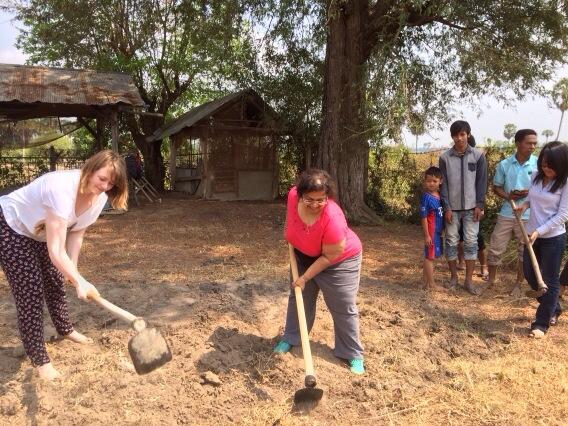
Attempting to dig a field with a bunch of Christian Cambodians. Discovering that I lack all talent for digging.
* * *

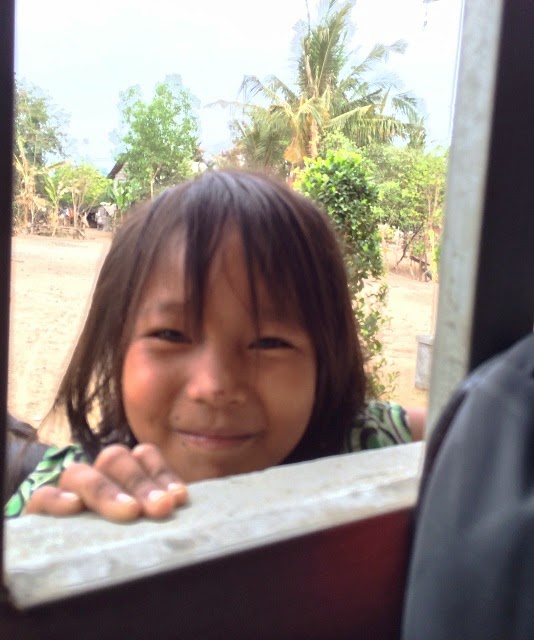
Cambodian children, naturally smiley—as children are everywhere once detached from electronics.
* * *

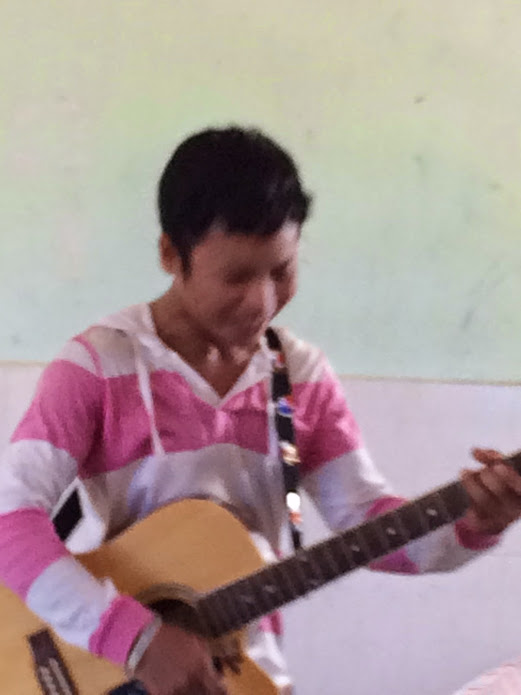
I enjoyed (and was a bit amused by) the Tonle Batie Church, church in an agrarian economy, most unlike mine, St. Andrew’s, Oxford. There was a community pig. Flock of community chickens wandered around. Chillis , tomatoes and peppers were grown on spare bits of land. English lessons took place in the church hall, and the worship was rousing and charismatic!
Here is a section of my piece for Christian Today.

“Blogging for Tearfund in Cambodia was an honour – which I mean quite literally.

I felt honoured to enter Cambodian homes, and step over the threshold into their lives. I felt honoured to meet people who with great dignity, resilience and self-reliance earn their living by gathering wood from the forest, trapping fish in Tonle Batie Lake, raising pigs and growing their own rice.

I like Tearfund’s Umoja model of development, particularly asking people their dreams. Being asked to dream introduces hope and possibility into a life. Umoja then encourages people to look at resources they do have; apparently most begin by saying they do not have any.

Encouraged to think outside the box, Mechyan, an elderly HIV positive widow who lived on church land, grew chillies and basil in old mesh rice bags and made powder to sell from the nutritious moringa trees growing wild on the property.

Vanny created a worm farm from cow dung to feed his chickens and aerate his vegetable garden and Yiv Toch taught others how to raise chickens. It’s the parable of the talents in action: use the little you have to gain more.

As an Umoja facilitator told us, Jesus did feed 5,000, but he took people’s five loaves and two fish to do it with. Their very own Umoja project!

I feel my heart, mind and imagination have been stretched by meeting people from a different culture, who make their living in difficult circumstances, in a country without welfare or a social safety net, but with great optimism, cheerfulness and diligence.

When I hit roadblocks which frustrate me, I will remember the Cambodian Tearfund office workers who bought us dongles to help our laptops work anywhere in Cambodia. They worked on configuring the unfamiliar laptops for well over an hour till each of them worked with the dongles, (a task which frustrates us whenever we travel) and similarly worked with our latest model iPhones until they got Cambodian SIMs to work in them, cutting the SIMs down to size, doggedly persisting until they were successful.

How easily I permit technology and the unfamiliar to baffle me, and how much can be accomplished by the calm persistence, confidence and self-reliance I saw everywhere in Cambodia.”

* * *

Okay, it was my first attempt at raising funds for a good cause—though it will not be my last.

Sadly, we haven’t reached our fund-raising goal. Our target was to raise 60 new supporters for Tearfund who would commit to giving £3 a month. This money will go towards encouraging self-sufficiency in Cambodia through the Umoja project. We’ve reached 48.

Will you be one of the those 12 people? If you would like to support Tearfund here, (sign up on the top left-hand corner), I would like to offer you a gift.

Let me know when you have done so by emailing me at anitaATanitamathiasDOTcom and I will send you the ebook of my four books, AND…

Wandering Between Two Worlds: Essays in Faith and Art traces my life, my struggles, and the evolution of my faith in essays. It deals with dichotomies—East and West, Writing and Prayer, Domesticities and Art, Roots and Wings, along with my conversion narrative and an account of working with Mother Teresa.

Francesco, Artist of Florence: The Man Who Gave Too Much

which has sold the best of all my books, is a children’s book, dealing with art, Florence, The Renaissance, beauty, good-heartedness, weakness, and the importance of forgiving oneself.

The Meek Shall Inherit the Earth is a reflection on that Beatitude, theological writing for everywoman.

The Church That Had Too Much is an odd book, the record of a dream; I found myself writing it in the shape and rhythms of poetry.

AND a fifth one shall be sent to you when it is finished…a free e-book of my newest book, still in process “A Handbook of Christian Writing.” It is both practical and spiritual!

Thank you!

Filed Under: In which I Travel and Dream Tagged With: #TFBloggers, Bangkok, Cambodia, Pnomh-Penh, Tearfund, Umoja

“Prosperity Theology” as a Hook for the Gospel: Hanging out with Christians in Cambodia

By Anita Mathias


Embedded image permalink  

Rick Warren, of the wildly successful Saddleback Church, was influenced by Donald McGavran, maverick church planter, who suggested church planters use the kind of music people already listened to. The familiar music provides a hook for the Gospel.

Some of the fastest-growing churches today use music as a hook; I think of the music coming out of Jesus Culture (Bethel Church, Redding, California) or Hillsong. Hillsong’s Ocean, Where Feet May Fail, cracked the top 100 songs. And what about the sublime Revelation Song?  Oh How he loves me, sounds like a pop song: So heaven meets earth like a sloppy wet kiss/ And my heart turns violently inside of my chest.

Jesus’s metaphor for evangelism was fishing.  You catch a fish with a worm, because that’s what it likes. Can’t bait your hook with roses.  Won’t work.

You bait your hook with worms “short, fat juicy ones,” but the point is not the worms. The point is the fisherman the worm draws you to. And He is worth it.

* * *

 I kept coming across what sounded to me like Prosperity Theology in Cambodia. Ke Pich, the assistant pastor, said he became a Christian after listening to Joyce Meyers on TV for 2-3 months.  Another pastor, with the only concrete house in his village of palm leaves and bamboo huts (a bit like the cottage Yeats dreamed of “of clay and wattle” made in the Lake Isle of Innisfree) told a story of a woman who had no money, and gave money to the church and then her micro-business began to make a bit of money, and then the church gave her a job and now she has enough money.

Crass? Well, it’s not just a “majority world” story. Post-modern emergent (and best-selling) writer Donald Miller in Blue Like Jazz talks about making $1000 a month, and his bank balance hovering around 0, and not tithing a red cent, and then he began to tithe, and magazine assignments and speaking gigs came, in, and he could save an additional 10%, and he never again lacked for money.

* * *


This is Abraham Maslow’s famous hierarchy of needs. When we lack food, shelter, and safety, it is hard to think of anything metaphysical.

So you see the appeal of prosperity theology. And it works, it really works, all its promise of answered prayer, of giving and receiving, taken straight from the words of Jesus. And it leads us to Someone grander than money.

* * *

 Celestial economies figured large in my family’s history. My grandfather, Piedade Felician Mathias, a Catholic surgeon who won an O.B.E., worked God, and God, with mercy and amusement, allowed Himself to be worked.  When his private practice dropped, he’d say to my grandmother, aggrieved, accusatory, “Josephine are you giving?  Give.  You are not giving; that is why I am not getting.”  She did; people got sick; he bought land, houses…

As a widow, on the first Monday of the month, Granny had her chair carried out to her palm grove, where a line of poor people waited for her.  She gave each a five rupee note,

My Uncle Morris Mathias, head of United Breweries International and unofficial adviser and emissary of Lee Kuan Yew of Singapore, indulgently sent her, each month, a few hundred rupees—solely to give away.  “Give, Ma, give,” he laughed, remembering his father’s powerful, paradoxical economy.  “The more you give, the more we get.”

* * *

 And I can attest that “Give and you shall receive,” is a true narrative, because when we began to tithe months into our marriage, financial windfalls happened and happened, and  we’ve never lacked money while we tithed. Our only financially tight period was the first 2.5 years of starting a business, when—suddenly cold-footed—alas, we did not tithe.

* * *

 There is nothing wrong with desiring a comfortable home, or a beautiful garden, or a good education for the kids. In fact, as C. S. Lewis writes in “The Weight of Glory, ”  “If we consider the unblushing promises of reward … promised in the Gospels, it would seem that our Lord finds our desires not too strong, but too weak. We are half-hearted creatures, fooling about with drink and sex and ambition when infinite joy is offered us, like an ignorant child who wants to go on making mud pies in a slum because he cannot imagine what is meant by the offer of a holiday at sea. We are far too easily pleased.”

* * *   

A predominant desire I noticed in the several villages I had the privilege of visiting was blessing. “Pray for me, that God will bless me,” I was asked more than once. And people would lavishly offer me blessing!

And what’s wrong with that? Being blessed by God should be our predominant desire. What could be lovelier?

Sampat took my hand, held it, stroked my arm, and asked me to bless her house. I have never blessed a house before!! but moved, did so, and blessed her chickens and eggs for good measure.

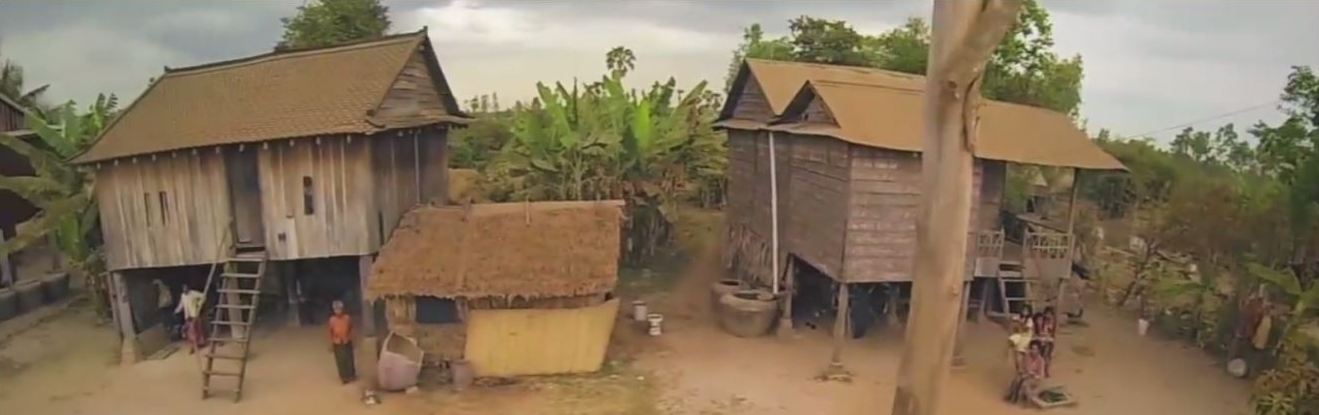
Why shouldn’t prosperity appeal to people who live in a one room house, on bamboo stilts, with palm-leaved walls?

Prosperity theology as a hook for the gospel! They hear Joyce Meyers (whom I have never read, or listened to, so am not endorsing—or not) say that faith and giving and prayer will lead to an improved financial situation. Well, under normal circumstances, it will.

Wherever true Christianity spreads, it must cause diligence and frugality, which, in the natural course of things, must beget riches!, John Wesley, Dublin, 1789

Faith brings hope. Faith helps you realize you can pursue a purpose and let your eyes grow bright with it.

* * *

I have inherited my grandparent’s reflex of giving away what I feel the lack of. Money when I need money. Time and energy in volunteering (leading Bible studies was my main form of volunteerism) when I lacked both. Happiness when I am sad. “Let my depression bloom,” is my little private saying. (When I feel depressed, I go through my personal email and reply to all the messages from friends and family which I have lacked energy to reply to.)

To sneer at all prosperity theology in our sophistication is to sneer at Jesus who says, “Give and you shall receive, full measure, pressed down, flowing over. For the measure you give is the measure you receive. ”

What one should be rightly suspicious of, and run when you hear it, is the perversions of prosperity theology.

“Give to my TV ministry, my radio ministry, my speaking ministry, my healing ministry and God will bless you.”

If you hear that, run–resisting the relentless push to donate money to greedy ministries and ministers who want your money for their own career ambitions (unless of course, you have benefitted from their ministries, in which case, perhaps you should give some).

(Will God bless those who contribute to the ministries of careerists who may, or may not, be charlatans? Yeah,  he probably will, because he commands “Give,” and did not specify to whom. It’s our heart and our generosity he is concerned with, for all money is his.)

If, however, you are asked to give to the poor (as I am cajoling you to give to Tearfund at the base of this post) please consider it, because the poor are heavy on God’s heart, as our youngest, weakest, most unhappy child is heavy on ours.

We might give to receive, and God sometimes plays our game, and smiles, and shrugs, and says, “Anything to increase their faith,” as we do anything, comics, animated computer games, handheld video games, to get our little children to read.

The point of being a Christian is not prosperity.  What faith in Jesus has to offer the people of Cambodia and me is greater than prosperity—it is peace, shalom, well-being, trust in the Father, joy, love for others, Jesus himself.  All this is prosperity in the global sense.

* * *

 People’s natural hunger to improve their circumstances can serve as  a hook for the Gospel. Tearfund is encouraging people to pool resources, to reframe, to look at what they have, not what they do not have, and to learn new skills of animal husbandry and planting.

Embedded image permalink

 Tearfund worker Kagne, and Sampath are having a little confab about growing rice & raising chickens

Sambath grows watermelons and rice on a neighbour’s unused land which she rents. She has a veritable bevy of adorable chickens. The lovely Tearfund worker, Kagne, printed out a guide from the interent on how to keep chickens and she used it, and now look!!

Please could you help Tearfund help people help themselves by giving them a hand up?

* * *

 I have just written my first book of fiction, Francesco—Artist of Florence: The Man who Gave Too Much. It is a children’s story, a lavishly illustrated tale of a Florentine Renaissance artist. Here are some comments from friends who read it,

Simon Cutmore— it is a gem of a book and a beautiful parable and I think could be read by you and old alike.

Jules Middleton—  I love the story! I wanted to read  more! I love the history of Art connections.

Joanna Mitchell— I thought it was lovely – sweet and true and good — – and a bit like one of Francesco’s jewels.

I would like to email it to you as a gift if you give £3 to Tearfund   here by direct debit.

Alternatively, text HOPE TODAY to 70444 to give £3 a month to See For Yourself, Tearfund.  It will be added to your mobile phone bill. Tearfund receives 100% of the money. This subscription service will cost £3.00 per month until you send STOP to 70080.

Just leave me a comment saying you have done so, and  send me your email address at anitaATanitamathias.com and I will email you an e-copy of my newest baby 🙂

Filed Under: In which I Travel and Dream, random Tagged With: #TFBloggers

On The Falsity of Scarcity Thinking and the Fact of Abundance Everywhere

By Anita Mathias

In which I help dig a field for a community project
When I am stressed, I go into scarcity mode. I just want to survive. I just want people to help me survive. I withdraw into my hard tortoise shell and want to stay there till the storm has passed, occasionally sticking out my head to say, “Help.”

 This is, of course, the antithesis of the way Jesus wants his Christians to live. He wants us to live with faith, because we truly do have have access to an immense power source, the Vine, the Holy Spirit. He wants me to live with faith because His eye is on the sparrow, the lily and me. He wants me to live with faith because all things are his, and I am his, and I can find all needful things in him.

I am having a very interesting, relaxed, happy time in Cambodia. However, it is a bit challenging physically—the heat, the residual jet lag, slight culture shock, the late nights blogging, up to midnight sometimes, and the early morning starts. 6.30 a.m. breakfast anyone?

I occasionally go into survival mode when tiredness creeps up on me. Oh Jesus, just get me through today. Oh Jesus, I just don’t have the energy to get out of the van and meet another lovely Cambodian. Please help me. Oh Jesus, I am barely awake; wake me up.

And then I remember: I don’t live in a world of scarcity, of just getting through challenge, but in a world of abundance. Of the Holy Spirit, who comes on request, and will give me all good things—love, joy, peace, patience, kindness. And I close my eyes, and pray, “Come Holy Spirit,” and slowly, mysteriously, magically, I am refilled—just enough–from God’s infinite wells of energy and joy and kindness and bounce.

Oh, we have an abundant God, and we live in an abundant universe, and never let me forget it and settle for merely surviving.

* * *

Cambodia has a per capita income of 78 USD a month, and is one of the world’s poorest countries, according to World Bank data.

And yet what strikes me is the abundance everywhere. Trees full of green mangoes. Jackfruits, bananas, gooseberries, green coconuts, and rambutan growing everywhere, even in the dry season. The giant lakes Tonle Sap and Tonle Batie full of fish and crabs. The soil so fertile that fallen papaya seeds root. Abundant young people everywhere, full of energy and optimism (and giggles). The sweet smiley spirit of the people.

* * *

Just before leaving for Cambodia, Roy and I signed up to run a half-marathon on September 28th   2014 to raise money for our favourite Christian charity working in the Third World. Now, I have been trying to lose weight for 17 months, and have only shed 18 pounds. Loads more to go! Literally. The extra weight I am carrying gives my legs the strength of someone in their seventies or eighties, according to Roy’s running book. Believe me, I believe it!

So I sign up, then ask my friend, David, “Tell me, am I crazy?” And David said, “You would be crazy if you didn’t do something. If you just accepted being overweight. You must now change the way you think of yourself. You must think of yourself as a girl who runs half-marathons. The day I quit smoking, I began thinking of myself as a non-smoker.” I am trying, believe me, I am trying.

* * *

 The Umoja Project Tearfund’s development model begins by asking people what their dreams and resources are. The villagers frequently say they have no resources. But in meeting numerous church members and facilitators over the last few days, we discovered a different picture slowly emerges.

They realise what they do have. They change their self-definition. Yiv Toch who knew how to raise chickens taught the others. Other group members had unused land. They pooled small amounts together to buy seeds for a community vegetable garden, and poultry to share. Those with a bit of English teach the smaller fry.

We spent a day in Pastor Te Pich’s church, and even dug in a field. The earth was more fertile and easier to dig than Oxford’s clayey soil, but I must admit I am no better at agriculture and hard labour in Cambodia than I am in Oxford! What struck me was the unsimulated joyousness as everyone, men, women and children, dug together in a field, and the field was dug in half an hour. It would have taken Roy hours! And then we ate Cambodian snacks, and played Cambodian games, and all the foreigners lost!!

Tearfund’s Village Integrated Development Project or Umoja is training facilitators to encourage communities to come together to pool money together so that they can borrow from the group in emergencies at 3% rather than from money-lenders at 120%!  This savings and loan group also provides seed money for the community pig, for instance, a source of

much affection and interest to everyone, and for chickens and ducks.

The unused land around the church is intensively planted as a community garden, even children digging around the tomato and chilli plants. The savings group provides the “seed money” for the seeds.

The resources for change come from the community itself, thus rescuing them form the vicious circle of hand-outs and foreign aid, which crush pride, self-respect, self-reliance and creativity.

Cambodia is a country of abundance—fertile soil, beneficent climate, optimistic sweet-spirited people. It is also a country with great corruption at the governmental level, one of the most corrupt countries in the world.

It is even more important then that people develop self-sufficiency and their own parallel non-taxable economies– vegetables, chickens, piggeries, fruit trees, private free schools, so that they survive and, God willing, thrive while their forests are despoiled, their gems and hardwood and minerals shipped away, and their land appropriated by powerful, mighty corporations.

Please help Tearfund help Cambodia’s people develop self-sufficiency.

I have just written my first book of fiction, Francesco—Artist of Florence: The Man who Gave Too Much. It is a children’s story, a lavishly illustrated tale of a Florentine Renaissance artist. Here are some comments from friends who read it,

Simon Cutmore— it is a gem of a book and a beautiful parable and I think could be read by you and old alike.

Jules Middleton—  I love the story! I wanted to read  more! I love the history of Art connections.

Joanna Mitchell— I thought it was lovely – sweet and true and good — – and a bit like one of Francesco’s jewels.

I would like to give it to you as a gift if you give £3 to Tearfund   here by direct debit.

Alternatively, text HOPE TODAY to 70444 to give £3 a month to See For Yourself, Tearfund.  It will be added to your mobile phone bill. Tearfund receives 100% of the money. This subscription service will cost £3.00 per month until you send STOP to 70080.

Just leave me a comment saying you have done so, and  send me your email address at anitaATanitamathias.com and I will email you an e-copy of my newest baby 🙂


Filed Under: In which I Travel and Dream Tagged With: #TFBloggers

On Pol Pot, Cambodia’s Killing Fields, and the Power of an Idea to Transform–or Destroy. (In Cambodia with Tearfund)

By Anita Mathias

Embedded image permalink

 Stupa in the Killing Fields, commemorating the victims of the Khymer Rouge

 We wandered around the “Killing Fields” today, where thousands of the  3 million Cambodians who perished (out of a population of 8 million) were clubbed, hacked, or axed to death by the minions of Pol Pot, leader of the murderous Khmer Rouge

 Pol Pot apparently was a sweet child, and then a brilliant student, sent to Paris by the Cambodian government on a doctoral scholarship. (Most of the Khymer Rouge leaders, incidentally, were intelligent and highly educated, mainly in Paris).

 Pol Pot’s barbarity started with an idea. That the simple agrarian society he had stumbled upon on Cambodia’s borders was the very best society. 

 Sadly, his personality was dangerous. On the DISC personality assessment, he would score as DI, dominant and influential. And so instead of living a peaceful agrarian life himself, and buying farms, and inviting people to live and toil on them, he enforced his idea on society, forcing the entire population of Pnomh-Penh and other cities into the countryside, where they toiled for 12-14 hours  a day in forced labour in rice paddies, etc.

 The Pol Pot regime was control in the extreme. What does control stem from? From wanting your own way. From thinking you know best and wanting everyone to do what you want them to do.

 But of course, everyone wants their own way, and so control will never be complete. Everyone has at least a residue of stubborn autonomy which cannot be snuffed out, and which leads oppressors to suspect, rightly, that their control is not complete. And leads to increasingly cruel, fearful and desperate attempts to control.

 So Pol Pot, instead of trusting the power of his idea, used greater and greater barbarity to force society to accept it, killing intellectuals and the educated, those who knew a foreign language, those who wore glasses, doctors, professors, and eventually, in growing paranoia, loyal members of his own Khymer Rouge.

 It was eugenics in reverse, a single-handed attempt to lower the IQ of a nation, murdering the educated and cultured, and I would expect that 35 years later Cambodia is still suffering from the effects of having her entire intelligentsia murdered.

 Nations and human history, however, tends towards equilibrium and balance. Great evil has within itself the seeds of its own extinction. Pol Pot was overthrown to great rejoicing within 4 years, just as the extreme evil of Hitler and Stalin reduced the shelf-life of their regimes.


   Peaceful agrarian scene, just outside the Killing Fields.

Peaceful agrarian scene, just outside the Killing Fields.

 I walked through the killing fields, in which now birds sing, trees flower, hens march outside followed their chicks, and skinny cows graze.

 Cambodia was an agrarian society, and Pol Pot could have enjoyed it peacefully and privately , without three years of stress for his people and himself–for like all dictators he grew increasingly paranoid as he realized that absolute control was impossible,  suspecting everyone, friend and crony alike, killing people on suspicions, and dubious information extracted over months of torture.

 Was it just Pol Pot? Nope, I think every parent, every lover, every friend, every church leader, or small group leader has in themselves a urge to control things. I’ve been meditating on control after hearing  an acquaintance, a “good” and respected Christian woman say that her greatest weakness was that she wanted to control everything, her family, her work, her church, her small group and that this was the greatest source of stress in her life.

 Like her, I would really like to have things go the way I think they should go, and want them to go. I resolved then to give up this silliness, to persuade but not control, to go with the flow in relatively unimportant things, instead of directing the flow. And if people don’t behave the way I want them to, or think they should– to “control” them, in the only way God has left open to us, by the immense force of prayer, which as Paul Miller repeatedly points out in his book The Praying Life, does change people but with the invisible force of the spirit.

 * * *

 I chatted to our tour guide at the Genocide Museum, an intelligent man who was made to work in the rice paddies, essentially as a slave, on a ration of two bowls of rice a day, sometimes more gruel than rice. Pol Pot viewed his people as expendable, since he thought he needed only 2 million out of the 8 million to run his communist society. Those who died from overwork and malnutrition died. The rice they produced he exported.

 Obviously, having to live and work in community—the same food, the same clothes, all colour banned, with the fruits of your toil going elsewhere was not a trust-inspiring taste of community for the people of Cambodia. Tearfund’s Umoja process in healing in encouraging to work in community.

 * * *

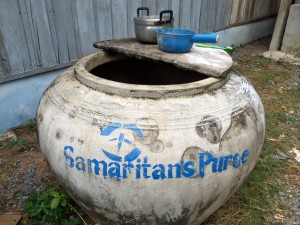
 Cambodia’s Christians don’t lack for uncoordinated help from well-meaning Western Christians. I saw concrete pigpens and water butts in a Tearfund Project today, donated by Samaritan’s Purse.

samaritans

 Heck, who wouldn’t be tempted by a hand-out? There is something magical about something for nothing; it has the whiff of grace about it; it would sure tempt me. 

 But as I’ve mentioned in his blog, one of the turning points of my life was when I fell in love with a house I could not afford (in which I now live). Roy hopefully suggested to his mother who has inherited wealth from her husband’s family and her own that she help us buy it, since she has bought houses for his brother David, and Jeph Mathias, who, consequently, no longer needs to work.

 She refused. Providentially. So we bought the house with a crazy mortgage, almost 7 times his salary and I started a business. I gained confidence. I changed my self-definition. I thought I was not detail-oriented. Heck, I was wrong. I could be obsessively detail-oriented when I needed to be. I thought I was no good with money. Nope, if I prayed for guidance and God’s ideas, I discovered I could be brilliant with money.    

 I learnt dozens of things I did not know—including working in a team and biting my lip often, and  how to plan something step by step from concept to execution, to plan with enough detail that you intuitively know it is going to work because your detailed step by step plan is concrete, credible and practical.

 That has helped me in other areas of my life, my blog, for instance.

 * * *

The worst thing about poverty is hopelessness. At a meeting at ICC (International Cooperation for Cambodia) they described Tearfund’s Umoja process (which encourages communities to dream about what they want to see, to set aside a small sum of money every week into a savings and loan program, and to use some of that money in  micro-entrepreneurial enterprises).

 At the first meeting, they ask, “What resources do you have?” The people say, “We do not have any resources. We are poor.” But they realize they have unused land around their houses in which they can grow things in containers. They have enough to buy a laying hen or two. They can buy a community pig. Put fish in a pond. Dig a well. Pool together for a water butt for the hot, dry season (i.e. now!)

 The self-definition—that we are poor, and so we need help is self-limiting. One you define yourself as a poor person (or a fat person with a bad metabolism, or someone not techie, or not smart enough to learn X, or do Y well, you have limited yourself. It’s a self-fulfilling prophecy). A pervasive hopelessness spreads.  

 Hand-outs don’t work permanently (except in disaster relief, where they make the difference between death from starvation or thirst and life). They are like putting a finger in a dyke, which sooner or later will burst. Once you have spent your hand-out, you will need another. And another.

 What changes people is ideas, not dollars. The idea that they DO have resources—physical strength, optimism, a bit of land around their houses, the ability to keep chickens, and to pool money and work together on a community garden, a piggery, a fishery.

 Tearfund is helping train people in new agricultural and animal husbandry techniques, and in starting small businesses like sewing shops.

 A donation of £3 a month will pay for a family to go through Umoja, Swahili for togetherness, the Church and Community Mobilization programme.

 Would you care to donate here by direct debit, please.

 Alternatively, text HOPE TODAY to 70444 to give £3 a month to See For Yourself, Tearfund.  It will be added to your mobile phone bill. Tearfund receives 100% of the money. This subscription service will cost £3.00 per month until you send STOP to 70080. 

If you’d like to sign up to support Tearfund’s work in Cambodia through either of these links, I’d like to send you a beautifully formatted PDF version of one of my books

Wandering Between Two Worlds—a series of memoiristic essays on my life and faith journey

The Meek Inherit the Earth—a meditation on that Beatitude

The Church That Had Too Much—a recording of a vivid dream.

 Just leave me a comment saying you have done so, and  send me your email address at anitaATanitamathias.com. Thank you


Filed Under: In which I Travel and Dream Tagged With: #TFBloggers, Cambodia, Killing Fields, Pol Pot

A Day in Cambodian Villages with Tearfund: Thoughts on Poverty, Shalom and Self-Sufficiency

By Anita Mathias

The spiritual value which runs though Scripture is not prosperity (though, in the Old Testament, those blessed by God are generally prosperous).

It is shalom. Strong’s Concordance translates it as “wholeness, health, peace, welfare, safety, soundness, tranquility, prosperity, perfectness, fullness, rest, harmony, the absence of agitation or discord.” What a lovely concept.

It is not right in a world of obscene and extravagant wealth for anyone to go hungry, to be deprived of access to the world’s mental, intellectual and spiritual and cultural riches through lack of education,

William Booth, founder of the Salvation Army, said this in his last and most famous speech, “While Women weep, as they do now, I’ll fight; while children go hungry, as they do now I’ll fight; while men go to prison, in and out, in and out, as they do now, I’ll fight; while there is a poor lost girl upon the streets, while there remains one dark soul without the light of God, I’ll fight, I’ll fight to the very end!”

That remarkable passion is not my calling—or else, I would never get a word written.

On the other hand, if we know millions of our fellow humans lack food, or clothing or shelter OR an education which opens their soul to the resources of thought and spirit through the centuries as well as the resources to climb out of poverty—and do nothing about it, how can the love of God dwell in us?

In Jesus’ striking parable of the sheep and the goats, the righteous are welcomed into the heaven, on the basis of what they did, not what they did not do. They saw the King hungry in the disguise of the poor, and fed him; they saw him naked and clothed him. The unrighteous did no such thing, though they may have cried “Lord, Lord,” and through their charismatic personalities and gifts of influence may even have worked miracles in his name.

And so, though development is not everyone’s calling, all Christians should help the poor, as need crosses our paths, as our hearts respond to need, as the Spirit moves. (And I would suggest that if we do not sense the Spirit move, start with 10%, the Biblically recommended figure, and keep moving it around ministries, until you are giving to ministries you are happy with, and causes that bring joy to your heart.)

* * *

I  visited a couple of Cambodian villages today which use Umoja (Swahili for togetherness) Tearfund’s development model.

Lunch with Tearfund staff, Cambodia.

Lunch with Tearfund staff, Cambodia.

Tearfund trains a facilitator, who recruits rural pastors to the program. They ask the community what they would like to see in their community. They dream. And then they dream about how to raise the money to accomplish that dream. More dreams. Part of the Umoja process is dreaming, a word dear to me (check out my  blog title!).

Tearfund provides training in agricultural and micro-business techniques. The community establishes savings and loans programs, which enable them to buy sewing machines, to raise chickens and ducks and geese etc.

* * *


Embedded image permalink

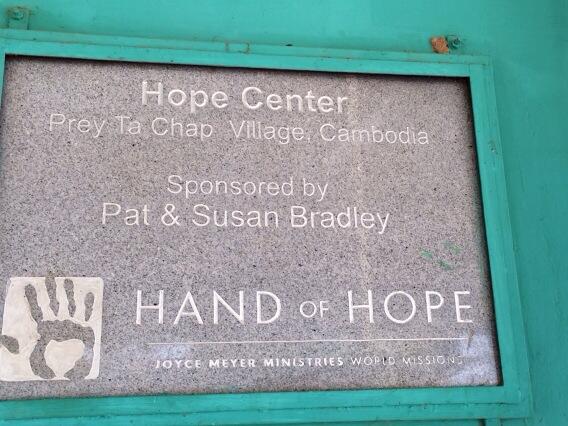
We visited an interesting compound today, behind locked corrugated steel gates! There was a Hope Centre donated by Joyce Meyer, which is used as a church. There was a pre-school run by Potters Field ministries, which provides the regulation blue tee shirts. Many Christian ministries coming together in that compound.

Tearfund kickstarted the Umoja process in that church—a sewing shop with fancy pre-ordered Kymer clothes for their new year, a chicken and duck raising project, and wormeries in cow manure to feed the chickens inexpensively, and fertilize crops. They had been taught “foreign” agricultural techniques such as growing beans on the fences surrounding the vegetable garden, saving space and producing food simultaneously.

He showed us their  books, letters in Kymer, numbers in English, thumb prints over amounts donated, and as far as I could make out, several people put a pound into the projects weekly, and presumably reaping the rewards.

* * *

 In the afternoon, we visited some results of the Umoja vision of self-sufficiency. Ror Kar Khpross, an elderly lady in Tasu village who was chased away by her family because she is HIV positive grows chilis and basil in a little plastic rice bags, and makes paste from the moringa tree, one of nature’s miracle trees, which she sells.

Embedded image permalink

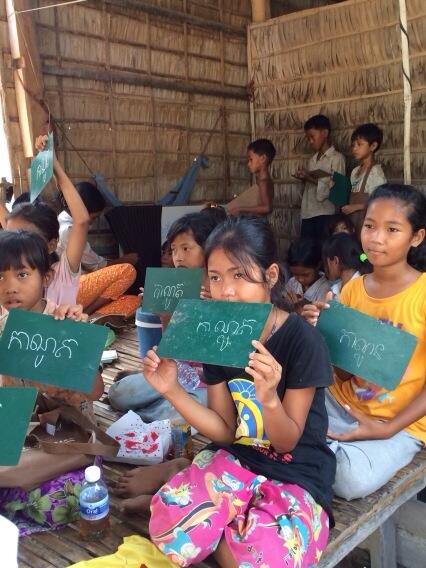
We visited a little school which children who go to the local “free” schools (where they learn very little) go to after hours to learn the alphabet, and do some fairly complex math. It’s on a raised platform on stilts, in the volunteer teacher’s house, two classes in a room about 3 by 3 meters, progressing concurrently disciplined but raucous. Whoa, they are going to learn focus!

Embedded image permalink


* * *

 Perhaps, man’s greatest need is spiritual, because from it all else comes. And then, perhaps, education, which gives us the tools to learn, grow, change and create prosperity. Even a little literacy will help people read labels on medicine bottles, store receipts, bank statements, and not be cheated.

According to the Pastor, implementing Umoja can be a challenge, because ministries like World Vision provide the chickens and the coop, and the seeds for crops. However, the villagers would sell it in the market for quick cash and be poor again. In fact, before Umoja, he said, the villagers would pray for “a foreigner to come and help us.”

Umoja requires them to set aside a small amount of money a week into the pooled savings and loan project,  which is invested in community projects of their choice. They are encouraged to look at their resources—a moringa tree in the case of widowed  Ror Kar Khporss; land in the case of the pastor’s family and ask what they could do with it. And land in abundance there is, lots of still unutilized land even in the compound which was part of the Umoja process.

Stuffed frogs at a roadside stall, Cambodia.

Stuffed frogs at a roadside stall, Cambodia.

Because they are developing their human resources of imagination, assiduity, persistence, following up on goals, and developing multiple income streams, this should, in the long run, be more effective than relying on hand-outs.

Poverty is partly a mind-set. If you define yourself as poor, you feel defeated and crushed at the outset and won’t have the energy or vision to climb out of poverty. Apparently, the Umoja process trains people to see what they do have and gradually to optimize it, and begin the climb out of poverty, increasing their self-confidence and self-reliance in the process.

I have just captured a fraction of today’s impressions; I am still rather jet-lagged.

Please Would you consider supporting Tearfund’s work in Cambodia, essentially paying for the facilitator to be trained to help train the community in the Umoja process in opening their eyes to notice they resources they already have in place—time, strength, land– and how they can optimize these?

To support Tearfund’s work in Cambodia by donating £3 a month here (about $5 for Americans).

Alternatively, text HOPE TODAY to 70444 to subscribe to give £3 a month to See For Yourself, Tearfund.  It will be added to your mobile phone bill. Tearfund receives 100% of the money. This subscription service will cost £3.00 per month until you send STOP to 70080.

Filed Under: In which I Travel and Dream Tagged With: #TFBloggers

Growth Happens Outside the Comfort Zone. (And hello from Pnomh-Penh, Cambodia

By Anita Mathias

One of my favourite Oxford walks is by the Thames from Iffley Lock to Folly Bridge.

As it gets warmer, the river is crowded with school and college rowers. And, on the banks, an obnoxious man with a bullhorn cycles beside the perspiring rowers, shouting tips on posture and alignment and synchronization.

Our family loves rowing and canoeing, slowly, dreamily, aimlessly. Watching those focused rowers, Zoe said, “I would never want to do THAT kind of rowing.”

No, neither would I. (Though Roy who rowed for his college, Corpus Christi, Cambridge, says, “Humph!”)

So the rowers have a choice. Listen to the man with the bullhorn, and get better.

Or turn a deaf ear to him, and get kicked out of the team, and perhaps lose your race. No more early mornings rowing on the river as the mists rise, and the birds sing, and the dreaming towers emerge from the lifting mist.

If they do not push themselves, their world shrinks.

* * *

                                                                        My whole life I have lived in pleasant thought,

As if life’s business were a summer mood;

As if all needful things would come unsought

To genial faith, still rich in genial good;

 Wordsworth wrote. Yeah, me too. Me too.

And that’s how I like to walk, “in pleasant thought/ As if life’s business were a summer mood.” Slowly, dreamily.

I worked with a personal trainer last year on (don’t laugh!) my walking speed, because one of my favourite things to do with friends is walk with them, and many of my friends are younger than I, and I was having trouble keeping up!

And Joanna kept saying, “Push yourself, Anita. Increase your speed until you are perspiring. Increase your speed until you are slightly out of breath. Walk as if you are trying to catch the last train out. You grow new blood vessels and capillaries. You will strengthen your heart and lungs.”

So faced with my embarrassment when I walk with “normal” people, and get breathless, I have been pushing myself. I walk with Runkeeper on my iPhone, which tells me my pace, and push, push push, until I am sweaty and breathless. But then I come home, from about 3.5 miles of this, and feel wonderful.

Isn’t it great that  God gave us such a means of feeling really, really wonderful, this endorphin high, lying coiled, dormant, right within our bodies?

* * *

 I am writing this having just arrived in Phomh-Penh—definitely outside my comfort zone. I accepted a Tearfund Challenge to tell the story of their projects, and help raise support for them.

The 100 degree heat; jet lag; the unfamiliar culture; the challenges of live-blogging, the hassle of using new technology and getting my old techie stuff to work here, and the risk of getting ill—oops, this will definitely be outside my comfort zone.

* * *

 Pascal says “One of the greatest causes of man’s unhappiness is his inability to sit quietly in a room.” Yes, I believe that if one cannot find happiness within oneself, and vertically, drawing comfort, nourishment and love for God, deriving happiness from other people can be elusive. They fill our emotional tanks, but once these are drained, we want more.

However, growth does not come from sitting quietly in a room. Growth comes from doing things at which one is likely to fail, and then failing, and humbling oneself to ask for help. Or better still, succeeding and then accepting a new challenge. Growth comes from learning.

buddha_in_bangkok

Huge Buddha in Bangkok

buddhas_feet

The Buddha’s feet

For instance, we had an opportunity today to spend two hours sitting in Bangkok airport, or taking a taxi and exploring. We took a taxi and explored—the charms of a vibrant Buddhist culture, massive Buddhas, viharas and wats everywhere, street markets and aromatic street food. Augustine calls travel “reading from the book of the world,” and so indeed it is.

A colourful Buddhist shrine, Bangkok.

A colourful Buddhist shrine, Bangkok.

* * *

 It’s not just growth that happens outside one’s comfort zone. What happens outside the Christians’ comfort zone is that we are pushed into the Holy Spirit, pushed into Christ, because our own resources—they fail us.

Pray for me—for health and strength and coherent (and God willing inspiring) blogging and that I and the other two bloggers, Danny Webster and Rich Sells succeed in our challenge of inspiring 60 new people to support Tearfund’s work in Cambodia with £3 a month.

Do follow our adventure here, please.

Holly Poulter, Tearfund’s media officer adds: People can text HOPE TODAY to 70444 to subscribe to give £3 a month to See For Yourself.  It will be added to your mobile phone bill. Tearfund receives 100% of the money. This subscription service will cost £3.00 per month until you send STOP to 70080.

Filed Under: In which I Travel and Dream Tagged With: #TFBloggers

In which I will be Visiting Cambodia with Tearfund in March 2014

By Anita Mathias

I am excited to announce that I will be going to Cambodia with Tearfund in March.


tonle batie cropped

Here is my post about why I would like to visit Tonle Batie, Cambodia with Tearfund.

And here is Tearfund’s video announcement

http://www.youtube.com/watch?v=BLSm7DmfIZw&feature=youtu.be

Read Tearfund’s Press Release.

‘Bloggers can change the world, or at the least they can change the way people view the world.’ says Krish Kandiah, Executive Director of the Evangelical Alliance, Tearfund Vice President and member of the judging panel. ‘We hope these bloggers can use their skills to help many people see the country and people of Cambodia through God’s eyes.’

Please will you follow my reports on my blog from March 17th to 25th?

Thank you 🙂


Filed Under: In which I Travel and Dream Tagged With: #TFBloggers, Cambodia, Tearfund, Tonle Batie

Why I want to go to Tonle Batie, Cambodia with Tearfund

By Anita Mathias

I am applying to travel with Tearfund to Cambodia, to the village of Tonle Batie, near Pnomh Penh.tonle batie cropped

Cambodia endured extreme economic and social devastation during the years of Pol Pot and the Khmer Rouge, which has left a legacy of widows and orphans; of people who find it difficult to trust each other enough to work together; and a generation without the education to swiftly escape poverty.

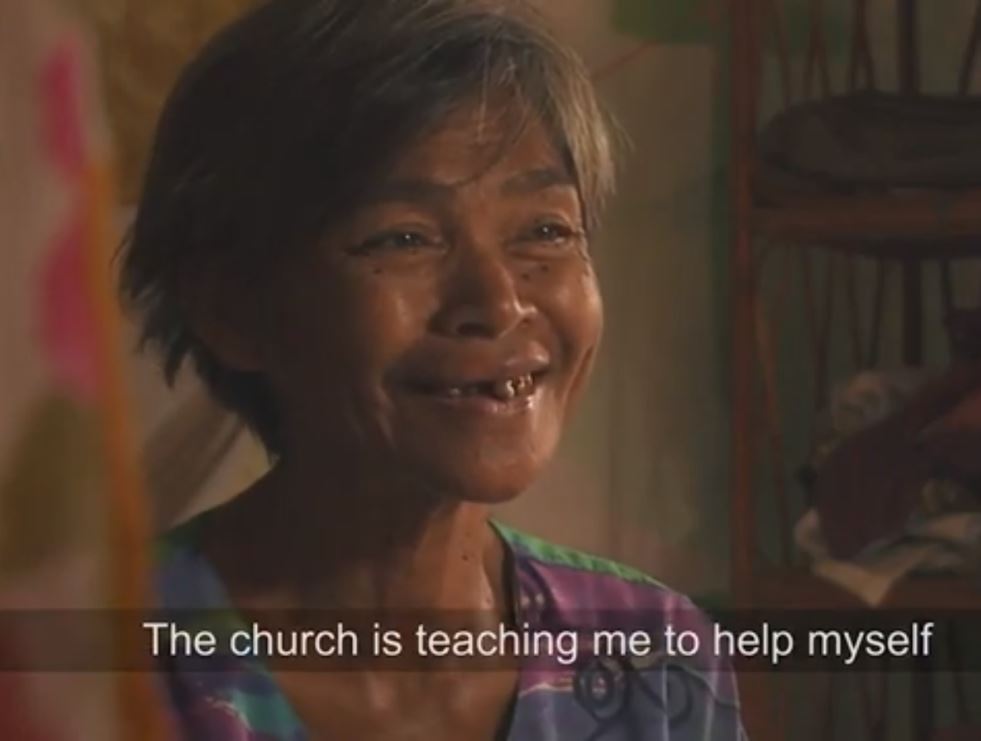
I have watched interviews with Yiv Toch, a hardworking mum, and with Gneam, 65, who had lost her husband to malnutrition under the Khymer Rouge, and, then, her second husband (given her in one of Pol Pot’s forced marriages). Both have no margin against hunger or sickness,  save borrowing at 120%.

However, the local church, largely composed of recent converts, (and their energetic volunteer Pastor Ke Pich, a Tearfund worker Navy, and a Youth worker Thany) is catalysing the community, infusing it with new hope, enthusiasm, and energy to pull itself out of crushing poverty.

Gneam
  

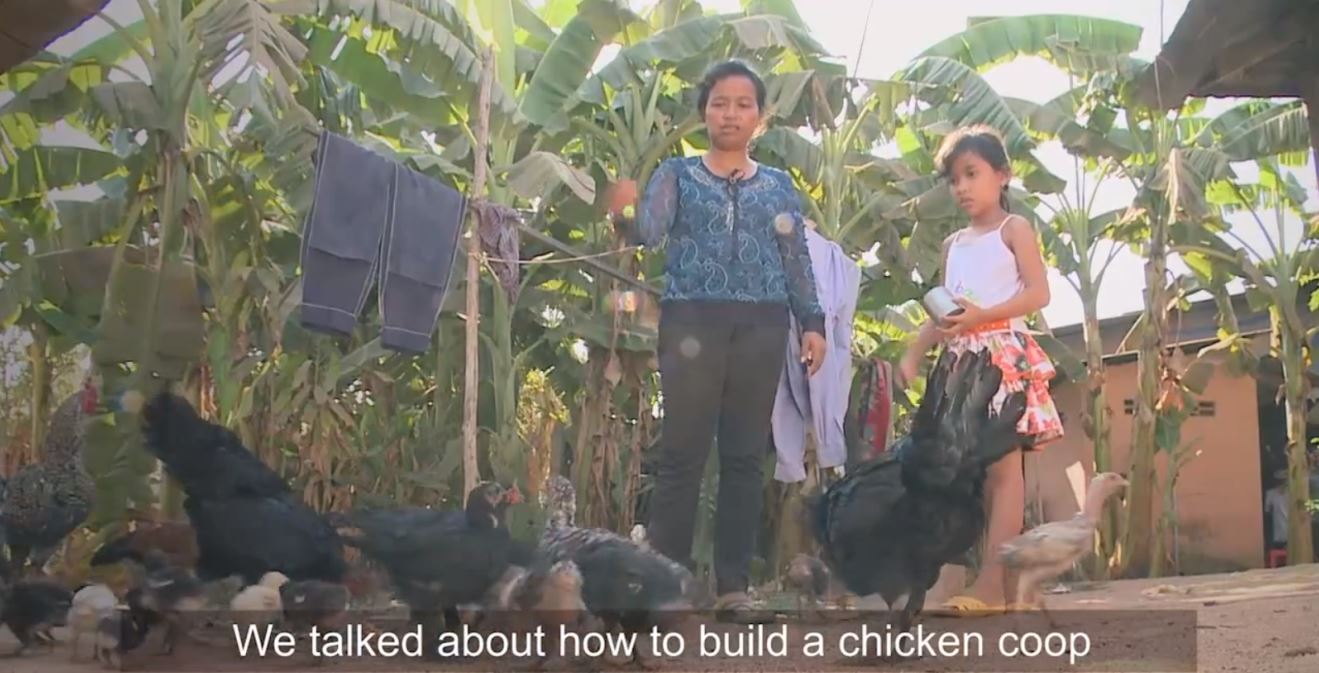
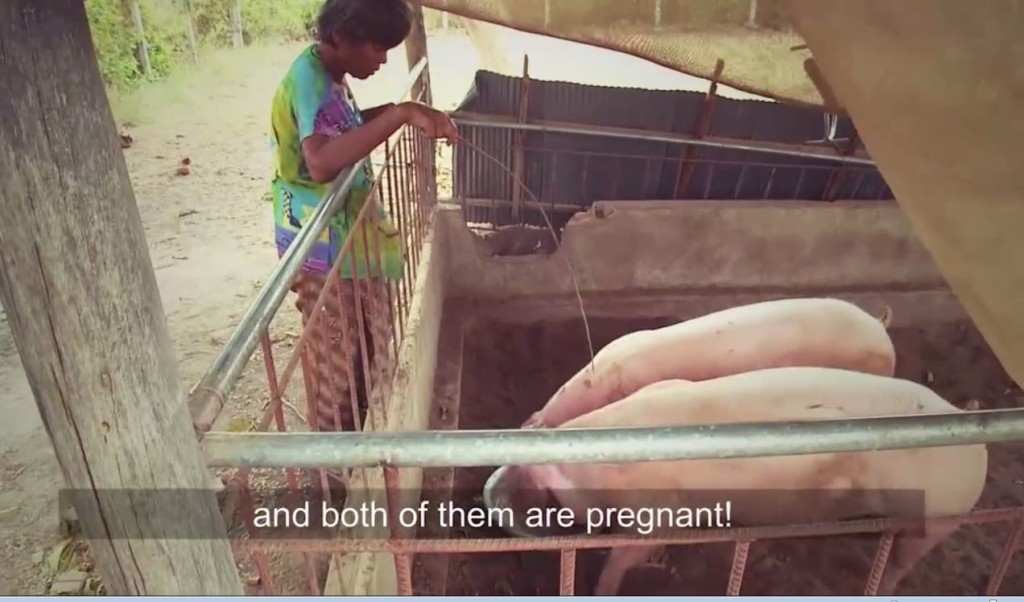
 The little miracles Jesus describes in his Gospel stories are a reality here. Yiv Toch who was given 8 chicks describes, joyfully, how she now has 50, which she can sell for extra income. The two community pigs are pregnant.  Landless families who dream of a bit of land can grow vegetables in the church’s communal garden.

Yiv Toch chickens

feeding_the_pigs

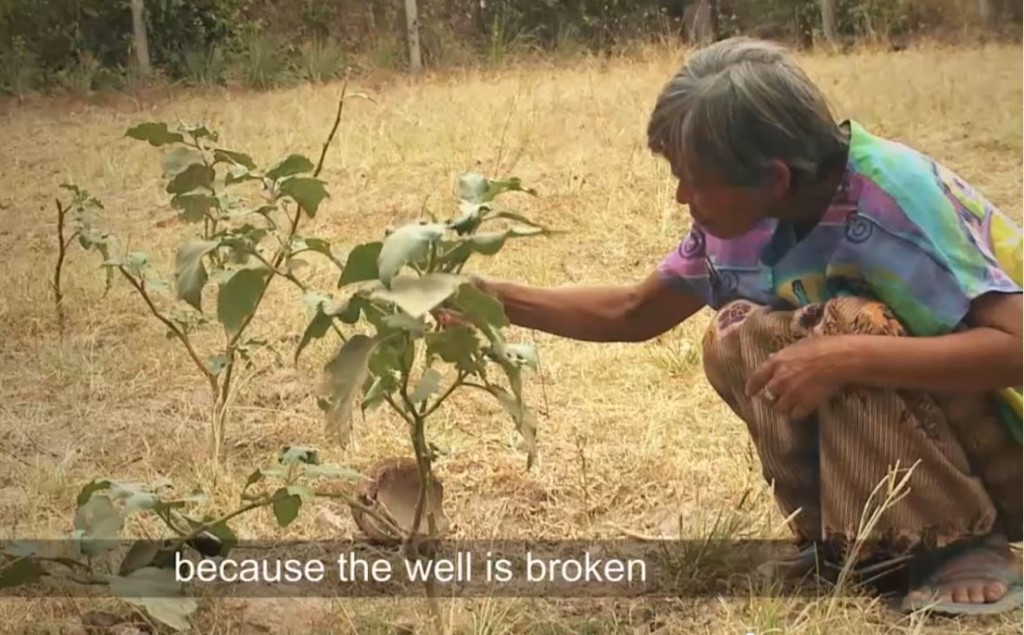
 The pump donated by a well-meaning church, was dug so deep that the water poisoned crops and then it broke; there was no money to repair it. The community brainstormed and decided to cooperate to dig a pond to store rainwater so that—in this village without running water–they can grow vegetables, even out of the rainy season.

Gneam inspecting the eggplants.

I love these real-life stories of using creativity, ingenuity and hardwork to escape poverty. It would be a privilege to tell them!

* * *

The roots of my Christian faith are entwined with the poor. When I first committed to follow Christ, aged 17, Christ’s command “Whatever you do for the least of these, you do for me,” leaped out at me from the Gospels, and I decided to work with Mother Teresa.

I worked with Mother Teresa for 14 months, and truly enjoyed hanging out with the poor, with the “scheduled tribes” in Orissa, whom India’s development hasn’t benefited, and at Kalighat, Mother Teresa’s Home for The Dying Destitute.

However, after I came to England, studying English at  Somerville College, Oxford, I have worked as a writer, and in publishing. But each time, I listen to Heidi Baker mention God’s directive to her to sit at the feet of the poor, I uneasily feel as if I am missing out on a vital aspect of the Christian life. The Gospel is good news to the poor, and perhaps the Gospel alive in our lives must, in some way, bring good news to the poor.

* * *

I would particularly enjoy observing and telling the story of the village of Tonle Batie, Cambodia, since I am an entrepreneur. I have founded two businesses with minimal capital, and the second, a small publishing company, now solely supports our family.  So I am impressed by the village’s income generation schemes, which will gradually create self-sufficiency through creativity and ingenuity.

* * *

Another reason I am eager to visit Cambodia, one of the poorest countries in the world, is that the primary theme of my blog, Dreaming Beneath the Spires, is the intersection of faith and theology with everyday life.  Hanging out with the poor—close to stark reality—you encounter the great theological questions (and perhaps answers): Whether God is indeed just if we contend with him; why God permits suffering, and whether there is anything redemptive about it; whether the Gospel and the power of prayer work anywhere in the world; whether God’s love and care is an ever-present reality for people in Tonle Batie, Cambodia as for those in Oxford, England, where I live.

* * *

I love travelling: visiting new countries; understanding, soaking in, and photographing new cultures; and writing about them on my blog, sensitively and affectionately. Writing about travel is a secondary strand in my blog, and interests my readers. I would love to tell the story of how Tearfund’s partner International Cooperation for Cambodia, and the local church are helping people heal after the traumatic years of the Khmer Rouge; and to learn to trust one another, and work together for the future with hope.

* * *

I have been blogging for three and a half years, and have begun developing a “platform”– about 15,000 page views a month; about 1700 Facebook fans and friends; and about 34,000 followers on Twitter where I am active (and have been a finalist for the Christian New Media “Tweeter of the Year Award.”)

I would be delighted to leverage my story-telling gifts and social media friendships to help raise money for Tonle Batie by telling its story. I regularly exchange guest posts with other established bloggers, and would love to to guest-post about my experiences in Cambodia.

Tearfund would like each blogger to inspire 20 people to contribute £3 a month so that 23 new families could go through the Church and Community Mobilisation process, being  able to send their children to school, learn new farming techniques, and put food on the table. I feel certain my amazing warm-hearted audience of committed Christians readers as well as my personal and church friends and family would enjoy supporting this interesting unfolding story. I look forward to doing so myself.

* * *

Personally speaking, the practice of gratitude has been transforming my spiritual life and is an important strand in my blog. I was struck by people’s shining eyes as they described chickens multiplying, vegetables growing, not having to worry about having enough food, or having to withdraw their children from school. Oh I would love to  learn and relearn gratitude for the goodness of God, which I can take for granted!

The Gospel is good news to the poor, and is the world’s greatest force for poverty reduction, I believe. Where it roots, people pray, which gives them new hope and precipitates divine assistance. People work with new enthusiasm, for the Gospel catalyses creativity. People act honestly, which breeds the trust on which co-operative entrepreneurship depends.

And since the Gospel is indeed the power of God, it will work anywhere in the world. It will be exciting to observe the Gospel at work, and Aslan on the move, in the community of Tonle Batie, Cambodia–and to tell the story of this new chapter in The Greatest Story Ever Told!

Filed Under: In which I Travel and Dream, In which the Gospel is Good News Tagged With: #TFBloggers, Cambodia, Entrepreneurship, Tearfund, The Gospel, Tonle Batie, Travel

Sign Up and Get a Free eBook!

Sign up to be emailed my blog posts (one a week) and get the ebook of "Holy Ground," my account of working with Mother Teresa.

Join 546 Other Readers

My Books

Rosaries, Reading, Secrets: A Catholic Childhood in India

Rosaries, Reading Secrets, B&N
USA

UK

Wandering Between Two Worlds: Essays on Faith and Art

Wandering Between Two Worlds
USA

UK

Francesco, Artist of Florence: The Man Who Gave Too Much

Francesco, Artist of Florence
US

UK

The Story of Dirk Willems

The Story of Dirk Willems
US

UK

My Latest Meditation

Anita Mathias: About Me

Anita Mathias

Read my blog on Facebook

Follow me on Twitter

Follow @anitamathias1

Recent Posts

  • Using God’s Gift of Our Talents: A Path to Joy and Abundance
  • The Kingdom of God is Here Already, Yet Not Yet Here
  • All Those Who Exalt Themselves Will Be Humbled & the Humble Will Be Exalted
  • Christ’s Great Golden Triad to Guide Our Actions and Decisions
  • How Jesus Dealt With Hostility and Enemies
  • Do Not Be Afraid, but Do Be Prudent
  • For Scoundrels, Scallywags, and Rascals—Christ Came
  • How to Lead an Extremely Significant Life
  • Don’t Walk Away From Jesus, but if You Do, He Still Looks at You and Loves You
  • How to Find the Freedom of Forgiveness
Premier Digital Awards 2015 - Finalist - Blogger of the year
Runner Up Christian Media Awards 2014 - Tweeter of the year

Categories

What I’m Reading


Wolf Hall
Hilary Mantel

Wolf Hall --  Amazon.com
Amazon.com

Amazon.co.uk

Silence and Honey Cakes:
The Wisdom Of The Desert
Rowan Williams

Silence and Honey Cakes --  Amazon.com
Amazon.com

Amazon.co.uk

The Long Loneliness:
The Autobiography of the Legendary Catholic Social Activist
Dorothy Day

The Long Loneliness --  Amazon.com
Amazon.com

Amazon.co.uk

Country Girl
Edna O'Brien

Country Girl  - Amazon.com
Amazon.com

Amazon.co.uk

Archive by month

My Latest Five Podcast Meditations

INSTAGRAM

anita.mathias

My memoir: Rosaries, Reading, Secrets https://amzn.to/42xgL9t
Oxford, England. Writer, memoirist, podcaster, blogger, Biblical meditation teacher, mum

Hi Friends, I have taped a meditation; do listen a Hi Friends, I have taped a meditation; do listen at this link: https://anitamathias.com/2025/04/08/the-kingdom-of-god-is-here-already-yet-not-yet-here-2/
It’s on the Kingdom of God, of which Christ so often spoke, which is here already—a mysterious, shimmering internal palace in which, in lightning flashes, we experience peace and joy, and yet, of course, not yet fully here. We sense the rainbowed presence of Christ in the song which pulses through creation. Christ strolls into our rooms with his wisdom and guidance, and things change. Our prayers are answered; we are healed; our hearts are strangely warmed. Sometimes.
And yet, we also experience evil within & all around us. Our own sin which can shatter our peace and the trajectory of our lives. And the sins of the world—its greed, dishonesty and environmental destruction.
But in this broken world, we still experience the glory of creation; “coincidences” which accelerate once we start praying, and shalom which envelops us like sudden sunshine. The portals into this Kingdom include repentance, gratitude, meditative breathing, and absolute surrender.
The Kingdom of God is here already. We can experience its beauty, peace and joy today through the presence of the Holy Spirit. But yet, since, in the Apostle Paul’s words, we do not struggle only “against flesh and blood, but against the rulers, against the unseen powers of this dark world and against the spiritual forces of evil,” its fullness still lingers…
Our daughter Zoe was ordained into the Church of E Our daughter Zoe was ordained into the Church of England in June. I have been on a social media break… but … better late than never. Enjoy!
First picture has my sister, Shalini, who kindly flew in from the US. Our lovely cousins Anthony and Sarah flank Zoe in the next picture.
The Bishop of London, Sarah Mullaly, ordained Zoe. You can see her praying that Zoe will be filled with the Holy Spirit!!
And here’s a meditation I’ve recorded, which you might enjoy. The link is also in my profile
https://anitamathias.com/2024/11/07/all-those-who-exalt-themselves-will-be-humbled-the-humble-will-be-exalted/
I have taped a meditation on Jesus statement in Ma I have taped a meditation on Jesus statement in Matthew 23, “For those who exalt themselves will be humbled, and those who humble themselves will be exalted.”
Do listen here. https://anitamathias.com/2024/11/07/all-those-who-exalt-themselves-will-be-humbled-the-humble-will-be-exalted/
Link also in bio.
And so, Jesus states a law of life. Those who broadcast their amazingness will be humbled, since God dislikes—scorns that, as much as people do.  For to trumpet our success, wealth, brilliance, giftedness or popularity is to get distracted from our life’s purpose into worthless activity. Those who love power, who are sure they know best, and who must be the best, will eventually be humbled by God and life. For their focus has shifted from loving God, doing good work, and being a blessing to their family, friends, and the world towards impressing others, being enviable, perhaps famous. These things are houses built on sand, which will crumble when hammered by the waves of old age, infirmity or adversity. 
God resists the proud, Scripture tells us—those who crave the admiration and power which is His alone. So how do we resist pride? We slow down, so that we realise (and repent) when sheer pride sparks our allergies to people, our enmities, our determination to have our own way, or our grandiose ego-driven goals, and ambitions. Once we stop chasing limelight, a great quietness steals over our lives. We no longer need the drug of continual achievement, or to share images of glittering travel, parties, prizes or friends. We just enjoy them quietly. My life is for itself & not for a spectacle, Emerson wrote. And, as Jesus advises, we quit sharp-elbowing ourselves to sit with the shiniest people, but are content to hang out with ordinary people; and then, as Jesus said, we will inevitably, eventually, be summoned higher to the sparkling conversation we craved. 
One day, every knee will bow before the gentle lamb who was slain, now seated on the throne. We will all be silent before him. Let us live gently then, our eyes on Christ, continually asking for his power, his Spirit, and his direction, moving, dancing, in the direction that we sense him move.
Link to new podcast in Bio https://anitamathias.co Link to new podcast in Bio https://anitamathias.com/2024/02/20/how-jesus-dealt-with-hostility-and-enemies/
3 days before his death, Jesus rampages through the commercialised temple, overturning the tables of moneychangers. Who gave you the authority to do these things? his outraged adversaries ask. And Jesus shows us how to answer hostile questions. Slow down. Breathe. Quick arrow prayers!
Your enemies have no power over your life that your Father has not permitted them. Ask your Father for wisdom, remembering: Questions do not need to be answered. Are these questioners worthy of the treasures of your heart? Or would that be feeding pearls to hungry pigs, who might instead devour you?
Questions can contain pitfalls, traps, nooses. Jesus directly answered just three of the 183 questions he was asked, refusing to answer some; answering others with a good question.
But how do we get the inner calm and wisdom to recognise
and sidestep entrapping questions? Long before the day of
testing, practice slow, easy breathing, and tune in to the frequency of the Father. There’s no record of Jesus running, rushing, getting stressed, or lacking peace. He never spoke on his own, he told us, without checking in with the Father. So, no foolish, ill-judged statements. Breathing in the wisdom of the Father beside and within him, he, unintimidated, traps the trappers.
Wisdom begins with training ourselves to slow down and ask
the Father for guidance. Then our calm minds, made perceptive, will help us recognise danger and trick questions, even those coated in flattery, and sidestep them or refuse to answer.
We practice tuning in to heavenly wisdom by practising–asking God questions, and then listening for his answers about the best way to do simple things…organise a home or write. Then, we build upwards, asking for wisdom in more complex things.
Listening for the voice of God before we speak, and asking for a filling of the Spirit, which Jesus calls streams of living water within us, will give us wisdom to know what to say, which, frequently, is nothing at all. It will quieten us with the silence of God, which sings through the world, through sun and stars, sky and flowers.
Especially for @ samheckt Some very imperfect pi Especially for @ samheckt 
Some very imperfect pictures of my labradoodle Merry, and golden retriever Pippi.
And since, I’m on social media, if you are the meditating type, here’s a scriptural meditation on not being afraid, while being prudent. https://anitamathias.com/2024/01/03/do-not-be-afraid-but-do-be-prudent/
A new podcast. Link in bio https://anitamathias.c A new podcast. Link in bio
https://anitamathias.com/2024/01/03/do-not-be-afraid-but-do-be-prudent/
Do Not Be Afraid, but Do Be Prudent
“Do not be afraid,” a dream-angel tells Joseph, to marry Mary, who’s pregnant, though a virgin, for in our magical, God-invaded world, the Spirit has placed God in her. Call the baby Jesus, or The Lord saves, for he will drag people free from the chokehold of their sins.
And Joseph is not afraid. And the angel was right, for a star rose, signalling a new King of the Jews. Astrologers followed it, threatening King Herod, whose chief priests recounted Micah’s 600-year-old prophecy: the Messiah would be born in Bethlehem, as Jesus had just been, while his parents from Nazareth registered for Augustus Caesar’s census of the entire Roman world. 
The Magi worshipped the baby, offering gold. And shepherds came, told by an angel of joy: that the Messiah, a saviour from all that oppresses, had just been born.
Then, suddenly, the dream-angel warned: Flee with the child to Egypt. For Herod plans to kill this baby, forever-King.
Do not be afraid, but still flee? Become a refugee? But lightning-bolt coincidences verified the angel’s first words: The magi with gold for the flight. Shepherds
telling of angels singing of coming inner peace. Joseph flees.
What’s the difference between fear and prudence? Fear is being frozen or panicked by imaginary what-ifs. It tenses our bodies; strains health, sleep and relationships; makes us stingy with ourselves & others; leads to overwork, & time wasted doing pointless things for fear of people’s opinions.
Prudence is wisdom-using our experience & spiritual discernment as we battle the demonic forces of this dark world, in Paul’s phrase.It’s fighting with divinely powerful weapons: truth, righteousness, faith, Scripture & prayer, while surrendering our thoughts to Christ. 
So let’s act prudently, wisely & bravely, silencing fear, while remaining alert to God’s guidance, delivered through inner peace or intuitions of danger and wrongness, our spiritual senses tuned to the Spirit’s “No,” his “Slow,” his “Go,” as cautious as a serpent, protected, while being as gentle as a lamb among wolves.
Link to post with podcast link in Bio or https://a Link to post with podcast link in Bio or https://anitamathias.com/2023/09/22/dont-walk-away-from-jesus-but-if-you-do-he-still-looks-at-you-and-loves-you/
Jesus came from a Kingdom of voluntary gentleness, in which
Christ, the Lion of Judah, stands at the centre of the throne in the guise of a lamb, looking as if it had been slain. No wonder his disciples struggled with his counter-cultural values. Oh, and we too!
The mother of the Apostles James and John, asks Jesus for a favour—that once He became King, her sons got the most important, prestigious seats at court, on his right and left. And the other ten, who would have liked the fame, glory, power,limelight and honour themselves are indignant and threatened.
Oh-oh, Jesus says. Who gets five talents, who gets one,
who gets great wealth and success, who doesn’t–that the
Father controls. Don’t waste your one precious and fleeting
life seeking to lord it over others or boss them around.
But, in his wry kindness, he offers the ambitious twelve
and us something better than the second or third place.
He tells us how to actually be the most important person to
others at work, in our friend group, social circle, or church:Use your talents, gifts, and energy to bless others.
And we instinctively know Jesus is right. The greatest people in our lives are the kind people who invested in us, guided us and whose wise, radiant words are engraved on our hearts.
Wanting to sit with the cleverest, most successful, most famous people is the path of restlessness and discontent. The competition is vast. But seek to see people, to listen intently, to be kind, to empathise, and doors fling wide open for you, you rare thing!
The greatest person is the one who serves, Jesus says. Serves by using the one, two, or five talents God has given us to bless others, by finding a place where our deep gladness and the world’s deep hunger meet. By writing which is a blessing, hospitality, walking with a sad friend, tidying a house.
And that is the only greatness worth having. That you yourself,your life and your work are a blessing to others. That the love and wisdom God pours into you lives in people’s hearts and minds, a blessing
https://anitamathias.com/.../dont-walk-away-from-j https://anitamathias.com/.../dont-walk-away-from-jesus.../
Sharing this podcast I recorded last week. LINK IN BIO
So Jesus makes a beautiful offer to the earnest, moral young man who came to him, seeking a spiritual life. Remarkably, the young man claims that he has kept all the commandments from his youth, including the command to love one’s neighbour as oneself, a statement Jesus does not challenge.
The challenge Jesus does offers him, however, the man cannot accept—to sell his vast possessions, give the money to the poor, and follow Jesus encumbered.
He leaves, grieving, and Jesus looks at him, loves him, and famously observes that it’s easier for a camel to squeeze through the eye of a needle than for a rich person to live in the world of wonders which is living under Christ’s kingship, guidance and protection. 
He reassures his dismayed disciples, however, that with God even the treasure-burdened can squeeze into God’s kingdom, “for with God, all things are possible.”
Following him would quite literally mean walking into a world of daily wonders, and immensely rich conversation, walking through Israel, Lebanon, Syria, and Jordan, quite impossible to do with suitcases and backpacks laden with treasure. 
For what would we reject God’s specific, internally heard whisper or directive, a micro-call? That is the idol which currently grips and possesses us. 
Not all of us have great riches, nor is money everyone’s greatest temptation—it can be success, fame, universal esteem, you name it…
But, since with God all things are possible, even those who waver in their pursuit of God can still experience him in fits and snatches, find our spirits singing on a walk or during worship in church, or find our hearts strangely warmed by Scripture, and, sometimes, even “see” Christ stand before us. 
For Christ looks at us, Christ loves us, and says, “With God, all things are possible,” even we, the flawed, entering his beautiful Kingdom.
https://anitamathias.com/2023/09/07/how-to-find-th https://anitamathias.com/2023/09/07/how-to-find-the-freedom-of-forgiveness/
How to Find the Freedom of Forgiveness
Letting go on anger and forgiving is both an emotional transaction & a decision of the will. We discover we cannot command our emotions to forgive and relinquish anger. So how do we find the space and clarity of forgiveness in our mind, spirit & emotions?
When tormenting memories surface, our cortisol, adrenaline, blood pressure, and heart rate all rise. It’s good to take a literally quick walk with Jesus, to calm this neurological and physiological storm. And then honestly name these emotions… for feelings buried alive never die.
Then, in a process called “the healing of memories,” mentally visualise the painful scene, seeing Christ himself there, his eyes brimming with compassion. Ask Christ to heal the sting, to draw the poison from these memories of experiences. We are caterpillars in a ring of fire, as Martin Luther wrote--unable to rescue ourselves. We need help from above.
Accept what happened. What happened, happened. Then, as the Apostle Paul advises, give thanks in everything, though not for everything. Give thanks because God can bring good out of the swindle and the injustice. Ask him to bring magic and beauty from the ashes.
If, like the persistent widow Jesus spoke of, you want to pray for justice--that the swindler and the abusers’ characters are revealed, so many are protected, then do so--but first, purify your own life.
And now, just forgive. Say aloud, I forgive you for … You are setting a captive free. Yourself. Come alive. Be free. 
And when memories of deep injuries arise, say: “No. No. Not going there.” Stop repeating the devastating story to yourself or anyone else. Don’t waste your time & emotional energy, nor let yourself be overwhelmed by anger at someone else’s evil actions. Don’t let the past poison today. Refuse to allow reinjury. Deliberately think instead of things noble, lovely, admirable, excellent, and praiseworthy.
So keep trying, in obedience, to forgive, to let go of your anger until you suddenly realise that you have forgiven, and can remember past events without agitation. God be with us!
Follow on Instagram

© 2025 Dreaming Beneath the Spires · All Rights Reserved. · Cookie Policy · Privacy Policy